I don’t know about you but I love my bed! And I firmly believe that a good night’s sleep can make you feel so good! Breathing, eating and sleeping are three of the most basic and essential functions we do as humans. But can food affect our sleep or does our sleep affect our food? The reality is that it is probably a bit of both…On average we need between 7-9 hours’ sleep per night with some people managing on less and others may need more. Lack of sleep can lead to irritability, fatigue and difficulty concentrating. However chronic poor sleep has been linked to obesity, diabetes and heart disease.
In general, research has found that eating in line with the Mediterranean or DASH diet, both of which promote fruits and vegetables, fiber rich foods and healthy mono-unsaturated and polyunsaturated fats tends to be associated with better quality sleep. Magnesium is a mineral that is reported to help with sleep regulation and is found in bananas, nuts, green vegetables, tofu and dairy. Melatonin is a micronutrient present in some foods but also a hormone that occurs naturally in the body and helps control sleep patterns. Melatonin, is found in tart cherry juice, eggs, nuts and dairy. Interestingly the tradition of hot milk before bed comes from Roman times… and milk contains both magnesium, melatonin and an amino acid called tryptophan which helps produce serotonin and melatonin.
Kiwifruit is another food that has been reported to have a positive impact on sleep duration and quality. In one four-week trial of adults with sleep problems, consumption of two kiwifruits per day one hour before bedtime significantly increased total sleep time and sleep efficiency. A potential reason for this is that they are a rich source of antioxidant and contain the hormone serotonin. Either way they are also great sources of vitamin C and great for keeping bowel movements regular.
Do you ever feel like you make poorer food choices when you’re tired? There may be good reason behind this. Sleep deprivation can cause a drop in Leptin levels (a hormone that signals fullness) and increases the hormone Ghrelin (hormone that stimulates appetite). This change in hormones can explain why you might eat more when missing sleep or why you tend to eat more without feeling full when you have had minimal sleep. US research from Cedar- Sinai Medical Centre also found that lack of sleep increased insulin resistance. So, we can see that regular good night sleep helps manage hormones, appetite and possible food choices.
Caffeine and alcohol can negatively affect falling asleep and sleep quality so best to keep within healthy limits if struggling with sleep. Maybe keep the caffeine to before midday!
450g (1lb, 31/2 cups) plain flour 1/2 teaspoon sugar 1/2 teaspoon salt 1/2 teaspoon bicarbonate of soda 300-600ml (1/2 – 1 pint, 1 1/4 – 2 1/2 cups) sour milk or buttermilk
METHOD
Sieve the dry ingredients. Make a well in the centre.
Pour in all the milk at once. Using 1 hand, with your fingers stiff and outstretched like a claw, stir in a full circular movement from the centre to the outside of the bowl in ever increasing circles. The dough should be softish, not too wet and sticky. When it all comes together, turn it out onto a well-floured work surface. Wash and dry your hands. Tidy it up and flip over gently. Pat the dough into a round, about 4cm deep.
Cut a deep cross on the loaf and prick in the four corners.
Bake in the oven for 15 minutes then turn down to 200deg C for 30 minutes until cooked. If you are in doubt, tap the bottom of the bread, when it is cooked it will sound hollow. Cool on a wire rack.
Tip! Soda breads are best eaten on the day they are made, but are still good the next day.
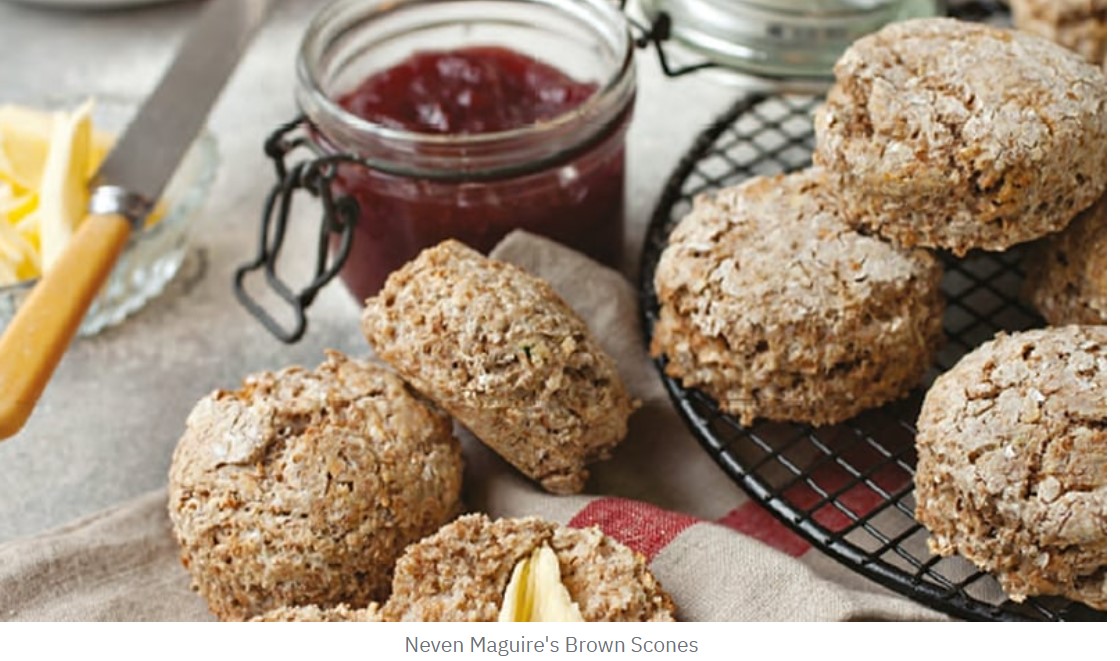
Spotted Dog
Follow the recipe above adding: 1 dessert spoon of sugar, 100g sultanas, 1 egg.
Add the sugar and the sultanas with the flour and drop the egg in with the milk before missing. Spotted dog is also called railway cake in some parts of Ireland.
Stripy Cat
Follow the spotted dog recipe replacing the sultanas with 75g of roughly chopped best quality chocolate.
Come to savour culinary delights at Ballymaloe House Hotel.BOOK YOUR STAY
275g (10oz) potato (about 1 medium), peeled and finely diced
1kg (2lb 2oz) mixed cockles and mussels
300ml (11fl oz) dry white wine
200ml (7fl oz) milk
200ml (7fl oz) single or double cream
Salt and freshly ground black pepper
4 tbsp roughly chopped fresh parsley
Molly Malone was a beautiful girl who sold cockles and mussels and died tragically of a fever while still young, or so the song goes. Molly may not have been a real girl, but since at least the 17th century, there have been fishmongers on the streets of Dublin who sell ‘Cockles and Mussels, alive, alive, oh!’
Cockles, with their distinctive flavour and lovely curved shell, are traditionally eaten in Ireland with Oatcakes. If you can only find mussels, this chowder will be just as good.
Serve either as a substantial starter or with chunks of crusty bread as a meal in its own right.
Heat the sunflower oil in a saucepan over medium-high heat. Add the bacon and sauté for about 1 minute, until crisp and golden. Add the butter to the pan and melt. Then add the leek, carrot and potato. Reduce the heat to low and sauté gently for 4–5 minutes, until soft but not browned.
Meanwhile, prepare the cockles and mussels. Scrub the shells clean and discard any that remain open when you tap them against a hard surface. Remove the beard – the little fibrous tuft – from each mussel. Bring the wine to a boil in a large saucepan and add the cockles and mussels. Cover with a tight-fi tting lid and cook for 3–4 minutes, shaking the pan occasionally, until the shells have opened.
Remove from the heat, drain the shellfi sh in a colander, reserving the cooking juices, and discard any shells that remain closed. Return the shellfi sh to the empty pan to keep warm. Place a fine sieve over a measuring jug and strain the cooking liquid. You should have at least 600ml (1 pint); if not, add water to make up that quantity.
Add the pan juices and the milk to the bacon and vegetable mixture and bring to a boil. Reduce the heat and simmer for 6–8 minutes, until the potato is tender. Add the cream and simmer for another 2–3 minutes, until the soup is reduced and thickened slightly. Season with salt and pepper.
Meanwhile, remove half of the cockles and mussels from their shells and add them with the remaining cockles and mussels still in their shells to the chowder. Stir in the parsley and serve at once.
The final newcomer to this region is Derby born @chefnikita.p who runs fine dining supper clubs from her family home. She’s no stranger to a competition though! Tune in Tuesday 7pm @bbctwo and @bbciplayer to see her cook! #greatbritishmenu2d
Fabulous news Nikita – we really enjoyed interviewing you – look out for our @greatbritishmenu interview coming soon4 likesReply
Shred some fat off the Gigot or Rack chops and render it down in the bottom of a heavy casserole pot. Peel onions, carrots and potatoes. Trim off any excess fat from the chops. Do not remove bones. Cut carrots and onions into quarters. Toss meat in the rendered fat until browned then remove. Do the same with the carrots and onions, then add back in the meat.
Add stock if you have it or water will do. Season nicely with salt and pepper remembering that it will reduce.Allow to simmer for half an hour with the lid on, then add potatoes on top. Cover and simmer gently for another 1 and half hours approximately on a gentle heat or in a moderate oven until meat is cooked.
Then pour off the cooking liquid. Degrease and reheat in another saucepan. Very slightly thicken the liquid with roux. Check seasoning. Then swirl in butter, chives, parsley and pour back into stew.
Come and savour culinary delights at Ballymaloe House Hotel in person, and experience how we prepare this recipe firsthand.
Info:
Serves 4–6
Preparation time: 10 minutes
Cooking time: 20 minutes
Ingredients