I am never quite sure if I should be calling this a cake or a tart but in any event, it is delicious and quite easy to make.
Ingredients
I am never quite sure if I should be calling this a cake or a tart but in any event, it is delicious and quite easy to make.
The origins of the recipe are from Tuscany in Italy but I like to use highly perfumed Irish dessert apples when in season. Look out for some lesser known but very delicious Irish dessert apples such as Irish Peach and Ardcairn Russet.
Serves 8
10g butter melted for greasing the parchment paper
4 dessert apples
Finely grated zest of 2 lemons
1 teaspoon vanilla extract
250g caster sugar
2 eggs
150ml cream
110g butter melted and cooled
125g whole almonds, blanched, peeled and ground to a fine powder in a food processer or ground almonds
110g plain flour sieved
1 ½ teaspoons baking powder sieved
100g of apricot jam
1 tablespoon lemon juice, warmed and sieved
2 tablespoons of chopped sweet geranium leaves ( optional)
Method
Preheat the oven to 180c / 350 f / gas 4
Line a 28cm flan ring with a removable base with a disc of parchment paper. The paper should in one piece cover the base and sides of the tin and come up 1cm above the edge of the tin. Brush the paper with a little melted butter.
Peel, core and quarter the apples and slice into c 3mm slices. Mix with the lemon zest. Whisk the vanilla, sugar, and eggs to a thick and light consistency similar to a batter. Whisk in the cream and cooled melted butter. Fold in the almonds, flour and baking powder. Add ¾ of the sliced apples, being careful not to break the apple slices.
Pour the mixture into the prepared flan ring and gently smooth over the surface. Scatter the remaining apples over the surface and sprinkle with 1 dessertspoon of caster sugar.
Place in the preheated oven and cook for 20 minutes. Reduce the temperature to 160c etc and cook for a further 40 minutes by which time the tart will feel gently set. It may be necessary to cover the tart during the cooking with a sheet of parchment paper if the tart is getting too dark.
Remove from the oven and allow to cool slightly. While the tart is still warm, Paint the surfaced with the warm sieved apricot jam to achieve a glossy glaze and if using the chopped geranium, sprinkle on immediately after glazing the tart.
A delicious classic recipe for a very classy cake.
Ingredients
butter (melted, for greasing)
4 eggs
125 g (41/2 oz) caster sugar (plus 3 tbsp for sprinkling)
2 tblsp warm water
1 tsp vanilla extract
125 g (41/2 oz) plain flour (plus extra for dusting)
for the filling
200 g (7oz) rhubarb (about 2 stalks, trimmed), cut into 5mm (1/4 in) slices
125 g (41/2 oz) caster sugar
200 ml (7fl oz) milk
1 vanilla pod, split lengthways, or 2 tsp vanilla extract
3 egg yolks
15 g (1/2 oz) cornflour
100 ml (31/2 fl oz) whipped double or regular cream (measured when whipped)
Method
Preheat the oven to 190°C (375°F/Gas 5). Line the base of the Swiss roll tin (25 x 38cm/ 10 x 15′) with baking parchment, brush the base and sides of the tin with melted butter and dust with flour.
Using a hand-held electric beater or an electric food mixer, whisk together the eggs, caster sugar, water and vanilla extract until light and fluffy.
Sift in the flour, about one-third at a time, and fold it into the mixture. Carefully pour the mixture into the prepared Swiss roll tin and bake in the oven for 12–15 minutes or until the centre of the sponge is slightly springy to the touch and the edges have shrunk a little from the sides of the tin.
Take a piece of baking parchment slightly larger in size than the tin and spread out on a work surface.
Sprinkle the paper evenly with caster sugar (this is to stop the cake sticking to the paper). Quickly flip the Swiss roll tin over onto the sugared paper, then carefully remove the tin and baking parchment from the bottom of the cake.
Place a clean, slightly damp tea towel over the cake while it cools – this will prevent it drying out and cracking when you roll it.
Meanwhile, make the filling. Place the rhubarb in a saucepan with 75g (3oz) of the caster sugar and 25ml (1fl oz) of water and place on a medium heat, stirring to dissolve the sugar. Bring to the boil and allow to boil, uncovered and stirring regularly, for 10–15 minutes or until the rhubarb is completely soft and the mixture is quite thick.
Tip out onto a plate and allow to cool.
Next make the custard. Place the milk and the split vanilla pod (if using) in another pan and bring to the boil.
Whisk the egg yolks (and vanilla extract, if using) with the remaining sugar (I like to use a hand-held electric beater for this) for a few minutes or until pale and light. Then briefly whisk in the cornflour.
Pour the hot milk and vanilla pod (if using) onto the egg mixture, whisking as you pour, then tip it all back into the saucepan and cook, stirring all the time, over a low heat for a few minutes or until it forms a thick custard.
Pour it into a bowl and allow to cool, then fold in the cooled rhubarb and the whipped cream – you can leave it slightly marbled (not fully mixed) if you prefer.
When the sponge is completely cold, spread over the rhubarb and custard mixture, then, with one of the short sides facing you, roll up the Swiss roll away from you and carefully transfer to a serving plate.
Sprinkle with a little extra caster sugar to finish, then cut into slices about 2cm (3/4in) thick to serve.
ballymaloecookeryschool New season potatoes are being dug daily here at Ballymaloe Cookery School and delivered up to the Farm Shop by the hardworking gardeners. The pic of @rachelallencooks is from last year when everyone (literally) dug in during the lockdown and helped out anywhere they could. Thank goodness things are begining to look a little more normal. Swing by the shop and grab a bag of Homegrown Organic Spuds at The Farm Shop. Bring them home and gently boil in salted water, slather with some delicious butter and a sprinkling of @maldonsalt. It couldn’t be more #SimplyDelicious
Makes approx. ¾lb (350g) fresh pasta, feeds approximately 3-4.
You will need:
300g (10oz) ’00’ flour
25g (1oz) semolina flour and extra for dusting
A good pinch of salt
1 whole egg and 3 large egg yolks
1 dessertspoon extra-virgin olive oil
1 teaspoon cold water
Sift the ’00’ flour, 25g (1oz) of the semolina flour and the pinch of salt into a bowl. Make a well in the centre of the flour, break in one whole egg and two egg yolks into the centre, together with the extra-virgin olive oil and the cold water and mix everything together.
When the dough is at a crumbly stage (before you form it into a ball) check to see if there is enough moisture in it. If there is not, add the remaining egg yolk and maybe even an extra egg white. It is difficult to be exact with the quantity of liquid, as it depends on the size of the eggs and the brand of flour.
Knead the dough for 8-10 minutes or until it is really smooth and silky, see my Tip, above left. Wrap it well in cling film and let it rest for 30 minutes before rolling. Divide the dough into three pieces – keep two covered in cling film while you roll the other piece into a length that is 1-2mm (about 1/8in) thick. As a guide, you shouldn’t be able to read the lettering on a matchbox through the pasta. If the pasta is rolled too thinly it will be too sloppy and won’t be strong enough to hold the sauce.
Using a knife or pizza wheel, cut into ¼in (5mm) strips for noodles or tagliatelle. Pappardelle are the widest of the noodles, they should be cut to a width of 15mm (about »in) with a crimped-edge cutter. Toss the cut pasta in the extra semolina flour and then place them on a tray that is also sprinkled generously with semolina flour. Repeat with the remaining pasta dough.
The pasta is best if the strips are allowed to dry out for at least an hour in the fridge or cool place.
It can be kept for up to three days in the fridge.
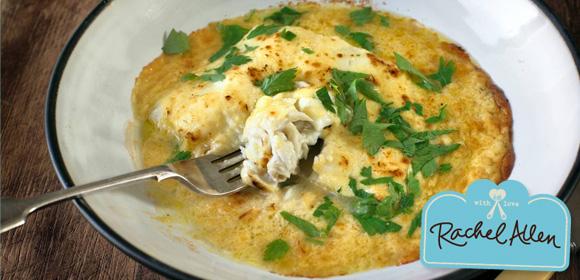
First season the haddock pieces with the salt and freshly ground black pepper. Arrange the fillets in a single layer in the ovenproof dish (it should be a dish that is posh enough to bring to the table). Mix the grated Cheddar cheese together with the Dijon mustard and the cream and spread carefully over the fish.
The fish can be prepared ahead and refrigerated at this point. It will keep in the fridge for a day.
To cook, place in the pre-heated oven for about 20 minutes or until the fish is cooked and the top is golden and bubbly. If the fish is cooked but the top is not yet golden, place under a hot grill for just a few moments to colour the cheese.





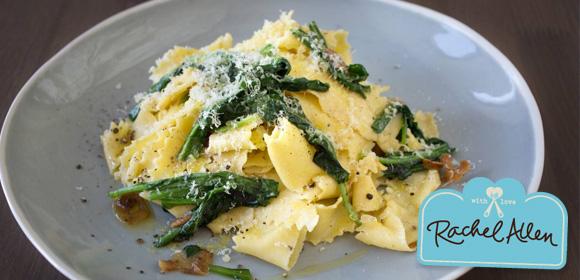



Makes approx. ¾lb (350g) fresh pasta, feeds approximately 3-4.
You will need:
300g (10oz) ’00’ flour
25g (1oz) semolina flour and extra for dusting
A good pinch of salt
1 whole egg and 3 large egg yolks
1 dessertspoon extra-virgin olive oil
1 teaspoon cold water
Sift the ’00’ flour, 25g (1oz) of the semolina flour and the pinch of salt into a bowl. Make a well in the centre of the flour, break in one whole egg and two egg yolks into the centre, together with the extra-virgin olive oil and the cold water and mix everything together.
When the dough is at a crumbly stage (before you form it into a ball) check to see if there is enough moisture in it. If there is not, add the remaining egg yolk and maybe even an extra egg white. It is difficult to be exact with the quantity of liquid, as it depends on the size of the eggs and the brand of flour.
Knead the dough for 8-10 minutes or until it is really smooth and silky, see my Tip, above left. Wrap it well in cling film and let it rest for 30 minutes before rolling. Divide the dough into three pieces – keep two covered in cling film while you roll the other piece into a length that is 1-2mm (about 1/8in) thick. As a guide, you shouldn’t be able to read the lettering on a matchbox through the pasta. If the pasta is rolled too thinly it will be too sloppy and won’t be strong enough to hold the sauce.
Using a knife or pizza wheel, cut into ¼in (5mm) strips for noodles or tagliatelle. Pappardelle are the widest of the noodles, they should be cut to a width of 15mm (about »in) with a crimped-edge cutter. Toss the cut pasta in the extra semolina flour and then place them on a tray that is also sprinkled generously with semolina flour. Repeat with the remaining pasta dough.
The pasta is best if the strips are allowed to dry out for at least an hour in the fridge or cool place.
It can be kept for up to three days in the fridge.
http://www.rachelallen.com/post/gillian-hegartys-home-made-pasta