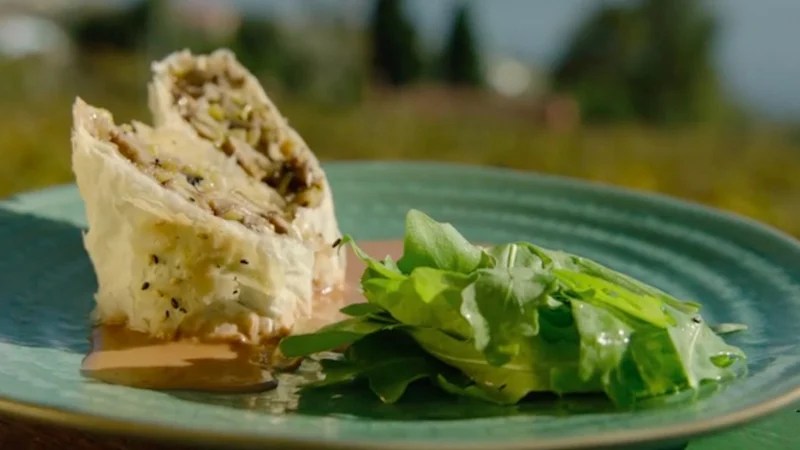
Neven Maguire’s mushroom & leek strudel with madeira wine sauce
Ingredients
Serves 4-6
For the strudel
2 tbsp olive oil, plus extra for oiling
1 small onion, peeled and finely diced
2 garlic cloves, peeled and crushed
225g mixed wild mushrooms roughly chopped
1 small leek, washed and finely sliced
2 tbsp double cream
2 tbsp Madeira Wine
2 tbsp chopped parsley
4-5 sheets filo pastry, thawed if frozen (about 100g/4oz in total)
1 egg, beaten
salt and freshly ground black pepper
mixed salad leaves, to serve
For the madeira wine sauce
700ml beef stock
1 tbsp tomato purée
3 tbsp Madeira Wine
3 tbsp cream
Method
For the strudel
Preheat the oven to 190°C/375°F/ gas mark 5.
Line a baking tray with parchment paper.
Heat the olive oil in a large frying pan.
Add the onion, garlic and mushrooms and cook over a medium to high heat for 2-3 minutes until almost tender.
Reduce the heat, add the cream and Madeira to the pan and cook for another minute.
Add herbs and salt and pepper to taste.
Sauté for another minute until the spring onions are just tender and the liquid has almost completely reduced.
Allow to cool completely.
Unroll the sheets of filo pastry and place them all, one on top of the other, on a work surface.
Brush the top sheet of pastry with beaten egg and then spread over the mushroom mixture to within 4cm (1½in) of the edges.
Fold the short ends inwards a little to meet the mushroom mixture and then, starting with a long edge, roll up the pastry fairly tightly like you would a Swiss roll, keeping the mushrooms in place as you roll.
Place the strudel seam-side down on the parchment paper and brush it all over with the remaining beaten egg.
Bake for 20-25 minutes until crisp and golden brown.
Allow to cool for a few minutes before carefully placing on a chopping board.
Cut the strudel into thick slices and arrange on warmed plates. Drizzle some sauce beside it and serve with some mixed salad leaves.
For the madeira wine sauce
Heat a heavy based saucepan, add the Madeira Wine and reduce by half.
Gradually whisk in the beef stock until smooth, followed by the tomato purée.
Simmer for approximately 5 minutes, stirring occasionally until slightly thickened.
Whisk in the cream, bring to the boil, season to taste and thicken with some diluted cornflower.
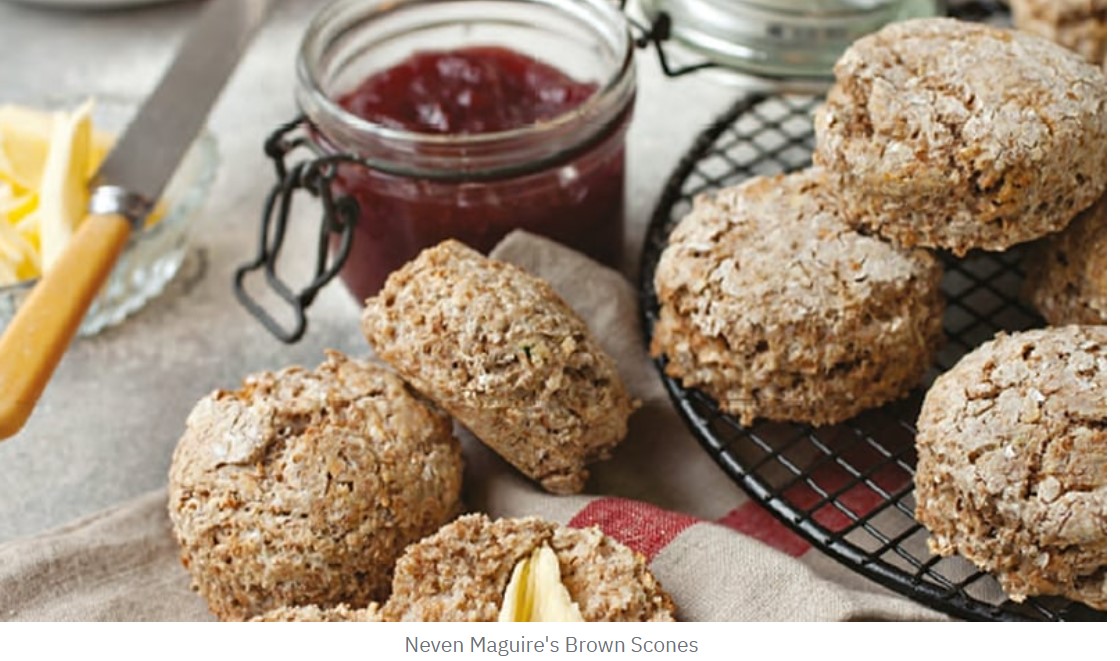
Brown scones are full of roughage and great for breakfast. And here is a good tip: you can make this mixture, shape the scones and freeze them. You can then cook the scones straight from the freezer to the oven – just give them an extra 5 minutes and make sure the scones are golden brown and well-risen.
Ingredients
Rapeseed or sunflower oil, for greasing
225g (8oz) self-raising flour, plus extra for dusting
225g (8oz) coarse wholemeal flour
½ tsp baking soda
½ tsp salt
50g (2oz) wheat bran
25g (1oz) butter, diced and at room temperature
1 tsp light muscovado sugar
300ml (½ pint) buttermilk, plus a little extra if necessary
Method
Preheat the oven to 220°C (425°F/gas mark 7). Line 2 baking sheets with parchment paper and grease the paper with a little oil.
Sift the flours, baking soda and salt into a bowl. Tip in the bran left in the sieve and stir it in with the wheat bran. Rub in the butter with your fingertips until it is evenly dispersed. Stir in the sugar.
Make a well in the centre of the dry ingredients and add the buttermilk and golden syrup. Using a large spoon, mix gently and quickly until you have achieved a smooth, not-too-sticky dough. Add a little more buttermilk if necessary, until the dough binds together without being sloppy.
On a lightly floured surface, roll out the dough to a 2.5cm (1in) thickness and cut into rounds with a 6cm (2½in) plain cutter. Arrange on the lined baking sheets and bake for 10-15 minutes, until golden brown and well-risen.
Serve with butter or lightly whipped cream and strawberry jam.
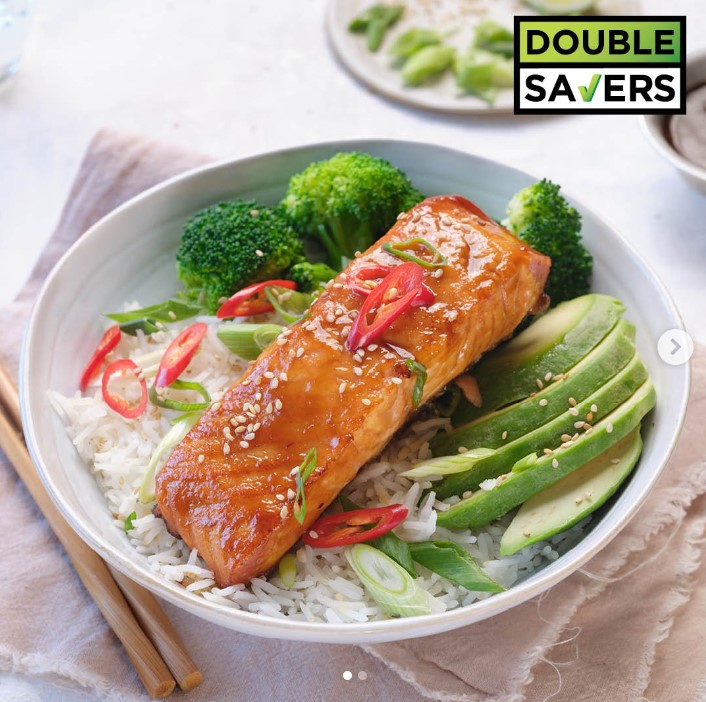
To serve: Basmati rice, cooked 1 red chilli, sliced (optional) 1 spring onion, sliced (optional)
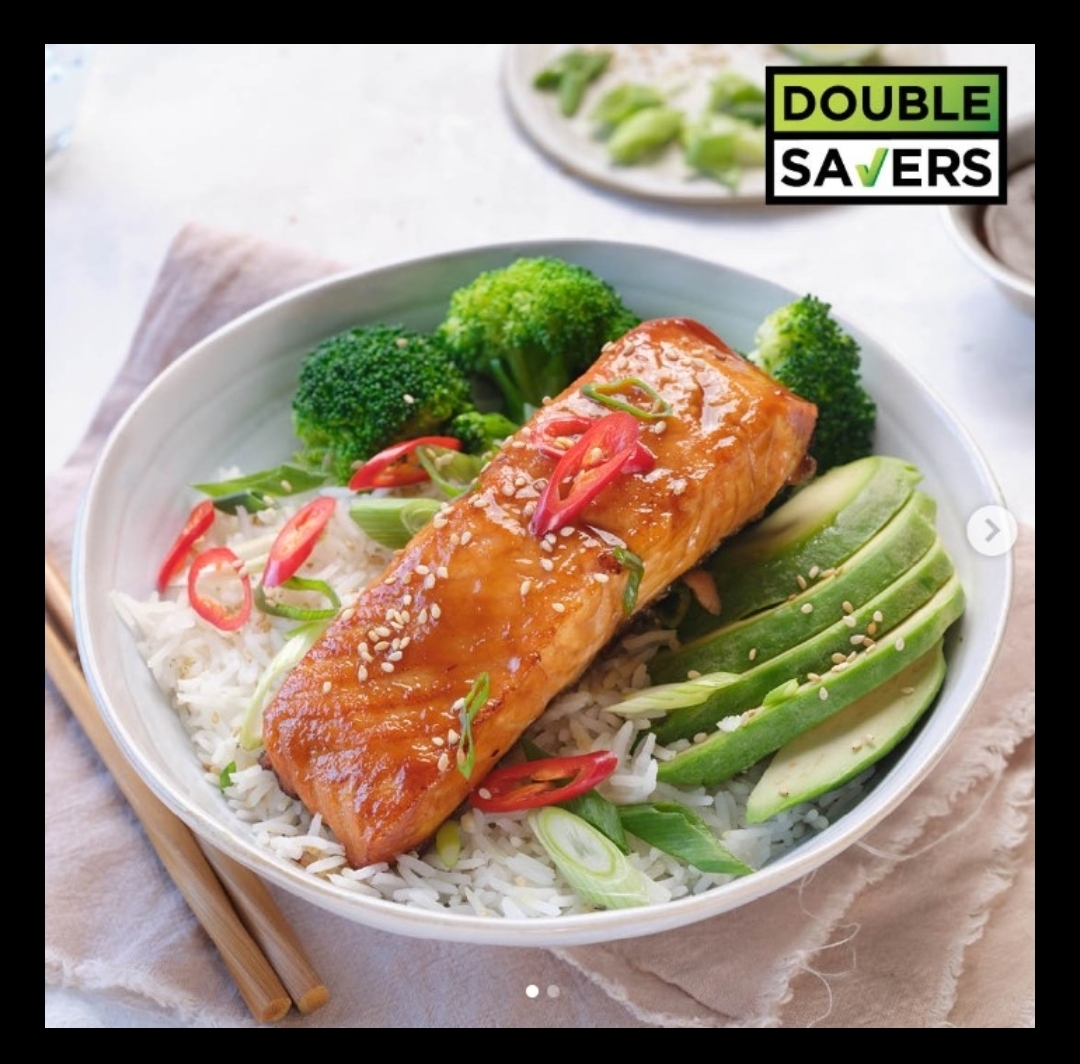
Method Marinate the salmon fillets for 10 minutes before cooking. Heat a frying pan over medium heat and add in the oil. Once hot, brush most of the marinade from the salmon and cook skin side down on the pan for 3 minutes. Flip and cook for another 3 minutes. Remove from the pan and pour the remaining teriyaki sauce into the pan and cook for 2 minutes on a low heat. Meanwhile, steam or boil the broccoli until al dente. Serve the salmon on a bed of basmati rice along with the broccoli and avocado. Drizzle over with remaining sauce and garnish with chilli slices and spring onion.4d
We have partnered up with @sabarestaurantdublin to create our new @simplybetterds Thai Food range. Watch our brand ambassador @nevenmaguire learn how to make this delicious Phad Thai with Chef Yo. Find the full recipe below and shop the ingredients in your local @dunnesstores.
Method: 1. Soak the noodles in cold water until soft, about 30 minutes, then rinse under cold water and keep to one side. 2. Bring a wok to a medium to high heat, add the oil, then the chicken and stir for 2 minutes before adding the prawns and stir for another minute. 3. Bring the chicken and prawn to one side of the wok. Add the remaining oil and the beaten eggs. 4. Stir quickly and mix the egg with the chicken and prawns. 5. Add the noodles, stir for 1 minute until the noodles start to soften. 6. Then add the sauce and stir well to cover the noodles. 7. Add the bean sprouts and spring onions. Toss them through quickly for just 30 seconds to make sure the vegetables remain crunchy. 8. Serve in warmed bowls with a sprinkle of the crushed peanuts, fried shallots and dried chillies.2d
Cabbage often—and unfairly—gets overlooked, with flashier veggies and protein-dense superfoods getting all the attention. But as far as nutritional food options go, the leafy green is pretty hard to beat. A staple in different cuisines (American coleslaw! Middle Eastern malfouf! Chinese suan la bai cai!), cabbage has been a longtime favorite amongst global chefs.
“Much of this stems from its versatility,” Woldy Reyes, chef and author of the cookbook In the Kusina: My Seasonal Filipino Cooking, tells Vogue. “We are seeing a growing trend of chefs utilizing it as a centerpiece, such as cabbage steaks, rather than as a side dish. The culinary appeal has never been stronger.”
“Its popularity stems from its ability to transform,” adds Tatiana Mora, chef of plant-based Michelin star restaurant Mita. “It can be eaten raw, fermented, steamed, roasted, or sautéed, consistently providing flavor, texture, and nutrition. I love it because it is a noble vegetable that grows easily, keeps well, and can be used almost entirely, making it perfect for a conscious and respectful approach to cooking.”
It’s accessible, easy to cook, and delicious. Here are all the reasons cabbage deserves a seat at your table (get it?) in 2026.
What is cabbage?
Cabbage is a leafy green that is part of the brassica plant family (which also includes broccoli, cauliflower, brussels sprouts, and kale), says Amy Shapiro, RD, registered dietitian and founder of Real Nutrition. It comes in several varieties, but the most common ones you’ll see are green, red (or purple), and savoy. What makes cabbage different from other leafy greens is its density and durability. “It’s heartier, stores longer, and holds up well to cooking, fermenting, and shredding,” Shapiro says. “Nutritionally, it shares many benefits with other cruciferous vegetables, but it’s often milder in flavor and more versatile across cuisines.”
The Benefits
Besides its versatility, one of the main benefits of cabbage is its many nutrients. Shapiro lists other main benefits of the leafy green:
Supports Gut Health
Shapiro says that, because cabbage contains fiber and other compounds that support digestion, eating this leafy green can benefit the gut bacteria and boost gut health.
Anti-Inflammatory Properties
Cabbage is also rich in antioxidants and phytonutrients that studies have shown can reduce inflammation, she says.
Boosts Heart Health
Along with fiber, cabbage has potassium, which supports healthy cholesterol levels and blood pressure. Cabbage also has vitamin K, which is essential for blood clotting (and bone health). Shapiro points to red cabbage in particular, which she says contains antioxidants called anthocyanins that studies have shown can improve brain and heart health.
Regulates Blood Sugar
Cabbage is low in calories and carbs while being high in fiber, which can help stabilize glucose levels in the body.
‘Give your pancakes a French, Australian or American twist with Rachel Allen’s delicious recipes’
“If you’re looking for a new take on this age-old recipe, try a crepe with banana, salted caramel and cream, wholemeal pikelet with blueberry compote, American pancake with maple syrup and rashers, or buckwheat blini with salmon and creme fraiche
The cooking of pancakes dates way back to prehistoric times where batters made from stoneground flour and water were cooked over fire. Sometimes leavened with yeast and other raising agents, pancakes can take on many slightly dissimilar guises. Essentially flat cakes, pancakes in France are thin and sometimes a little crisp around the edges as the name crepe would suggest: like the thin fabric with a wrinkled surface. Serve with this salted caramel sauce recipe, below, as well as banana slices and softly whipped cream. Once made, the sauce will keep for a month or more. It gets thicker in the fridge so just reheat to serve.”
4 cups ½-inch cubes peeled butternut squash (1½ pounds; from a 2¼-pound whole squash, if that’s where you’re starting from)
1½ teaspoons kosher salt
½ teaspoon freshly ground black pepper
¼ to ½ teaspoon cayenne pepper, to taste
Ingredients, Dressing
2 tablespoons white wine vinegar or apple cider vinegar
1 tablespoon Dijon Mustard
1 tablespoon honey
1 clove garlic, grated or smashed into a paste
¼ teaspoon kosher salt
¼ teaspoon freshly ground black pepper
3 tablespoons olive oil
Ingredients, Salad
5 cups baby arugula
½ cup pomegranate seeds* (see Tip)
¼ cup pumpkin seeds, lightly toasted
½ small red onion, thinly sliced
½ cup crumbled goat cheese (4 ounces)
Freshly ground black pepper
Method
Roast the squash. Preheat the oven to 400°F. Line a rimmed baking sheet with foil and pour 2 tablespoons of the oil on the lined sheet. Place the oiled sheet in the oven (yep, nothing on it) and heat until very hot but not smoking, about 8 minutes.
In a large bowl, toss the squash with the remaining 1 tablespoon oil, the salt, pepper, and cayenne until coated. Using an oven mitt, remove the hot baking sheet from the oven and quickly pour the squash onto the sheet (you should hear some sizzling); take a few extra seconds to make sure the flat sides of the squash are hitting that hot oiled pan. Roast until the undersides are golden, about 15 minutes. Remove the squash from the oven, shake the pan (or flip the squash with tongs if you’re down with OCD, yeah you know me), return to the oven, and roast until the new underside is golden brown,10 to 15 minutes. Let cool to room temp or just warm (so it doesn’t murder the greens when you drop them on).
Make the dressing. In a screw-top jar, shake the vinegar, mustard, honey, garlic, salt, pepper, and oil until it’s creamy. (If it separates, just shake it again.)
Makes the salad. Arrange the arugula on a platter. Top with the roasted squash, pomegranate seeds, and pumpkin seeds. Scatter the onion and goat cheese on top. Drizzle with the dressing to taste and sprinkle with pepper.
*Or finely diced green apple if you can’t find pom seeds.
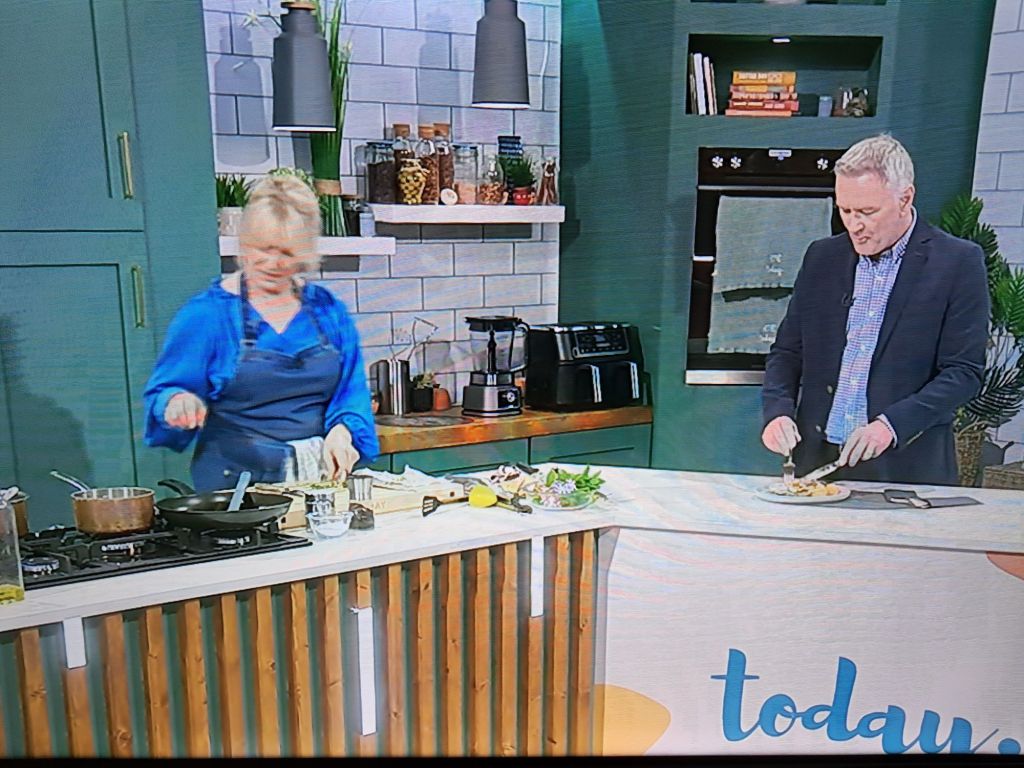
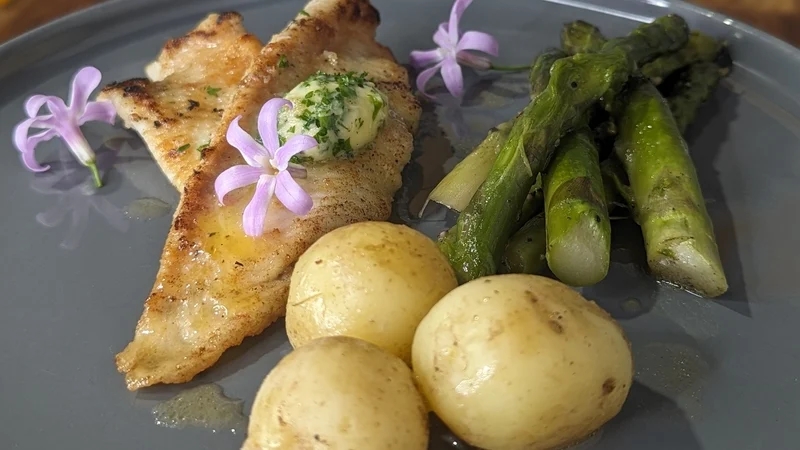
Rachel Allen’s pan-fried fish with herb butter, asparagus, new potatoes.
Ingredients
Serves: 4-6
For the herb butter:
50g soft butter
1 tablespoon chopped herbs such as dill, fennel, chives, parsley
A squeeze of lemon juice
Salt and pepper
For the pan-fried fish:
4 fillets of flat fish, such as John Dory, plaice, sole, brill or turbot, or part of a round fish fillet, like salmon, cod, grey mullet, etc. (allow 175g for a main course and 75g for a starter)
Approximately 4 tablespoons flour
Extra virgin olive oil or soft butter
A pinch of sea salt flakes and freshly ground black pepper
Method
Dry the fish fillets on kitchen paper.
Season on both sides with sea salt flakes and freshly ground black pepper.
Heat a cast iron or non-stick frying pan on a high heat until smoking. Add a dash of olive oil and put in the fish fillets.
OR you can dust the fillets with seasoned flour then spread some soft butter over one side.
Place buttered side in the pan first. Turn when golden on one side, then cook again until golden on the other side.
Place a couple of slices of herb butter over each fillet and serve immediately with asparagus and boiled new potatoes.


 dunnesstoresVerified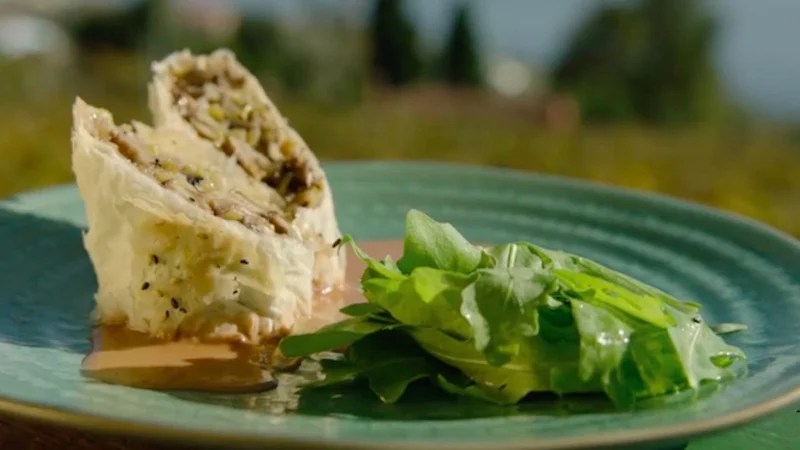











 Foodaware