2026 is the Year of the Cabbage @voguebeauty

January 13, 2026

Cabbage often—and unfairly—gets overlooked, with flashier veggies and protein-dense superfoods getting all the attention. But as far as nutritional food options go, the leafy green is pretty hard to beat. A staple in different cuisines (American coleslaw! Middle Eastern malfouf! Chinese suan la bai cai!), cabbage has been a longtime favorite amongst global chefs.

“Much of this stems from its versatility,” Woldy Reyes, chef and author of the cookbook In the Kusina: My Seasonal Filipino Cooking, tells Vogue. “We are seeing a growing trend of chefs utilizing it as a centerpiece, such as cabbage steaks, rather than as a side dish. The culinary appeal has never been stronger.”

“Its popularity stems from its ability to transform,” adds Tatiana Mora, chef of plant-based Michelin star restaurant Mita. “It can be eaten raw, fermented, steamed, roasted, or sautéed, consistently providing flavor, texture, and nutrition. I love it because it is a noble vegetable that grows easily, keeps well, and can be used almost entirely, making it perfect for a conscious and respectful approach to cooking.”

It’s accessible, easy to cook, and delicious. Here are all the reasons cabbage deserves a seat at your table (get it?) in 2026.

What is cabbage?

Cabbage is a leafy green that is part of the brassica plant family (which also includes broccoli, cauliflower, brussels sprouts, and kale), says Amy Shapiro, RD, registered dietitian and founder of Real Nutrition. It comes in several varieties, but the most common ones you’ll see are green, red (or purple), and savoy. What makes cabbage different from other leafy greens is its density and durability. “It’s heartier, stores longer, and holds up well to cooking, fermenting, and shredding,” Shapiro says. “Nutritionally, it shares many benefits with other cruciferous vegetables, but it’s often milder in flavor and more versatile across cuisines.”

The Benefits

Besides its versatility, one of the main benefits of cabbage is its many nutrients. Shapiro lists other main benefits of the leafy green:

Supports Gut Health

Shapiro says that, because cabbage contains fiber and other compounds that support digestion, eating this leafy green can benefit the gut bacteria and boost gut health.

Anti-Inflammatory Properties

Cabbage is also rich in antioxidants and phytonutrients that studies have shown can reduce inflammation, she says.

Boosts Heart Health

Along with fiber, cabbage has potassium, which supports healthy cholesterol levels and blood pressure. Cabbage also has vitamin K, which is essential for blood clotting (and bone health). Shapiro points to red cabbage in particular, which she says contains antioxidants called anthocyanins that studies have shown can improve brain and heart health.

Regulates Blood Sugar

Cabbage is low in calories and carbs while being high in fiber, which can help stabilize glucose levels in the body.

Boosts Immune System

Shapiro says that cabbage is rich in sulfur-containing compounds to help strengthen your immune system’s defences—and vitamin C, which studies have shown can provide antioxidant protection and support immune health.

Neven’s Recipe’s – Chicken satay with pickled cucumber salad – Marty in the Morning @rte lyric fm

My brother, Kenneth, loves Asian food and he is in no doubt that he is far better than me at cooking it! I don’t disagree. He is proud of this chicken satay dish and often makes it for the family. This dipping sauce also works well with pork, prawns, beef strips or turkey. And remember, kids just love anything on sticks!

SERVES 4

  • 4 tbsp dark soy sauce
  • 2 tsp clear honey
  • 2 tsp medium curry powder
  • 450g (1lb) skinless chicken breast fillets, cut into long strips

FOR THE PICKLED CUCUMBER SALAD:

  • 4 tbsp rice wine vinegar
  • 2 tbsp caster sugar
  • pinch of salt
  • ½ small cucumber, peeled, halved, deseeded and thinly sliced

FOR THE DIPPING SAUCE:

  • 2 tbsp crunchy peanut butter
  • 2 tsp dark soy sauce
  • 1 tsp light brown sugar
  • juice of ½ lime
  • 1 x 160ml (5½fl oz) tin of coconut milk (Thai Gold, if possible)
  • ½ red chilli, deseeded and finely diced
  • 2 tbsp chopped fresh coriander
  • sea salt and freshly ground black pepper

To make the dipping sauce, place the peanut butter in a small pan and stir in the soy sauce, light brown sugar and lime juice. Gradually whisk in the coconut milk and heat gently until you have achieved a smooth sauce. Stir in the chilli and coriander, then leave to cool, stirring occasionally to prevent a skin from forming.

2 Soak 8 x 15cm (6in) bamboo skewers in a shallow dish of cold water for at least 30 minutes. Preheat a griddle pan until it’s smoking hot or light a barbecue.

3 Whisk together the soy sauce, honey and curry powder. Season with pepper and stir in the chicken pieces. Leave to marinate for 2 minutes, then thread the chicken pieces onto the soaked bamboo skewers and arrange on the barbecue. Cook the chicken skewers over medium-hot coals for 4–6 minutes, turning once or twice, until completely tender and cooked through. If using a griddle pan, reduce the heat to medium as soon as you’ve put the skewers on.

4 Meanwhile, to prepare the pickled cucumber salad, place the vinegar in a bowl and stir in the sugar and a good pinch of salt until both have dissolved. Tip in the cucumber, stirring to combine, and set aside to allow the flavours to develop. 5 To serve, arrange 2 chicken satay skewers on each warmed plate. Divide the dipping sauce among individual bowls and place to the side of the skewers. Add the pickled cucumber salad, leaving behind any excess liquid, to serve.

Butter Chicken

Swap your usual takeaway curry for this homemade chicken makhana, which combines marinated chicken with a rich, buttery sauce. This is an authentic Indian curry with its origins in Delhi, where it was first made to use up pieces of leftover tandoori chicken.

Serves 4–6

  • 500g skinless and boneless chicken breasts or thighs
  • juice and finely grated rind of 1 lemon
  • 3 tbsp mild curry seasoning
  • 4 tbsp natural yogurt
  • 3 tbsp sunflower oil
  • 30g butter
  • 2 red onions, thinly sliced
  • 2 garlic cloves, sliced
  • 1 red chilli, seeded
  • 3cm piece fresh root ginger, peeled and sliced
  • 20g fresh coriander
  • 400ml passata (Italian sieved tomatoes)
  • 120ml cream
  • sea salt and freshly ground black pepper

Trim the chicken and cut into bite-sized pieces. Put in a bowl and stir in half the lemon juice with a good pinch of salt. Add 2 tablespoons of the curry seasoning, the yogurt and 1 tablespoon of the oil. Mix to combine, then season generously with pepper. Cover and leave to marinate for at least 1 hour or up to 3 days in the fridge.

Heat the rest of the oil and a knob of the butter in a wok or skillet over a high heat, and quickly sear the marinated chicken in batches until golden brown, transferring with a slotted spoon to a clean bowl as you go. Add the onions to the pan and sauté for 4–5 minutes until they start to caramelise.

Tip in the garlic, chilli and ginger, then add another knob of the butter and sauté for 1–2 minutes. Chop the stalks from the coriander and add them to the pan with the rest of the curry seasoning and another knob of the butter. Toast for a few minutes until very fragrant. Pour the passata into the pan and bring to a simmer, then add the cream and the rest of the lemon juice.

Transfer to a blender and blend until you have a very smooth sauce. Return to the pan and add the chicken with any juices and reheat gently for about 5 minutes until the chicken is cooked through and tender. Season to taste, then fold in the lemon rind with the rest of the butter and the coriander leaves, reserving a few sprigs to garnish. Transfer to bowls and garnish with the coriander sprigs.

SERVE WITH … This mild and creamy curry is sure to please all tastes. Make some Homemade Flatbreads, perhaps brushing them with a little melted butter and sprinkling with black onion seeds. A bowl of Pilau Rice completes the meal, alongside some spiced mango chutney, mint raita and lime pickle.

Crêpes with banana, salted caramel and cream, wholemeal pikelet with blueberry compote @rachelallencooks

rachelallencooks

and

ballymaloecookeryschool

Liked by ma.rcie8679 and others

Organic Salad with Roasted Vegetables, Salad Leaves and Cheese

Bowl of mixed greens, cucumber slices, cherry tomatoes, bell peppers, red onion, shredded carrots, purple cabbage, seeds, and feta cheese

Organic-salad-with-roasted-vegetables

This makes a perfect lunch with some crusty bread.

 Serves 4

Preparation time: 30 mins

Ingredients

  • 1-2 aubergines
  • 8 unpeeled garlic cloves
  • 3 tablesp.olive oil
  • 2 red peppers, halved and deseeded
  • 2 tablesp. balsamic vinegar
  • 4 scallions, finely sliced
  • 8-10 black olives
  • Salt and black pepper
  • Salad leaves, generous handful per person
  • 200g cheese

To Cook

Preheat the oven to Gas Mark 4, 180°C (350°F). Slice the aubergines lengthwise and mix with 6 of the garlic cloves and 1-2 tablespoons of the oil. Spread out on a baking sheet. Season well. Roast until tender – this will take approximately 20 minutes.

Grill the peppers until well blackened. Cover with a tea towel and leave to cool. Then remove the skins and cut into strips.

Whisk the vinegar with the remaining oil in a large bowl, peel and chop the remaining garlic and add to the bowl. Mix in the aubergines and peppers, scallions and olives. Taste for seasoning. Tear up the salad leaves, arrange on a large platter, top with aubergine mixture and sprinkle with cheese.

Serving Suggestions

Serve with crusty bread.


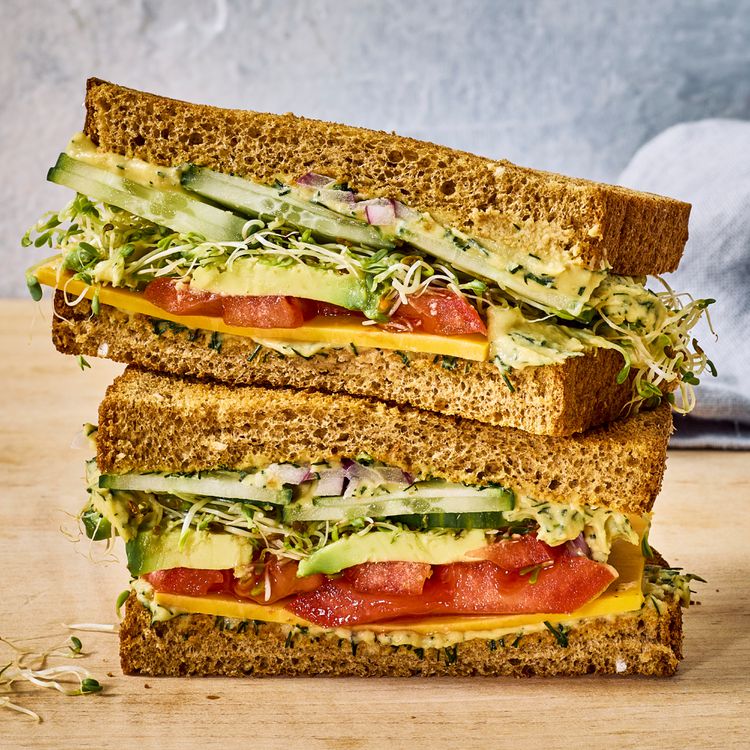
This Cucumber-Avocado-Tomato Sandwich Has 20 Grams of Protein – from EatingWell. A Light and Easy Lunch

This tomato, cucumber and avocado sandwich is the perfect light and easy lunch. With just a few fresh ingredients, you can have a satisfying meal in just 10 minutes. Creamy avocado and hummus provide plant-based protein and healthy fats, while juicy tomatoes and crisp cucumbers bring refreshing crunch and flavor. Layer it all on whole-grain bread for an extra boost of fiber, and you’ve got a quick and wholesome sandwich at the ready!

Refreshing, light and satisfying, our Cucumber-Avocado-Tomato Sandwich is an easy and delicious lunch that will really hit the spot. Every sandwich starts with and needs a good condiment. For this one, we amplify store-bought hummus with the sweet tang of honey mustard and fresh dill for a hit of herby brightness. Then we stack on the fiber-packed veggies: cucumbers and onions give a nice crunch and contrast to the creamy, heart-healthy avocado and the juicy tomato; the alfalfa sprouts add great texture. Cheddar cheese adds bone-boosting calcium and a salty, sharp flavor that complements the fresh veggies perfectly, and hearty toasted whole-wheat bread is the perfect vessel for all these wholesome toppings. Keep reading for our expert tips, including recommendations on swapping out hummus flavors. 

Tips from the EatingWell Test Kitchen

These are the key tips we learned while developing and testing this recipe in our Test Kitchen to make sure it works, tastes great and is good for you too! 

  • Experiment with different flavors of hummus for your spread. Try garlic hummus, dill pickle hummus or even make your own. To prepare a batch of our Classic Hummus, use a food processor and add a handful of ingredients: garlic, chickpeas, lemon juice, olive oil, tahini and salt. Best of all, this flavor-spiked hummus takes just 10 minutes to make!
  • While a chef’s knife can cut cucumbers, a serrated knife is more effective for slicing tomatoes. The serrated edge easily cuts through the skin and flesh without damaging the soft interior.

Nutrition Notes

  • Cucumbers aren’t brimming with the typical vitamins and minerals that you’ll find in many fruits and vegetables, but they are an important vegetable because they contain antioxidant phytonutrients that can help protect against inflammation. They are also more than 95% water, which makes them a hydrating vegetable—great for your skin. 
  • Avocados are known for being high in fat, but it’s the type of fat that your heart loves: monounsaturated fat. Avocados are also brimming with fiber, which has been shown to improve the health of the microbiome, and impacts your health in many ways, including strengthening your immune system, improving cognition and lowering inflammation. 
  • There are few things tastier than a really good tomato, and they are really good for you. Tomatoes are high in vitamin C, which is essential for healthy immune function. They are also high in a carotenoid called lycopene, an antioxidant that helps maintain healthy cells throughout the body, and eating foods with lycopene regularly can help lower your risk of heart disease. 
  • Whole-wheat bread is a heartier choice of bread for this sandwich and you’ll get the benefit of more nutrients and more fiber. Eating more fiber can lead to better digestive health. Whole-wheat bread is also a source of important B vitamins—essential for your working metabolism.

Ingredients

  • ¼ cup plain hummus
  • 1 tablespoon chopped fresh dill
  • 1½ teaspoons honey mustard
  • 2 thin slices whole-wheat bread, toasted
  • 1 (1-ounce) slice sharp Cheddar cheese
  • ½ small tomato, thinly sliced
  • ¼ medium avocado, thinly sliced
  • ¼ cup alfalfa sprouts
  • ¼ cup thinly sliced English cucumber
  • 1 tablespoon thinly sliced red onion
  • Pinch of salt

Directions

  1. Stir ¼ cup hummus, 1 tablespoon dill and 1½ teaspoons honey mustard together in a small bowl until well combined. Spread the hummus mixture on 1 side of each of 2 toast slices. Layer 1 cheese slice, tomato slices, avocado slices, ¼ cup alfalfa sprouts, ¼ cup cucumber and 1 tablespoon red onion over the hummus on 1 toast slice; sprinkle with salt. Top with the remaining toast slice, hummus-side down. Cut the sandwich in half diagonally.

Gratin of haddock with Imokilly cheddar and mustard by Rachel Allen #Ballymaloe

fish-gratin_0


.@rorysfood blackberry and sweet geranium posset #Ballymaloe

Watch How to Cook Well with Rory O’Connell at 8:30pm on Tuesday evenings on RTÉ One.

By Rory O’Connell Celebrity Chef
More from
How to Cook Well, with Rory O’Connell


Watch How to Cook Well with Rory O’Connell at 8:30pm on Tuesday evenings on RTÉ One.
Ingredients
A classic lemon posset or set cream is a simple and lovely thing and my version here with blackberries and sweet geranium leaves is I believe a good and delicious variation on the theme. It is remarkable how easy this is and how without the aid of egg or gelatine, the mixture sets into a tender chilled pudding. I like the possets served straight from the fridge, so nice and chilly. 
I often make this during the winter months using wild blackberries that I have frozen in the late summer or early autumn. If you are using frozen berries, use them straight from the freezer. I never cease to be amazed by the value one gets from a few bags of frozen fruit when fresh local fruit is simply not an option due to the seasons.  
A little softly whipped cream is the perfect accompaniment along with a fresh organic or crystallised rose petal. The combination of rose and blackberry is a marriage made in heaven and I might be tempted to add a few drops of rose water to the cream when whipping. Be careful though as too much rose water will yield a flavour that is too strong and overpowering. The flavour of the rosewater cream should be akin to catching the scent of a rose while walking about the garden – there but almost illusive.
If you do not have the lemon or rose-scented geranium, you can just leave it out. The fragrant leaves do however bring a magical element to the dish. The plants are easily found at good garden centres and can be treated as a house plant living on a bright window-sill or if the weather is mild where you live, they can spend spring, summer and autumn out of doors in a sheltered sunny spot. I can’t imagine not having one of these plants for the ravishing flavour to bring to certain dishes. In fact, it is the sort of magic that one receives from this rather innocuous looking leaf that humbles and mesmerises me and reminds me every time I use it, how astonishing nature is and how fortunate that my career has brought me down this path where I handle these treasures all of the time. Oh, joy.
The possets can be served in little cups or glasses or the prettiest receptacle you like to use. The portions are quite small as this is quite a rich little dish but I always think it is better to be longing for one more spoonful rather than being faced with too much food.
 A thin lacy biscuit such as the Nougatine biscuits would also be good here and I might be tempted to add a few drops of rose water to the cream when whipping. 
Serves
400ml cream
90g caster sugar
5 leaves of rose or lemon scented geranium
100g blackberries
50ml lemon juice.
Method
Place the cream, sugar, geranium leaves and blackberries in a small saucepan and bring to a bare simmer.
Stir the saucepan occasionally to encourage the sugar to dissolve. Maintain that bare simmer for 5 minutes. If the cream boils hard the texture and consistency of the posset will be spoiled. 
Remove the saucepan from the heat and stir in the lemon juice. You will notice the colour of the cream improving dramatically as soon as the lemon juice goes in.
Now strain the cream through a sieve to remove the geranium leaves and at the same time push as much of the blackberries through as possible. 
Pour the strained cream into 8 little cups or glasses and allow to cool before placing in the fridge for 3 hours to set.
The posset will keep perfectly in your fridge for several days. I like to cover them to protect the delicate flavour.
Serve with a little softly whipped cream and if you have them, a fresh or crystallised rose petal and a nougatine biscuit. 

Healthy Salmon Teriyaki Bowl with Avocado

dunnesstores

Verified

Follow

Liked by 

collettefinne and others

  • dunnesstores's profile picturedunnesstoresVerified
  • Healthy ✅ Tasty ✅ Affordable ✅ Try this tasty Salmon Teriyaki Bowl using ingredients from our own label range 😋

    Ingredients:
    1 tbsp sunflower or olive oil
    2 salmon fillets
    100ml teriyaki sauce
    200g broccoli, cut into florets
    1 avocado, sliced

    To serve:
    Basmati rice, cooked
    1 red chilli, sliced (optional)
    1 spring onion, sliced (optional)

    Method
    Marinate the salmon fillets for 10 minutes before cooking. Heat a frying pan over medium heat and add in the oil.
    Once hot, brush most of the marinade from the salmon and cook skin side down on the pan for 3 minutes. Flip and cook for another 3 minutes. Remove from the pan and pour the remaining teriyaki sauce into the pan and cook for 2 minutes on a low heat.
    Meanwhile, steam or boil the broccoli until al dente.
    Serve the salmon on a bed of basmati rice along with the broccoli and avocado. Drizzle over with remaining sauce and garnish with chilli slices and spring onion.4d

Healthy Salmon Teriyaki Bowl with Avocado

dunnesstores

Verified

Follow

Liked by 

collettefinne and others

  • dunnesstores's profile picturedunnesstoresVerified
  • Healthy ✅ Tasty ✅ Affordable ✅ Try this tasty Salmon Teriyaki Bowl using ingredients from our own label range 😋

    Ingredients:
    1 tbsp sunflower or olive oil
    2 salmon fillets
    100ml teriyaki sauce
    200g broccoli, cut into florets
    1 avocado, sliced

    To serve:
    Basmati rice, cooked
    1 red chilli, sliced (optional)
    1 spring onion, sliced (optional)

    Method
    Marinate the salmon fillets for 10 minutes before cooking. Heat a frying pan over medium heat and add in the oil.
    Once hot, brush most of the marinade from the salmon and cook skin side down on the pan for 3 minutes. Flip and cook for another 3 minutes. Remove from the pan and pour the remaining teriyaki sauce into the pan and cook for 2 minutes on a low heat.
    Meanwhile, steam or boil the broccoli until al dente.
    Serve the salmon on a bed of basmati rice along with the broccoli and avocado. Drizzle over with remaining sauce and garnish with chilli slices and spring onion.4d

Cozy, creamy, and full of flavor. This butternut squash risotto blends hearty brown rice with colorful vegetables for a nourishing twist on a classic comfort food. Perfect for family dinners or special occasions. @MayoClinic

Butternut squash risotto is a delightful and nutritious dish that combines the creamy texture of traditional risotto with the wholesome goodness of brown sushi rice and a medley of vibrant vegetables. Perfect for a cozy dinner or a special occasion, enjoy a hearty and healthy meal that will leave you feeling satisfied and nourished.

Servings: 6
Serving Size: 
¾ cup

Nutritional Information Per Serving

  • 171 calories 
  • 5 g total fat
  • 3 g saturated fat 
  • 0 g transfat
  • 0 g monounsaturated fat 
  • 13 mg cholesterol 
  • 362 mg sodium
  • 24 g total carbohydrate 
  • 3 g dietary fiber 
  • 4 g total sugars 
  • 8 g protein

Ingredients 

  • ½ cup uncooked brown sushi rice
  • 1 teaspoon olive oil
  • 1 cup diced onion
  • 4 cups low-sodium chicken stock
  • 1 cup white wine
  • 2 cups roasted butternut squash, chopped
  • 1 cup chopped zucchini
  • ½ cup frozen peas
  • 5 chopped crimini mushrooms
  • 1 tablespoon chopped sage
  • 1 teaspoon chopped thyme
  • ½ cup shredded Asiago cheese
  • 1 tablespoon heavy cream
  • ½ teaspoon kosher salt
  • ½ teaspoon ground black pepper

Directions   

  1. Follow package directions to partially cook the rice for about 40 minutes. Drain excess water and set aside.
  2. Preheat a medium sauté pan to medium-high heat and add olive oil.
  3. Add the onions and sauté until soft.
  4. Add the rice to the pan and sauté with the onions for about 2 minutes, stirring continuously.
  5. Reserve 1/2 cup of stock. Then pour 1/2 cup of stock into sauté pan and let it absorb into the rice.
  6. Stir in 1/2 cup of wine and let it absorb into the rice.
  7. Continue adding stock and wine in 1/2-cup increments, cooking each time until the liquid is absorbed before adding more, about 30 to 45 minutes total.
  8. Add the squash, zucchini, peas, mushrooms, sage and thyme to the pan, and cook until the vegetables are soft, about 3 to 5 minutes.
  9. Add the last 1/2 cup of the stock. Once the stock is absorbed into the rice, add the cheese, cream, salt and pepper; stir well.

Dietitian’s tip:

Traditional risotto is made with uncooked white rice. Brown rice adds fiber and nutrients, but it takes a long time to make risotto this way. That’s why this recipe calls for partially cooking the rice.

Created by the executive wellness chef and registered dietitians at the Mayo Clinic Healthy Living Program.