Friday night Italian pizzas @flahavansoats

flahavans's profile picture

flahavans

No Friday would be complete without a seriously delicious pizza. Check out how easy these gorgeous pizzas are to re-create at home (using our very own Progress Oatlets), and you’ll be making your own Italian fakeaways every Friday night. Ciao! #FlahavansOats

Serves 2 pizza bases|Takes 15 mins

Ingredients:
For the Pizza Bases:
85g Progress Oats
1 large egg white
½ tsp salt
Optional – 1tsp garlic powder, 1 tsp onion powder, 1tbsp grated parmesan or 1tsp nutritional yeast
For the tomato topping:
400g tin chopped tomatoes
2 tbsp tomato purée
1 tsp dried mixed herbs
1 tsp honey
1 tsp sea salt flakes
Couple of grinds of black pepper

Method:
For the Pizza Bases:
Pre-heat the oven 200C
Combine the oats, egg white, salt and season in a high-speed blender and blitz for 2 minutes until completely blended.
Heat a small heavy based frying pan over a medium heat.
Add one tsp of vegetable oil.
Spread half the oat mixture over the pan and cook for 2 minutes until the mixture firms up.
Move the oat base onto a lined baking sheet and spread over the toppings and bake for 5 minutes until the pizza is cooked through

For the tomato topping:

Drain the tinned tomatoes through a sieve over a bowl, pressing with the back of a ladle until about most of the juice has drained.
Tip the sieved tomatoes into a bowl and stir in the tomato purée, herbs, sugar and plenty of salt and pepper.
Pour the tomato mix into a high-speed blender and blitz for 1 minute.

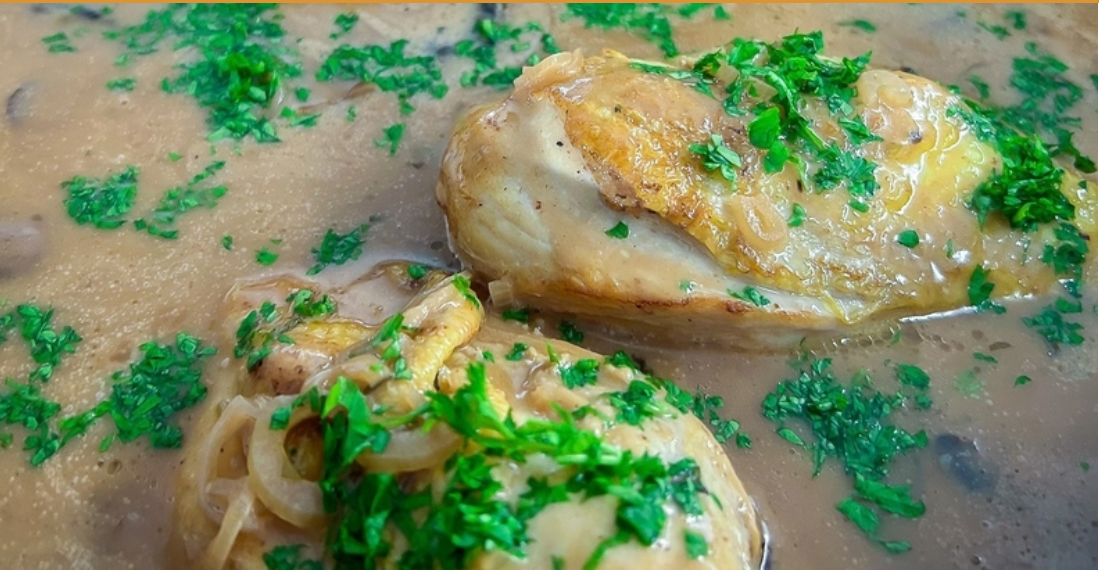
Neven’s chicken sauce lyonnaise with crushed baby potatoes from Neven’s Ulster Food Tour airs Wednesdays on RTÉ One at 8.30pm.

Neven Maguire

By Neven Maguire

Celebrity Chef

Neven’s Ulster Food Tour airs Wednesdays on RTÉ One at 8.30pm.

Ingredients

Serves 4

For The Chicken

· 4 x Quality Assured Cornfed Chicken breasts, skin on

· 150g Chestnut Mushrooms, sliced

· 2 garlic cloves, peeled and crushed

· 2 x Shallots, peeled and finely sliced

· 50ml Madeira Wine

· 75ml White Wine

· 1 tbsp Red Wine Vinegar

· 1 tbsp fresh thyme leave, chopped

· 200ml Beef Stock

· 120ml Double Cream

· Sea salt and freshly ground black pepper


For The Crushed Baby Potatoes

· 1 Packet Irish Charlotte Potatoes

· 6 tbsp Olive Oil

· 6 Garlic Cloves, lightly bashed in their skins

· 1 tbsp rosemary sprigs

· Sea Salt and Freshly Ground Black Pepper

Method

For The Chicken

· Heat a large heavy based saucepan over a medium heat

· Add the rapeseed oil and butter

· Place the chicken into the heat pot skin side down and season the flesh side with sea salt and freshly ground black pepper

· Cook for 3-4 minutes on each side until just sealed

· Remove from the pan and set aside

· Using the same pot, add in the shallots, garlic and mushrooms and sauté for 2-3 minutes, stirring to combine

· Deglaze with the madeira wine, white wine and red wine vinegar

· Allow to reduce slightly

· Add in the chopped thyme and stir

· Add in the beef stock followed by the double cream and stir well to combine everything

· Return the chicken to the pan and nestle it into the sauce

· Cover with a lid and reduce the heat to a simmer

· Cook for 15-20 minutes until the chicken is cooked through and tender

· Finish with chopped parsley


For The Crushed Baby Potatoes

· Preheat the oven to 200°C (400°F/ Gas mark 6).

· Put the potatoes in a large pan with cold salted water. Bring to the boil and cook for 15-20 minutes until tender. Drain and leave to steam dry for a few minutes.

· Arrange the potatoes in a large shallow baking tin, leaving enough space between each one so they have room to spread once smashed. Using the back or a large spoon or potato masher, push down on each of the potatoes to make them crack open.

· Drizzle the olive oil over the potatoes, season with sea salt and black pepper and add the garlic to the tray along with rosemary sprigs.

· Roast for 45 minutes to 1 hour, turning once and removing the garlic, until the potatoes are crisp and golden.

· Arrange on a platter and let everyone help themselves

Chocolate 🍫 hummus @babyledfeeding @dunnesstores

https://www.instagram.com/reel/C6laWw4CnWC/?igsh=Mms3M2h1ajN0bGN6

babyledfeedingand

dunnesstores

Original audio

Liked by danimandt and others

  • babyledfeeding's profile picturebabyledfeeding
  • Last week, I made Chocolate Hummus and I got SO much amazing feedback that I wanted to show you how you could use it as a handy finger food breakfast idea for your kids. These Breakfast Samosas are really good. Filled with my chocolate hummus, sliced banana and crushed seeds for extra goodness…all from @dunnesstores ☀️🍌

    You will want to save this one for later ❤️

    Prep time – 5 minutes
    Cook time – 5 minutes
    8 Mini Samosas and 2 Large

    4 Mini tortilla wraps
    1 large tortilla wrap

    5-6 tbsp Chocolate Hummus
    2 bananas sliced
    2 tbsp finely crushed seeds

    To serve
    Fresh strawberries
    Greek yogurt

    Cut the tortillas in half.

    For the mini tortillas spread about 2 tsps of chocolate hummus (the larger tortillas will use about 1 tbsp of hummus, then add 2 slices of banana the the corner and a sprinkle of nuts. Fold the rounded part up slightly, then fold the corner up and over and tuck in the remaining part into the opening.

    Heat on a pan until golden brown both sides.

    Serve with a side of Greek yogurt and fresh strawberries for extra protein which will keep you and your little ones full for longer.

    #babybreakfast #babyledweaning #breakfast #kidsbreakfast #kidssnack #healthybreakfast #firstfoods #blwinspiration #banana #easysnack

.@nevenmaguire makes simply delicious Pad Thai @dunnesstores with Chef Yo.

https://www.instagram.com/reel/C7AAVU2MowW/?igsh=MWZsNXNwcW1vdHhrdA==

  • dunnesstores's profile picturedunnesstores
  • We have partnered up with @sabarestaurantdublin to create our new @simplybetterds Thai Food range. Watch our brand ambassador @nevenmaguire learn how to make this delicious Phad Thai with Chef Yo. Find the full recipe below and shop the ingredients in your local @dunnesstores.

    Phad Thai
    Ingredients (Serves 2)
    • 200g Rice Stick Noodles
    • 6 Raw Tiger Prawns, shell removed
    • 175g Simply Better Irish Corn Fed Chicken Breast Fillets, thinly sliced
    • 2 Tbsp Simply Better Cold Pressed Rapeseed Oil (for wok)
    • 2 Simply Better Free Range Corn Fed Large Eggs, beaten
    • 1 Tbsp Simply Better Cold Pressed Rapeseed Oil (for eggs)
    • 80g Bean Sprouts
    • 40g Spring Onions, diced 1cm
    • 100g Simply Better Thai Phad Thai Wok Sauce
    • 1 Tbsp Unsalted Roasted Peanuts, crushed
    • 1 Tsp Dried Crushed Chillies
    • 20g Fried Shallots

    Method:
    1. Soak the noodles in cold water until soft, about 30 minutes, then rinse under cold water and keep to one side.
    2. Bring a wok to a medium to high heat, add the oil, then the chicken and stir for 2 minutes before adding the prawns and stir for another minute.
    3. Bring the chicken and prawn to one side of the wok. Add the remaining oil and the beaten eggs.
    4. Stir quickly and mix the egg with the chicken and prawns.
    5. Add the noodles, stir for 1 minute until the noodles start to soften.
    6. Then add the sauce and stir well to cover the noodles.
    7. Add the bean sprouts and spring onions. Toss them through quickly for just 30 seconds to make sure the vegetables remain crunchy.
    8. Serve in warmed bowls with a sprinkle of the crushed peanuts, fried shallots and dried chillies.2d

St. Mary’s Church, Nash, Pembrokeshire, West Wales

ST MARY, NASH, SOUTH PEMBROKESHIRE

Dyfed PRN 4416

 RB No. 3070

 NGR SN 0101 0327

 Listed Building No. 5988

 Grade II listed (1998)

First listed in 1970. Last amended in 1996.

Reason for listing: Listed as an important example of a pre-Ecclescological Movement C19 church, retaining most of its original character.

 SUMMARY

19th century church; 0% pre-19th century core fabric. On site of, and same location as, medieval church.

A single-cell church, small. Consists of chancel/nave, without structural division, 5 bays; 1841-2. Vestry (north), 1 bay, later 19th century?. Construction is in limestone rubble. Slate gable roofs, vestry with slate lean-to. Openings mainly from 1841-2, simple neo-gothic. Western bellcote, single, later 19th century.

(Box pews, west gallery and pulpit from 1841-2.)

Roofs and floors: 1841-2. Finishes: later 19th century.

Condition – good.

Archaeological potential – very good. Medium-deep external drain around 40% of church; former component beyond ?40% of church; no underfloor void; no external memorials significantly close to church.

Structural value (pre 19th century) – poor. 0% pre C19 core fabric.

Group value – low. C19 church; adjacent masonry farm buildings.

Phasing:

Phase 1 – Chancel/nave, 1841-2.

Phase 2 – Vestry (and bellcote), later C19?.

DESCRIPTION

St Mary, Nash, is a single-celled church, of small size. It was entirely rebuilt in 1841-2 on the same site, and in the same location as its predecessor, retaining none of the earlier fabric.

The present church consists of a 5-bayed chancel/nave without structural division, and a single bayed vestry north of the ‘chancel’ west bay. Construction is in limestone rubble; external pointing is largely from the later 19th century and the interior is plastered. Openings are from 1841-2 and simple neo-Gothic; the windows have 4-centred heads and 2 or 3 lights, in a simple ‘Perpendicular’ style. The west door has a 4-centred head; above it lies a parapet with a single bellcote, in darker limestone and probably an addition. The chancel/nave roof is a slated gable; the vestry has a slated lean-to roof.

Richard Fenton visited the earlier church c.1810 and described it as ‘though certainly ancient… neither has, nor appears to have had, any steeple or other ornament whatever, being the meanest religious structure I have seen in this hundred’ (Fenton, 1903, 234). It was apparently single-celled like the present church; a north aisle or chapel, ‘being grown ruinous’, had apparently been demolished a few years previously. According to Lewis, 1833, it was ‘a very ancient structure, remarkable for the rude simplicity of its architecture, and is said to have been erected by one of the earliest Norman proprietors of Upton Castle’. The tithe map of 1840 shows a conventionalised church, in elevation, with a west tower that is entirely spurious (NLW, Nash, 1840).

The church was demolished and rebuilt in its present form in 1841-2, under the local architect George Gwyther, of Pembroke Dock (Cadw, 1996, 11), and was reseated with the present pews, pulpit and gallery (Pembs. R. O., HPR/15/17); the flagged floor and plaster ceiling are contemporary. The vestry had been added by 1874 (Ordnance Survey 1:2500, First Edition, Pembs. Sheet XL.6.), when the bellcote was probably (re)built in its present form. The church was repaired in the 1890s (Cadw, 1996, 11) but the details of this work are not known.

There is a good range of internal fittings from 1841-2 including box pews, a pentagonal pulpit and a west gallery (cf. near-contemporary fittings at the nearby church at Redberth). The ‘chancel’ fittings are later 20th century (Bartosch & Stokes, 1992, 11).

The font has a square bowl which cannot be closely dated.

There is 1 bell (Bartosch & Stokes, 1992, 10).

A medium-deep external drain runs along the south wall. A north aisle/chapel was formerly present. The floor appears to lie directly on the substrate. No external memorials lie significantly close to the church.

Richard Fenton saw a medieval effigy, ‘of a crusader’, lying loose outside the church; apparently it had previously lain within the former north aisle/chapel (Fenton, 1903, 235). It has been moved to Upton Chapel (RCAHM, 1925, 253).

The church was Grade II listed in 1998.

First listed in 1970. Last amended in 1996.

Reason for listing: Listed as an important example of a pre-Ecclescological Movement C19 church, retaining most of its original character.

 SITE HISTORY

 There is no firm evidence for the pre-conquest religious use of the site:-

St Mary, Nash, was a parish church during the post-conquest period (Rees, 1932), of the medieval Deanery of Pembroke. It was appendant to the Manor of Nash (or ‘Esse’) and was assessed at £5 in 1291 (Green, 1913, 214). Its annual value was £6 12s 8½d in 1536 (ibid.). The chapel of Upton was subordinate to Nash parish.

Patronage was vested with the Manor of Upton and Nash in the 16th century, held by the Bowen family (ibid.), but was divided among a number of individuals by the 18th century and in 1833 was in the hands of the Rev. William Evans (Lewis, 1833), when the living was a rectory, with Upton annexed, rated in the king’s books at £6 12s 8½d (ibid.).

In 1998 St Mary, Nash, was a parish church. The living was a rectory, held with Cosheston and Upton (Benefice 583) in the Archdeaconry of St Davids, Rural Deanery of Castlemartin (St Davids, 1997-8).

The dedication is occasionally given as St Catherine (Ordnance Survey 1:2500, First and Second Editions, Pembs. Sheet XL.6.).

SOURCES CONSULTED

 Map Evidence

NLW, Ordnance Survey 1:2500, First Edition, Pembs. Sheet XL.6.

NLW, Ordnance Survey 1:2500, Second Edition, Pembs. Sheet XL.6.

NLW, Parish of Nash, Tithe Map, 1840.

Rees, W., 1932, South Wales and the Border in the XIVth century.

 Church in Wales Records

Bartosch & Stokes, 1992, Quinquennial Report, Nash.

St Davids, 1997-8, Diocesan Year Book.

 Parish Records, Pembrokeshire Record Office, Haverfordwest

HPR/15 – Nash with Upton:-

HPR/15/14 – Churchwarden’s Accounts, 1945-7.

HPR/15/17 – Plan of seating, c.1845.

Unpublished Accounts

Thomas, W. G., 1964, St Mary, Nash (in National Monuments Record, Aberystwyth)

Printed Accounts

Gordon Partnership, 1993, Redundant Religious Buildings in West Wales.

Cadw, 1996, Buildings of Special Architectural or Historic Interest (Cosheston).

Glynne, S. R, 1888, ‘Notes on the Older Churches in the Four Welsh Dioceses’, Archaeol. Cambrensis, Vol. V, Fifth Series.

Green, F., 1913, ‘Pembrokeshire Parsons’, West Wales Historical Records Vol. III.

Fenton, R., 1903 edn., A Historical Tour through Pembrokeshire.

Lewis, S., 1833, A Topographical Dictionary of Wales.

RCAHM, 1925, Inventory: Pembrokeshire.

Salter, M., 1994, The Old Parish Churches of South West Wales.

Updated – February 2022 – PKR[:]

Region

Dyfed

Theme

Ecclesiastic

Cheesy Potato Stacks from @babyledfeeding 🤤 @dunnesstores #dunnesbaby

https://www.instagram.com/reel/C09BEEivfoB/?igshid=NjMyZDczNDVlMg==

dunnesstores

•

Follow

Original audio

Liked by kellyslater10 and others

  • dunnesstores's profile picturedunnesstores
  • You need to make these Christmas Cheesy Potato Stacks from @babyledfeeding 🤤 They are so good and also perfectly safe and soft enough for little babies doing baby led weaning.

    Makes 24 Mini Potato Stacks
    Prep 15 mins
    Cook time 30 mins

    1 kg baby potatoes
    2 cloves garlic
    125ml (1/2 cup) fresh cream
    Small handful grated gruyere cheese (plus an extra 3 tbsp)
    Small handful grated mozzarella
    3-4 sprigs thyme leaves finely chopped
    Small bunch parsley leaves finely chopped
    1 tsp onion powder

    To serve
    Extra finely chopped herbs
    Black pepper to season

    Preheat oven to 180ºC.

    Thinly slice the potatoes and set aside.

    Add the remaining ingredients to a bowl, leaving aside 3 tbsp of the gruyere cheese. Stir well, then add in the sliced potatoes and stir until they are fully coated. You may have to use your hands to separate the slices.

    Stack the potatoes into a mini muffin tin until they are packed to the top.

    Bake in the oven for 25 minutes, then remove from the oven and, top with a little sprinkle of the extra cheese. Return to the oven and bake for an additional 10 minutes until the top is golden brown. Remove from the oven and leave to cool slightly as this keeps the potato slices together.

    Serve with a extra herbs and a sprinkle of fresh pepper.

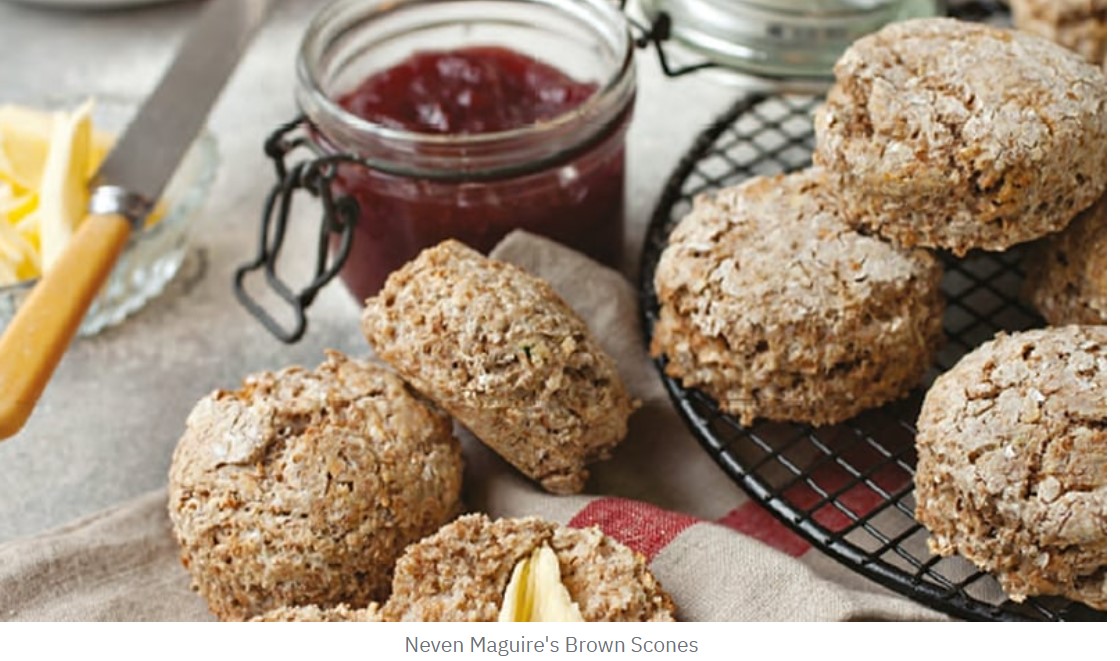
Neven Maguire’s Brown Scones are full of roughage and great for breakfast

Brown scones are full of roughage and great for breakfast. And here is a good tip: you can make this mixture, shape the scones and freeze them. You can then cook the scones straight from the freezer to the oven – just give them an extra 5 minutes and make sure the scones are golden brown and well-risen.

Ingredients

  • Rapeseed or sunflower oil, for greasing
  • 225g (8oz) self-raising flour, plus extra for dusting
  • 225g (8oz) coarse wholemeal flour
  • ½ tsp baking soda
  • ½ tsp salt
  • 50g (2oz) wheat bran
  • 25g (1oz) butter, diced and at room temperature
  • 1 tsp light muscovado sugar
  • 300ml (½ pint) buttermilk, plus a little extra if necessary

Method

  1. Preheat the oven to 220°C (425°F/gas mark 7). Line 2 baking sheets with parchment paper and grease the paper with a little oil.
  2. Sift the flours, baking soda and salt into a bowl. Tip in the bran left in the sieve and stir it in with the wheat bran. Rub in the butter with your fingertips until it is evenly dispersed. Stir in the sugar.
  3. Make a well in the centre of the dry ingredients and add the buttermilk and golden syrup. Using a large spoon, mix gently and quickly until you have achieved a smooth, not-too-sticky dough. Add a little more buttermilk if necessary, until the dough binds together without being sloppy.
  4. On a lightly floured surface, roll out the dough to a 2.5cm (1in) thickness and cut into rounds with a 6cm (2½in) plain cutter. Arrange on the lined baking sheets and bake for 10-15 minutes, until golden brown and well-risen.
  5. Serve with butter or lightly whipped cream and strawberry jam.


By Neven Maguire

Celebrity Chef

More from
Neven Maguire: Home Chef

Strawberry & Lemon Tart @dunnesstores @nevenmaguire Macnean House and Restaurant, Co.Cavan

https://www.instagram.com/reel/CtwhPbAodTH/?igshid=MTc4MmM1YmI2Ng==

Verified

Watch our Simply Better brand ambassador @nevenmaguire prepare this delicious Irish Strawberry & Lemon Tart using our new Simply Better Irish King Strawberries from Clarke’s Fresh Fruit. Find the full recipe below:

Ingredients (Serves 8)
500ml Simply Better Single Source Irish Jersey Cream
1 Jar Simply Better Sicilian Lemon Curd
250g Simply Better Irish King Strawberries, sliced
50g Pistachios
For the Sweet Shortcrust Pastry
175g Plain Flour
100g Butter, diced and chilled
50g Caster Sugar
Pinch of Salt
1 Simply Better Free Range Corn Fed Egg
½ Tbsp. Simply Better Organic Irish Jersey Milk
Zest of ½ Lemon

Method
1. To make the pastry, place the flour, butter, sugar and salt into a food processor and blend for 20 seconds. Add the egg, milk and lemon zest and blend again just until the pastry comes together – do not overwork the dough or the pastry will be tough. Wrap in cling film and chill for 1 hour.
2. Preheat the oven to 180°C (350°F/Gas Mark 4).
3. Roll the pastry out thinly on a lightly floured work surface. Transfer the pastry to a 23cm (9in) fluted loose bottomed flat tin ensuring the pastry is pushed into the edges of the tin. Transfer to the freezer for 10 minutes to firm up.
4. Remove the tart tin from the freezer. Line the pastry with baking parchment and fill with baking beans or rice. Bake for about 15 minutes or until the pastry is firm, then remove the beans or rice and cook for about 5 minutes more, until golden brown. Remove from the oven and allow to cool completely.
5. Whip the jersey cream in a bowl until you achieve soft peaks then fold in the lemon curd. Pour the lemon cream into the cooled pastry case. Arrange the sliced strawberries on top and scatter over the pistachio nuts. Keep chilled until ready to serve.

20h

Japanese milk bread – Shokupan @rachelallencooks #Ballymaloe

rachelallencooks's profile picture

rachelallencooks

Verified

ballymaloecookeryschool's profile picture

Liked by 

ballymaloecookeryschool and others

  • rachelallencooks's profile picturerachelallencooksVerifiedHappy Homemade Bread Day 🍞

    Japanese milk bread – Shokupan

    This is a Japanese tear-and-share loaf of bread with the most wonderful pillowy soft texture. It’s inspired by the Yudane and Tangzhong method where a little bit of flour and water or milk (both in this case) are cooked together to make a white sauce before mixing in the remaining ingredients. This method pre-gelatinises the starch in the flour allowing it to absorb more liquid, giving you a super-light loaf that stays fresh for longer as it retains the moisture.

    It also is divine with cinnamon, cardamom,dried fruit and/or candied peel added as a sweet treat.

    Here’s the recipe 👇🏽 below in Comments in 2 parts! Happy baking 🧡

    This bread can be made so easily using a Thermomix @thermomixukandireland too!Edited · 3h
  • rachelallencooks's profile picturerachelallencooksVerifiedThis quantity will make one 23 cm tear-and-share loaf.

    50g water
    50g milk
    15g strong white flour

    375g strong white flour
    15g milk powder
    25g caster sugar
    1 teaspoon salt
    115g milk
    1 egg, beaten
    25g fresh yeast or 12g dried yeast
    50g butter, melted

    Pour the water and the milk into a small saucepan and bring to the boil. Add in the 15g of flour & cook, whisking all the time, over the heat for a couple of minutes until the liquid has thickened to a white sauce. Tip the white sauce into a bowl & cool.
    Place the 375g of strong white flour in a mixing bowl, or the bowl of an electric food mixer (with the dough hook attached) ) with the milk powder, the sugar & the salt, & mix.
    Now place the milk in a separate bowl & add in the beaten egg, the yeast,the melted butter & the white sauce. Stir then pour all of this liquid into the dry ingredients & mix to a dough. Knead for 8-10 minutes by hand or in the machine until you have a smooth and almost springy dough, don’t add flour while you’re kneading, the dough is supposed to be slightly sticky. When I’m using a stand mixer for this I scrape down the sides of the bowl a couple of times during kneading.
    When the dough has been kneaded enough it will be smooth on the outside. Press it with a floured finger and the dent that you make with your finger should spring back a little bit.
    Place the dough into a bowl that’s large enough to take the dough when doubled in size (or leave it in the stand mixer bowl) & cover the bowl with a clean tea towel or a plate. Place it somewhere warm, not above 45’C, or just standing on the counter in your kitchen and allow the dough to double in size, this may take 2 hours. If you wish you can place the covered bowl of dough in the fridge overnight.
    When the dough has doubled in size, using a floured fist, punch the dough down to knock it back then knead it for just 1 minute.
    Brush a 23cm spring-form tin with melted butter, then dust with flour.
    Divide the dough into 8 equal pieces, each weighing about 90g. Keep all dough covered with a clean tea towel while you work with one ball of dough. On a very lightly floured work surface, place one ball of dough.2 likesReply
  • rachelallencooks's profile picturerachelallencooksVerifiedOn a very lightly floured work surface, place one ball of dough. Fold the edges, all the way round, into the centre of the ball of dough, squashing it down in the centre as you go. Turn the ball over so that the folded side is on the underside and the smooth side is on top. Roll the ball gently under the palm of your hand to make a round roll then place into the prepared tin. Repeat with all the other balls of dough so that you end up with 7 around the sides, spaced apart, and one ball in the centre. Now cover with the tea towel again and place on the worktop or somewhere a little warmer, again not above 45’C , and allow to rise again until almost doubled in size, about 35-45 minutes.
    Preheat an oven to 200’C. The dough is ready when you make a little dent with a floured finger and it doesn’t spring back. Also, the balls of dough should have joined together at this stage. Whisk the egg with a pinch of salt and brush very gently over the top of the risen bread. Place the bread in the lower part of the preheated oven to bake for 30-40 minutes. The dough, out of the tin, should sound hollow when you tap it on the base. If you wish you can bake the bread out of the tin for the last 5 minutes of cooking time. Place on a wire rack to cool.2 likesReply
  • leanwithlesleyLooks delicious, reminds me of your ciabatta/tabata 😂❤️Reply
  • View replies (1)

Satay Style Baked Chicken recipe @nevenmaguire @dunnesstores

https://www.instagram.com/reel/C_gZayaqDGE/?igsh=MW4ycmcycTAyNG5ndw==

dunnesstores

Original audio

Liked by spinaelizete and others

  • dunnesstores
  • This Satay Style Baked Chicken recipe from our brand ambassador @nevenmaguire is perfect for feeding the whole family. Find the full recipe below and shop the ingredients in your local @dunnesstores

    Ingredients (Serves 4)
    2 Tbsp. Simply Better Thai Yellow Curry Paste
    1 Can Simply Better Thai Coconut Milk
    4 pieces Simply Better Palm Sugar
    2 packets Simply Better Irish Corn Fed Chicken Thigh Fillets, trimmed
    1 Jar Simply Better Double Roasted Smooth Peanut Butter
    2 Tbsp. Simply Better Irish Made Soy & Ginger Sauce
    2 Tbsp. Simply Better Irish Made Sweet Chilli Sauce
    2 Limes, 1 juiced & 1 cut into wedges
    2 packets Simply Better Irish Corn Fed Chicken Thighs
    1 Simply Better Irish Red Chilli, cut into rings
    Handful Fresh Coriander leaves
    Simply Better Organic Thai Jasmine Rice, to serve

    Method
    Put the curry paste in a shallow dish with half of the coconut milk and crumble in two pieces of the palm sugar. Mix with a fork to form a smooth paste, then add the chicken and mix well to combine. Cover with cling film and leave to marinate for at least 1 hour, although the longer the better. Remove from the fridge about 20 minutes before you plan to cook it.

    To make the peanut-coconut sauce, add the peanut butter with the soy & ginger sauce, sweet chilli sauce, lime juice, the remaining palm sugar and coconut milk to a saucepan and stir over a gentle heat to make a smooth sauce. Transfer to a bowl and set aside until needed.

    Preheat the oven to 200°C (400°F/Gas Mark 6). Arrange the chicken on a baking tray and bake for 35-40 minutes until the chicken is cooked through and golden brown. Remove from the oven and arrange on a platter, then scatter over the fresh chilli and coriander. Tuck in the lime wedges and serve straight to the table with the rice and peanut-coconut sauce for dipping.

    NEVEN’S TOP TIP

    To make this an easy family tray bake, add a packet of baby potatoes that you’ve halved and tossed in a little oil to the chicken before roasting.