
Come and explore over 50 stalls of artisan food produce, craft, art and sustainable homewares at the Royal Hillsborough Farmers Market.
Royal Hillsborough Farmers Market returns this Saturday 28 September. With 50 stalls of the finest local and seasonal farm-to-market produce and artisan food from across Lisburn and Castlereagh for you to discover. Guest traders from across Northern Ireland will join them to present a fantastic array of local food, art and artisan crafts.
Food and drink is at the heart of Royal Hillsborough Farmers Market so you can expect to find regeneratively farmed and outdoor reared heritage meats from local farmers. Plus fruit and vegetables, breads, cakes, Irish cheeses, jams, chutneys and pickles, olives, pesto and tapenades, charcuterie, chocolate, coffee, fresh fish, shellfish and smoked salmon.
Stalls will feature foodie favourites to include Kin and Folk, Round House Bakery, Tori’s Bakery, Tom and Ollie, Crawfords Rock Seaweed Company, Royal Hillsborough’s own independent plant nursery, Potter’s Hill Plants will be in attendance.
You’ll also get to browse through stalls from local designers and artists. Plus pick up unique gifts and treats of organic skincare, and sustainable living products.
If you get hungry from browsing the stalls there will be plenty of gourmet street food and speciality coffee from the local food trucks.
For children there will be some fun craft activities, face painting and balloon modelling.
There will be seating on the lawn of the fort to sit, enjoy the market vibes and listen to the live music from local acoustic musicians.
They’d love to see you!
For updates on who is trading at each market, follow the Visit Lisburn Castlereagh social media channels on Facebook, Instagram, TikTok and X and also on their website.
When: Saturday 28 September
Time: 10am-3pm
Place: In the heart of Royal Hillsborough Village, located along The Dark Walk at Hillsborough Fort.
Payments: Most vendors accept card payments but not all.
Parking:
Hillsborough Forest
Ballynahinch St Pay & Display Car Park
For further information on upcoming food and drink events please visit www.visitlisburncastlereagh.com with frequent updates on Lisburn & Castlereagh City Council on Facebook.com/VisitLisburnCastlereagh, Twitter @VisitLisburn and Instagram @visitlisburncastlereagh.
Of course this recipe is great with just parsley but experiment with a combination of soft fragrant herbs sauce as parsley, chives, tarragon or chervil depending on what’s available.
Serves 4
Ingredients
4 x 175g hake fillets, skin on and boned
1 tablesp. olive oil
Salt and freshly ground pepper
50g butter
½ lemon, pips removed
1 tablesp. chopped mixed herbs (parsley, chives and tarragon)
To Cook
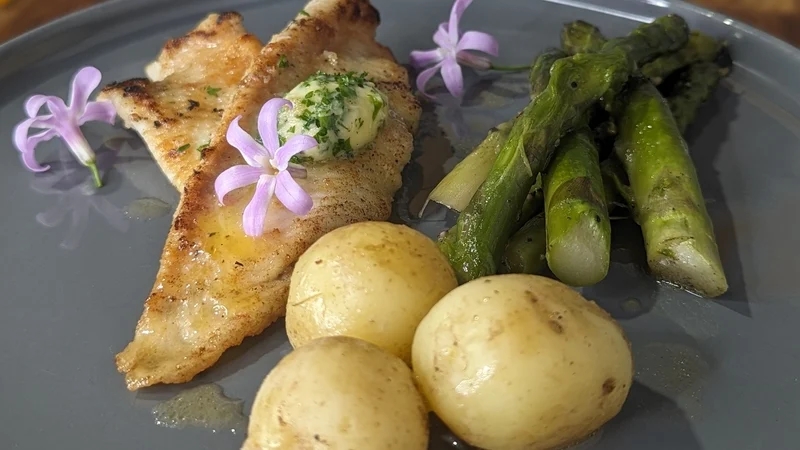
Heat the olive oil in a large frying pan and add the seasoned hake fillets, skin side down. Cook for a couple of minutes until the skin is just beginning to crisp, then add little knobs of butter to the pan around each hake fillet and cook for another couple of minutes until the skin is crisp.
Turn the hake fillets over and cook for another 3-4 minutes until cooked through. This will depend on the thickness of the fillets. Transfer to warmed plates while you make the sauce.
Add the rest of the butter to the frying pan and allow it to gently melt over a moderate heat. When it has melted, add a squeeze of lemon juice and the herbs, swirling to combine. Season to taste. Spoon this sauce over the hake fillets and serve with steamed broccoli and some sautéed new potatoes.
Serving Suggestions
Steamed broccoli and sauté new potatoes
Tips
Above all be careful not to overcook the fish. To check, gently prod the thickest part of the fish with a small knife. If it is cooked, the flesh will look opaque and the flakes will separate easily. If it isn’t done yet, it will still have the translucent look for raw fish.
Other fish you could use: Whiting, haddock or trout fillets
4 cups ½-inch cubes peeled butternut squash (1½ pounds; from a 2¼-pound whole squash, if that’s where you’re starting from)
1½ teaspoons kosher salt
½ teaspoon freshly ground black pepper
¼ to ½ teaspoon cayenne pepper, to taste
Ingredients, Dressing
2 tablespoons white wine vinegar or apple cider vinegar
1 tablespoon Dijon Mustard
1 tablespoon honey
1 clove garlic, grated or smashed into a paste
¼ teaspoon kosher salt
¼ teaspoon freshly ground black pepper
3 tablespoons olive oil
Ingredients, Salad
5 cups baby arugula
½ cup pomegranate seeds* (see Tip)
¼ cup pumpkin seeds, lightly toasted
½ small red onion, thinly sliced
½ cup crumbled goat cheese (4 ounces)
Freshly ground black pepper
Method
Roast the squash. Preheat the oven to 400°F. Line a rimmed baking sheet with foil and pour 2 tablespoons of the oil on the lined sheet. Place the oiled sheet in the oven (yep, nothing on it) and heat until very hot but not smoking, about 8 minutes.
In a large bowl, toss the squash with the remaining 1 tablespoon oil, the salt, pepper, and cayenne until coated. Using an oven mitt, remove the hot baking sheet from the oven and quickly pour the squash onto the sheet (you should hear some sizzling); take a few extra seconds to make sure the flat sides of the squash are hitting that hot oiled pan. Roast until the undersides are golden, about 15 minutes. Remove the squash from the oven, shake the pan (or flip the squash with tongs if you’re down with OCD, yeah you know me), return to the oven, and roast until the new underside is golden brown,10 to 15 minutes. Let cool to room temp or just warm (so it doesn’t murder the greens when you drop them on).
Make the dressing. In a screw-top jar, shake the vinegar, mustard, honey, garlic, salt, pepper, and oil until it’s creamy. (If it separates, just shake it again.)
Makes the salad. Arrange the arugula on a platter. Top with the roasted squash, pomegranate seeds, and pumpkin seeds. Scatter the onion and goat cheese on top. Drizzle with the dressing to taste and sprinkle with pepper.
*Or finely diced green apple if you can’t find pom seeds.
This recipe comes from the original Swiss Bircher muesli, where porridge oats are soaked in a little water, then sweetened with delicious seasonal or dried fruit, and sometimes nuts and seeds too. Strawberries and raspberries work particularly well in this muesli recipe, as does grated apple, to which you could also add a smidgen of ground cinnamon.
The recipe was created in the early 1900s by the Swiss physician Dr Maximillian Bircher-Benner, who knew that a diet rich in nutrients was essential for the recuperation of the patients in his hospital.
Place the porridge oats in a bowl with the water. Allow the oats to sit for 10 minutes, then add in the strawberries. Mash with a fork before adding enough light agave syrup or honey, whichever you’re using, to sweeten the mixture.
Serve the muesli on its own, or with cream and brown sugar; or topped with natural yoghurt and toasted, chopped hazelnuts or almonds.
Serves 2-3.
You will need:
75g (3oz) porridge oats
150ml (5fl oz) water
110g (4oz) strawberries
2-3 teaspoons light agave syrup or honey
To serve, you will need:
Cream and brown sugar (optional)
Natural yoghurt and toasted chopped hazlenuts or almonds (optional)
Place the porridge oats in a bowl with the water. Allow the oats to sit for 10 minutes, then add in the strawberries. Mash with a fork before adding enough light agave syrup or honey, whichever you’re using, to sweeten the mixture.
Serve the muesli on its own, or with cream and brown sugar; or topped with natural yoghurt and toasted, chopped hazelnuts or almonds.
We have partnered up with @sabarestaurantdublin to create our new @simplybetterds Thai Food range. Watch our brand ambassador @nevenmaguire learn how to make this delicious Phad Thai with Chef Yo. Find the full recipe below and shop the ingredients in your local @dunnesstores.
Method: 1. Soak the noodles in cold water until soft, about 30 minutes, then rinse under cold water and keep to one side. 2. Bring a wok to a medium to high heat, add the oil, then the chicken and stir for 2 minutes before adding the prawns and stir for another minute. 3. Bring the chicken and prawn to one side of the wok. Add the remaining oil and the beaten eggs. 4. Stir quickly and mix the egg with the chicken and prawns. 5. Add the noodles, stir for 1 minute until the noodles start to soften. 6. Then add the sauce and stir well to cover the noodles. 7. Add the bean sprouts and spring onions. Toss them through quickly for just 30 seconds to make sure the vegetables remain crunchy. 8. Serve in warmed bowls with a sprinkle of the crushed peanuts, fried shallots and dried chillies.2d
My brother, Kenneth, loves Asian food and he is in no doubt that he is far better than me at cooking it! I don’t disagree. He is proud of this chicken satay dish and often makes it for the family. This dipping sauce also works well with pork, prawns, beef strips or turkey. And remember, kids just love anything on sticks!
SERVES 4
4 tbsp dark soy sauce
2 tsp clear honey
2 tsp medium curry powder
450g (1lb) skinless chicken breast fillets, cut into long strips
FOR THE PICKLED CUCUMBER SALAD:
4 tbsp rice wine vinegar
2 tbsp caster sugar
pinch of salt
½ small cucumber, peeled, halved, deseeded and thinly sliced
FOR THE DIPPING SAUCE:
2 tbsp crunchy peanut butter
2 tsp dark soy sauce
1 tsp light brown sugar
juice of ½ lime
1 x 160ml (5½fl oz) tin of coconut milk (Thai Gold, if possible)
½ red chilli, deseeded and finely diced
2 tbsp chopped fresh coriander
sea salt and freshly ground black pepper
1 To make the dipping sauce, place the peanut butter in a small pan and stir in the soy sauce, light brown sugar and lime juice. Gradually whisk in the coconut milk and heat gently until you have achieved a smooth sauce. Stir in the chilli and coriander, then leave to cool, stirring occasionally to prevent a skin from forming.
2 Soak 8 x 15cm (6in) bamboo skewers in a shallow dish of cold water for at least 30 minutes. Preheat a griddle pan until it’s smoking hot or light a barbecue.
3 Whisk together the soy sauce, honey and curry powder. Season with pepper and stir in the chicken pieces. Leave to marinate for 2 minutes, then thread the chicken pieces onto the soaked bamboo skewers and arrange on the barbecue. Cook the chicken skewers over medium-hot coals for 4–6 minutes, turning once or twice, until completely tender and cooked through. If using a griddle pan, reduce the heat to medium as soon as you’ve put the skewers on.
4 Meanwhile, to prepare the pickled cucumber salad, place the vinegar in a bowl and stir in the sugar and a good pinch of salt until both have dissolved. Tip in the cucumber, stirring to combine, and set aside to allow the flavours to develop. 5 To serve, arrange 2 chicken satay skewers on each warmed plate. Divide the dipping sauce among individual bowls and place to the side of the skewers. Add the pickled cucumber salad, leaving behind any excess liquid, to serve.
Butter Chicken
Swap your usual takeaway curry for this homemade chicken makhana, which combines marinated chicken with a rich, buttery sauce. This is an authentic Indian curry with its origins in Delhi, where it was first made to use up pieces of leftover tandoori chicken.
Serves 4–6
500g skinless and boneless chicken breasts or thighs
juice and finely grated rind of 1 lemon
3 tbsp mild curry seasoning
4 tbsp natural yogurt
3 tbsp sunflower oil
30g butter
2 red onions, thinly sliced
2 garlic cloves, sliced
1 red chilli, seeded
3cm piece fresh root ginger, peeled and sliced
20g fresh coriander
400ml passata (Italian sieved tomatoes)
120ml cream
sea salt and freshly ground black pepper
Trim the chicken and cut into bite-sized pieces. Put in a bowl and stir in half the lemon juice with a good pinch of salt. Add 2 tablespoons of the curry seasoning, the yogurt and 1 tablespoon of the oil. Mix to combine, then season generously with pepper. Cover and leave to marinate for at least 1 hour or up to 3 days in the fridge.
Heat the rest of the oil and a knob of the butter in a wok or skillet over a high heat, and quickly sear the marinated chicken in batches until golden brown, transferring with a slotted spoon to a clean bowl as you go. Add the onions to the pan and sauté for 4–5 minutes until they start to caramelise.
Tip in the garlic, chilli and ginger, then add another knob of the butter and sauté for 1–2 minutes. Chop the stalks from the coriander and add them to the pan with the rest of the curry seasoning and another knob of the butter. Toast for a few minutes until very fragrant. Pour the passata into the pan and bring to a simmer, then add the cream and the rest of the lemon juice.
Transfer to a blender and blend until you have a very smooth sauce. Return to the pan and add the chicken with any juices and reheat gently for about 5 minutes until the chicken is cooked through and tender. Season to taste, then fold in the lemon rind with the rest of the butter and the coriander leaves, reserving a few sprigs to garnish. Transfer to bowls and garnish with the coriander sprigs.
SERVE WITH … This mild and creamy curry is sure to please all tastes. Make some Homemade Flatbreads, perhaps brushing them with a little melted butter and sprinkling with black onion seeds. A bowl of Pilau Rice completes the meal, alongside some spiced mango chutney, mint raita and lime pickle.
When you think of bananas, you probably imagine the ripe, sweet ones. But raw bananas—the unripe variety—are just as powerful when it comes to health benefits. Unlike their sweet friends, they’re packed with resistant starch, fibre, and essential nutrients that make them a game-changer for digestion, weight management, and overall health.
From supporting gut health to keeping blood sugar in check, the benefits of raw bananas are seriously underrated. In this blog, we’ll discuss the banana’s nutritional value, top health benefits, and the best ways to include it in your diet.
What Are Raw Bananas?
Raw bananas are merely unripe green bananas that are starchier, tougher, and less sweet than bananas when they are ripe. They’re popular in Indian, Thai, and Caribbean cooking, usually cooked into flavorful dishes, stir-fries, or even fried as chips.
What makes them special? It’s the amazing nutrients in raw bananas. The banana’s raw nutrition consists of:
Resistant starch – A special fibre that enhances digestion and aids in weight loss.
Potassium – Sustains muscle and heart function.
Vitamin C – Increases immunity and skin.
Vitamin B6 – Required for brain function and metabolism.
Magnesium – Aids muscle repair and bone development.
With so many nutrients in raw bananas, it’s little wonder that the benefits of eating raw bananas translate to numerous areas of health.
15 Health Benefits of Raw Bananas
Below are 15 awesome health benefits of raw bananas and why you should consume raw bananas daily:
1. Promotes Gut Health
One of the greatest benefits of raw bananas is that they enhance digestion. The resistant starch in raw bananas serves as a prebiotic, i.e., it provides the good bacteria in your stomach. These beneficial bacteria are responsible for food breakdown, nutrient absorption, and inhibiting bloating, gas, and constipation. [1] A proper gut microbiome also enhances immunity and inhibits digestive disorders like IBS (Irritable Bowel Syndrome).
2. Promotes Weight Loss
When dieting for weight reduction, raw bananas are to your rescue. The fibre and resistant starch content of raw bananas keep you satiated for longer, doing away with unwanted snacking. As opposed to ripe bananas, which contain more sugar, raw bananas contain complex carbohydrates, which get digested slowly, ensuring constant metabolism. Raw bananas also suppress insulin surges, leading to fat storage.
3. Regulates Blood Sugar Levels
For insulin-resistant individuals or diabetics, raw bananas are a smart food choice. The nutrients in raw bananas contain resistant starch, which does not break down the carbohydrates immediately. This results in a slow release of sugar into the bloodstream, thus avoiding sudden peaks and dumps. Eating them regularly enhances the sensitivity of insulin, allowing the body to control blood sugar levels naturally.
4. Improves Heart Health
Raw bananas are rich in potassium, which is a mineral that assists in maintaining blood pressure. Potassium controls the body’s sodium to avoid high blood pressure and also lightens the workload of the heart. Raw banana nutrients also control healthy cholesterol levels by lowering LDL (bad cholesterol) and raising HDL (good cholesterol), lowering the risk of stroke and heart disease. [2]
5. Controls Digestive Health
If you have digestive problems, incorporating raw bananas into your diet can be magical. High fibre content ensures smooth digestion and reduces the risk of constipation. Meanwhile, their resistant starch behaves like a natural equaliser, calming the digestive tract and warding off diarrhoea and bloating. Additionally, they are rich in tannins, which possess gentle astringent characteristics that cure loose stools. [3]
6. Enhances Insulin Sensitivity
Insulin sensitivity refers to how your cells absorb insulin and utilise glucose to produce energy. Insulin resistance is a primary cause of Type 2 diabetes. It has been found that raw bananas contain resistant starch, and consuming them makes one more insulin sensitive, thus adding them to the list as an ideal product for a diet-balanced diabetic life. [4] Regular consumption is said to fight insulin resistance and support the improved control of blood sugar levels.
7. Strengthens Bones
Raw bananas are rich in magnesium, a mineral that promotes calcium absorption and bone density. Raw bananas are also beneficial for preventing osteoporosis and ensuring healthy bones during old age. Magnesium has the function of contracting and relaxing muscles and hence is required for bone and muscle health in general.
8. Reduces Inflammation
Inflammation is the cause of most chronic conditions, such as arthritis, heart disease, and even cancer. [5] Raw bananas are a storehouse of antioxidants and vitamin C, which fight oxidative stress and reduce inflammation in the body. Raw bananas protect the body from cell damage by fighting free radicals, slowing down ageing, and making the body healthier.
9. Stimulates Brain Function
Raw bananas can also stimulate the brain. They contain vitamin B6, which is important for the synthesis of neurotransmitters such as serotonin and dopamine. These brain chemicals control mood, sleep, and thinking. Raw bananas can improve memory, focus, and overall mental health and cut the risk of neurological disorders. [6]
10. Helps Control Diarrhoea
Among the main benefits of eating raw bananas is that a raw banana helps relieve diarrhoea effectively. Raw bananas have high levels of pectin and tannins that work to remove excess water content from the intestines, compacting loose motions. Their electrolytes are also lost and have to be restored in the process. This explains why raw bananas have been particularly advocated as an unprocessed, organic remedy to deal with diarrhoea according to customary medicinal practices.
11. Keeps Kidney Stones Away
Kidney stones occur when calcium and other minerals tend to deposit themselves in the kidneys. The presence of potassium in raw bananas serves to prevent that by ensuring excessive calcium is being removed through the urine rather than deposited and forming stones. The magnesium in them also serves to maintain healthy kidneys and curb the risk of urinary tract infections (UTIs).
12. Offers Long-Term Energy
Unlike energy-crushing candies, raw bananas are a long-lasting source of energy. Their slow-digesting complex carbohydrates deliver energy throughout the day. This is a perfect pre-workout food since it provides you with the energy you require without overdriving your blood sugar levels.
13. Supports Skin Health
Raw bananas are beneficial for your skin as well! Antioxidants and vitamin C in raw bananas fight off free radicals, preventing premature ageing, keeping your skin shining and firm, and triggering skin elasticity and healing due to the production of collagen. Mashed raw bananas applied as a face pack can calm acne, redness, and dryness.
14. Aids Muscle Recovery
If you are getting muscle cramps or pain after exercising daily, raw bananas can be your resort. Raw bananas contain magnesium and potassium, which have a significant role in repairing muscles by inhibiting inflammation and cramps. Sports athletes and health-conscious people eat raw bananas to quicken recovery after exercise and enhance the functioning of muscles.
15. Naturally Gluten-Free
Raw bananas are a very good substitute for normal grains for individuals suffering from gluten intolerance or celiac disease. Raw bananas can be converted into gluten-free banana flour and can be consumed as an excellent wheat flour substitute while cooking. Raw bananas are thus a good and versatile source of sustenance for individuals seeking to do away with gluten intake yet achieve the taste of scrumptious and healthy foods.
This recipe comes from the original Swiss Bircher muesli, where porridge oats are soaked in a little water, then sweetened with delicious seasonal or dried fruit, and sometimes nuts and seeds too. Strawberries and raspberries work particularly well in this muesli recipe, as does grated apple, to which you could also add a smidgen of ground cinnamon.
The recipe was created in the early 1900s by the Swiss physician Dr Maximillian Bircher-Benner, who knew that a diet rich in nutrients was essential for the recuperation of the patients in his hospital.
Place the porridge oats in a bowl with the water. Allow the oats to sit for 10 minutes, then add in the strawberries. Mash with a fork before adding enough light agave syrup or honey, whichever you’re using, to sweeten the mixture.
Serve the muesli on its own, or with cream and brown sugar; or topped with natural yoghurt and toasted, chopped hazelnuts or almonds.
Serves 2-3.
You will need:
75g (3oz) porridge oats
150ml (5fl oz) water
110g (4oz) strawberries
2-3 teaspoons light agave syrup or honey
To serve, you will need:
Cream and brown sugar (optional)
Natural yoghurt and toasted chopped hazlenuts or almonds (optional)
Place the porridge oats in a bowl with the water. Allow the oats to sit for 10 minutes, then add in the strawberries. Mash with a fork before adding enough light agave syrup or honey, whichever you’re using, to sweeten the mixture.
Serve the muesli on its own, or with cream and brown sugar; or topped with natural yoghurt and toasted, chopped hazelnuts or almonds.
Butternut squash risotto is a delightful and nutritious dish that combines the creamy texture of traditional risotto with the wholesome goodness of brown sushi rice and a medley of vibrant vegetables. Perfect for a cozy dinner or a special occasion, enjoy a hearty and healthy meal that will leave you feeling satisfied and nourished.
Servings: 6 Serving Size: ¾ cup
Nutritional Information Per Serving
171 calories
5 g total fat
3 g saturated fat
0 g transfat
0 g monounsaturated fat
13 mg cholesterol
362 mg sodium
24 g total carbohydrate
3 g dietary fiber
4 g total sugars
8 g protein
Ingredients
½ cup uncooked brown sushi rice
1 teaspoon olive oil
1 cup diced onion
4 cups low-sodium chicken stock
1 cup white wine
2 cups roasted butternut squash, chopped
1 cup chopped zucchini
½ cup frozen peas
5 chopped crimini mushrooms
1 tablespoon chopped sage
1 teaspoon chopped thyme
½ cup shredded Asiago cheese
1 tablespoon heavy cream
½ teaspoon kosher salt
½ teaspoon ground black pepper
Directions
Follow package directions to partially cook the rice for about 40 minutes. Drain excess water and set aside.
Preheat a medium sauté pan to medium-high heat and add olive oil.
Add the onions and sauté until soft.
Add the rice to the pan and sauté with the onions for about 2 minutes, stirring continuously.
Reserve 1/2 cup of stock. Then pour 1/2 cup of stock into sauté pan and let it absorb into the rice.
Stir in 1/2 cup of wine and let it absorb into the rice.
Continue adding stock and wine in 1/2-cup increments, cooking each time until the liquid is absorbed before adding more, about 30 to 45 minutes total.
Add the squash, zucchini, peas, mushrooms, sage and thyme to the pan, and cook until the vegetables are soft, about 3 to 5 minutes.
Add the last 1/2 cup of the stock. Once the stock is absorbed into the rice, add the cheese, cream, salt and pepper; stir well.
Dietitian’s tip:
Traditional risotto is made with uncooked white rice. Brown rice adds fiber and nutrients, but it takes a long time to make risotto this way. That’s why this recipe calls for partially cooking the rice.