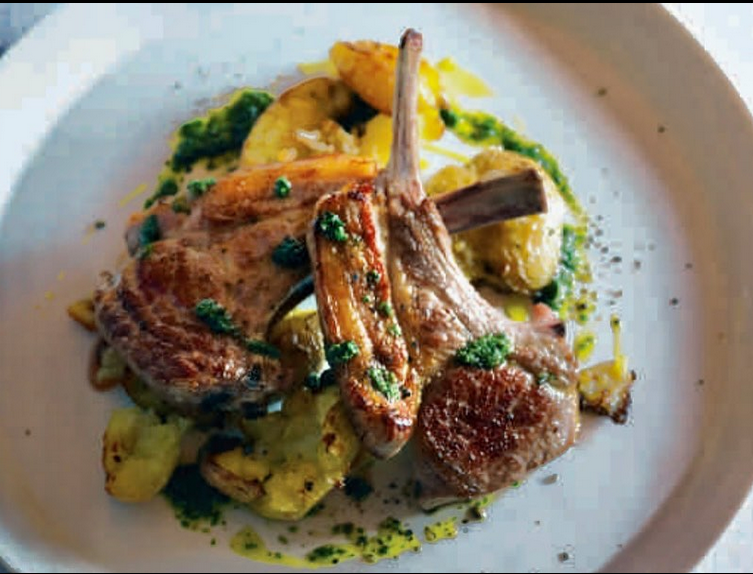
rachelallencooks Verified Here’s a really quick and easy recipe for Spring lamb chops with mint salsa verde, just delicious at this time of the year. Serves 4-6
For the mint salsa verde: Makes 150ml
1 handful of parsley leaves 1 handful of mint leaves grated zest and juice of 1 small lemon 1 clove of garlic, crushed 1 tbsp capers, rinsed 50ml extra virgin olive oil black pepper
lamb chops (2-3 per person) 1 – 2 tbsp extra virgin olive oil salt and pepper
First make the salsa verde, put the mint, parsley, lemon zest, garlic and capers into a food processor and whiz until it’s all finely chopped. Add the lemon juice and olive oil (add more oil if you want it a bit more runny). Check the seasoning – it might not need salt, as the capers can be quite salty.
Next cook the lamb chops, remove excess fat from the chops, but leave about ½ cm still on. Drizzle with olive oil and season with pepper. Place a frying pan or grill pan on a high heat. When it’s good and hot add the lamb chops and sprinkle with a little salt and more pepper. Cook for approximately 3 minutes on each side. Remove to a plate, cover and leave to rest in a warm oven for 5 minutes. Serve with a good drizzling of the salsa verde. #mint#salsaverde#springlamb
Ginger & Lime Baked Cheesecake with Irish Strawberry Compote Ingredients (Serves 6-8) For The Base: 2 Packs of Simply Better Handmade Oat & Ginger Cookies, crushed 75g Butter, plus extra for greasing For The Compote: 1 Bag of Simply Better Expertly Grown Frozen Irish Strawberries 250ml Simply Better Handmade Irish Raspberry & Wexford Rhubarb Cordial For the Filling: 3 Simply Better Free Range Corn Fed Large Eggs 500g Cream Cheese 100g Caster Sugar 1Tbsp Cornflour Finely Grated Rind and Juice of 2 Limes 1 Vanilla Pod, split in half lengthways and seeds scraped out To Serve: Simply Better Single Source Irish Jersey Cream, lightly whipped Method: 1. Preheat the oven to 160°C Lightly butter a 9inch loose-bottomed cake tin and line with non-stick baking or parchment paper. 2. To make the base, melt the butter in a pan set over a gentle heat. Add the crushed cookies and mix well. Spread the mixture over the base of the tin, pressing down with the back of a spoon to flatten. Place in the oven for 10 minutes to firm up. 3. Remove the tin from the oven and set aside. Place a dish of hot water in the oven on the bottom rack – this will stop a skin forming on the cheesecake. Place the cream cheese, sugar, eggs, lime rind and juice, vanilla seeds and cornflour in a mixing bowl and beat together until smooth with an electric whisk. 4. Pour this mixture into the cake tin and place on a baking sheet. Bake for 35-45 minutes until lightly golden. The filling should still be a bit wobbly at this stage. Turn off the oven, open the door and leave to cool completely. The filling will set as it cools. 5. To make the compote, place the leftover vanilla pod in a saucepan with the cordial and bring to the boil. Reduce the heat and allow to simmer for 5 minutes until reduced and slightly thickened. Place the strawberries in the pan and poach the berries for 2-3 minutes until softened but still holding their shape. Remove the vanilla pod before serving. 6. To serve, slice the cheesecake into wedges and serve with some cream and the poached strawberries.
I don’t know about you but I love my bed! And I firmly believe that a good night’s sleep can make you feel so good! Breathing, eating and sleeping are three of the most basic and essential functions we do as humans. But can food affect our sleep or does our sleep affect our food? The reality is that it is probably a bit of both…On average we need between 7-9 hours’ sleep per night with some people managing on less and others may need more. Lack of sleep can lead to irritability, fatigue and difficulty concentrating. However chronic poor sleep has been linked to obesity, diabetes and heart disease.
In general, research has found that eating in line with the Mediterranean or DASH diet, both of which promote fruits and vegetables, fiber rich foods and healthy mono-unsaturated and polyunsaturated fats tends to be associated with better quality sleep. Magnesium is a mineral that is reported to help with sleep regulation and is found in bananas, nuts, green vegetables, tofu and dairy. Melatonin is a micronutrient present in some foods but also a hormone that occurs naturally in the body and helps control sleep patterns. Melatonin, is found in tart cherry juice, eggs, nuts and dairy. Interestingly the tradition of hot milk before bed comes from Roman times… and milk contains both magnesium, melatonin and an amino acid called tryptophan which helps produce serotonin and melatonin.
Kiwifruit is another food that has been reported to have a positive impact on sleep duration and quality. In one four-week trial of adults with sleep problems, consumption of two kiwifruits per day one hour before bedtime significantly increased total sleep time and sleep efficiency. A potential reason for this is that they are a rich source of antioxidant and contain the hormone serotonin. Either way they are also great sources of vitamin C and great for keeping bowel movements regular.
Do you ever feel like you make poorer food choices when you’re tired? There may be good reason behind this. Sleep deprivation can cause a drop in Leptin levels (a hormone that signals fullness) and increases the hormone Ghrelin (hormone that stimulates appetite). This change in hormones can explain why you might eat more when missing sleep or why you tend to eat more without feeling full when you have had minimal sleep. US research from Cedar- Sinai Medical Centre also found that lack of sleep increased insulin resistance. So, we can see that regular good night sleep helps manage hormones, appetite and possible food choices.
Caffeine and alcohol can negatively affect falling asleep and sleep quality so best to keep within healthy limits if struggling with sleep. Maybe keep the caffeine to before midday!
Put the tofu, ground star anise, vanilla seeds, treacle and agave syrup into a large bowl and blend with a hand blender until silky smooth.
Melt the chocolate in a heatproof glass bowl sat over a saucepan of simmering water, being careful not to let the bowl touch the water. Fold into the tofu. Spoon the mixture between 4 glasses and refrigerate until set.
To make the honeycomb, line a baking tray with baking paper. Put the sugar, glucose and golden syrup into a deep saucepan and heat until it reaches 145C. (This should take about 5 minutes). Quickly whisk in the bicarbonate of soda. Be careful as the mixture will bubble up very suddenly. Quickly pour onto the lined baking tray. Set aside to cool and harden.
To make the apricots, heat the oil in a frying pan. Add the apricots and star anise and cook until the apricots start to caramelise. Sprinkle over a pinch of sugar and leave to cool.
To serve, sprinkle the toasted almonds on top of the mousse and serve with the apricots and peices of honeycomb.
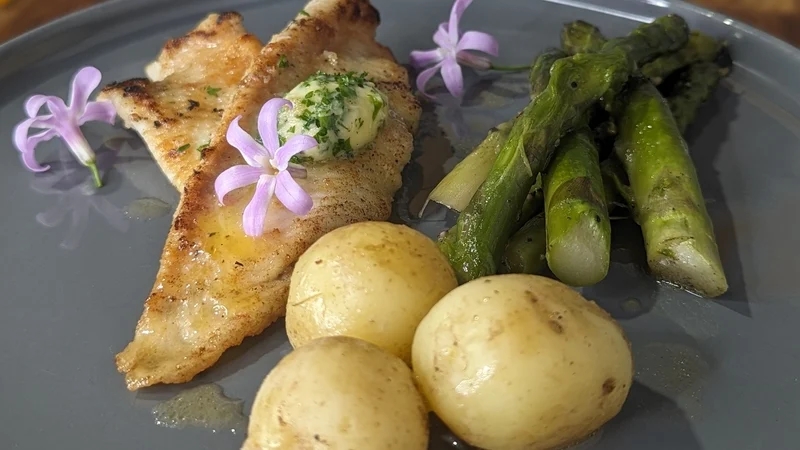
Rachel Allen’s pan-fried fish with herb butter, asparagus, new potatoes.
Ingredients
Serves: 4-6
For the herb butter:
50g soft butter
1 tablespoon chopped herbs such as dill, fennel, chives, parsley
A squeeze of lemon juice
Salt and pepper
For the pan-fried fish:
4 fillets of flat fish, such as John Dory, plaice, sole, brill or turbot, or part of a round fish fillet, like salmon, cod, grey mullet, etc. (allow 175g for a main course and 75g for a starter)
Approximately 4 tablespoons flour
Extra virgin olive oil or soft butter
A pinch of sea salt flakes and freshly ground black pepper
Method
Dry the fish fillets on kitchen paper.
Season on both sides with sea salt flakes and freshly ground black pepper.
Heat a cast iron or non-stick frying pan on a high heat until smoking. Add a dash of olive oil and put in the fish fillets.
OR you can dust the fillets with seasoned flour then spread some soft butter over one side.
Place buttered side in the pan first. Turn when golden on one side, then cook again until golden on the other side.
Place a couple of slices of herb butter over each fillet and serve immediately with asparagus and boiled new potatoes.
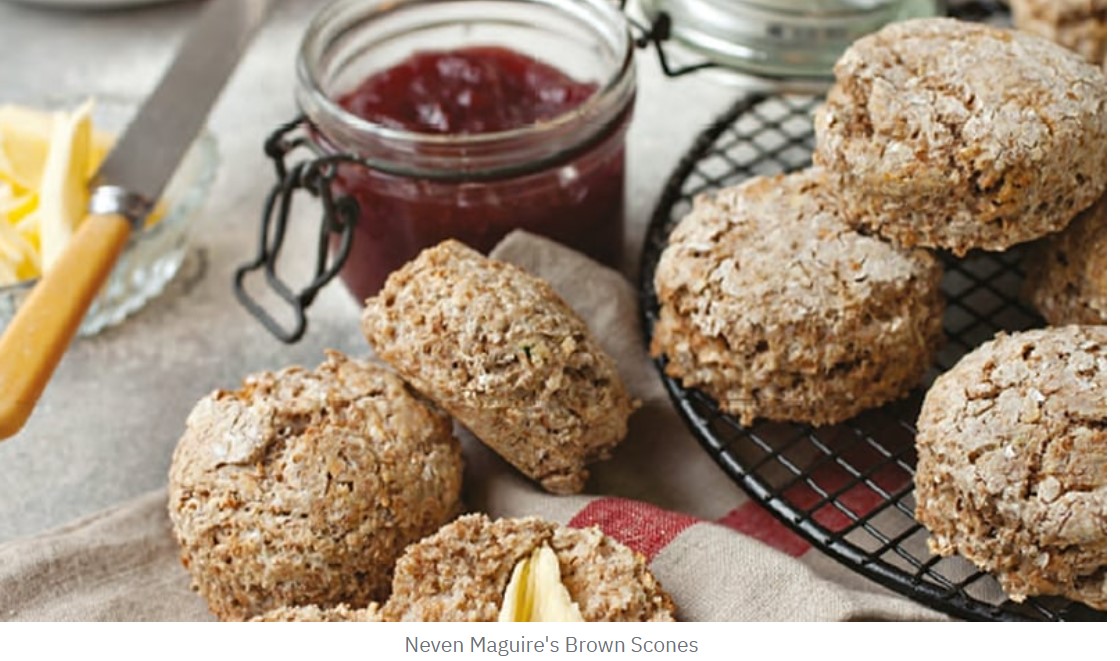
Brown scones are full of roughage and great for breakfast. And here is a good tip: you can make this mixture, shape the scones and freeze them. You can then cook the scones straight from the freezer to the oven – just give them an extra 5 minutes and make sure the scones are golden brown and well-risen.
Ingredients
Rapeseed or sunflower oil, for greasing
225g (8oz) self-raising flour, plus extra for dusting
225g (8oz) coarse wholemeal flour
½ tsp baking soda
½ tsp salt
50g (2oz) wheat bran
25g (1oz) butter, diced and at room temperature
1 tsp light muscovado sugar
300ml (½ pint) buttermilk, plus a little extra if necessary
Method
Preheat the oven to 220°C (425°F/gas mark 7). Line 2 baking sheets with parchment paper and grease the paper with a little oil.
Sift the flours, baking soda and salt into a bowl. Tip in the bran left in the sieve and stir it in with the wheat bran. Rub in the butter with your fingertips until it is evenly dispersed. Stir in the sugar.
Make a well in the centre of the dry ingredients and add the buttermilk and golden syrup. Using a large spoon, mix gently and quickly until you have achieved a smooth, not-too-sticky dough. Add a little more buttermilk if necessary, until the dough binds together without being sloppy.
On a lightly floured surface, roll out the dough to a 2.5cm (1in) thickness and cut into rounds with a 6cm (2½in) plain cutter. Arrange on the lined baking sheets and bake for 10-15 minutes, until golden brown and well-risen.
Serve with butter or lightly whipped cream and strawberry jam.
A nice twist on eggs benedict – perfect for brunch, lunch or dinner.
Serves 4
Cooking time: 30 minutes
Ingredients
4 x 100g salmon darns
A little olive oil
Salt and freshly ground black pepper
4 large eggs
1 tableps. white wine vinegar
4 thick slice of sourdough bread, toasted
Hollandaise Sauce
2 egg yolks
1½ tablesp. lemon juice
100g unsalted butter
Salt and pepper
To Serve:
Fresh dill and black pepper to serve Mixed salad
To Cook
To cook the salmon:
Heat the oven to Gas Mark 4, 180°C (350°F). Brush each piece of salmon with a little oil and season with salt and black pepper. Line a baking tray with parchment paper and place the pieces of salmon on it. Place in the oven and cook for 10 minutes.
To poach the eggs:
While the salmon is cooking poach the eggs. Bring a large pan of water to the boil. Reduce to a gentle simmer and add the white wine vinegar and a little salt. Break two of the eggs into the water and simmer for 3-4 minutes until just cooked but still soft on the inside. Remove with a slotted spoon and drain well on kitchen paper. Repeat with the other two eggs.
To make the Hollandaise Sauce:
Put the egg yolks and lemon juice in a food processor and whizz until the mixture is creamy. Melt the butter in a saucepan until it is sizzling hot. Keep the processor running and slowly pour in the melted butter. Taste and season with salt and pepper.
Serving Suggestions
Place the toast on plates, top with the salmon darn and poached eggs. Spoon over the hollandaise sauce and sprinkle with dill and black pepper. Serve with a mixed salad.
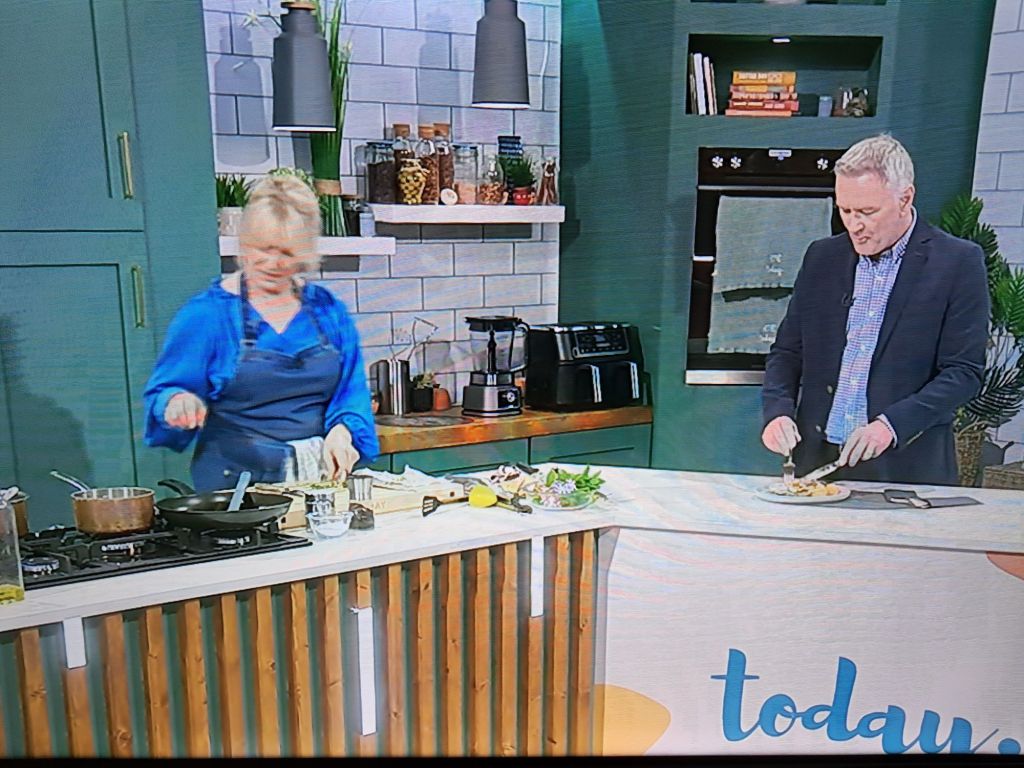
Sharon Hearne Smith’s Sesame Seed Porridge Bread from Today with Maura and Dáithí.
Ingredients
This is an unusual bread recipe, based on porridge oats and yoghurt instead of flour and water. It is quick, easy and virtually foolproof to make.
Use any selection of seeds you prefer instead of sesame seeds, or omit them altogether for a plain bread. Alternatively, add other flavours like nuts and dried fruits or sundried tomatoes and basil or a swirl of pesto would be delicious too. This bread stays quite moist and fresh for a few days stored in an airtight container.
Makes: 1 loaf (about 12 slices)
Sunflower oil for greasing
500g tub natural yoghurt
100ml milk
2 tbsp olive oil
2 tbsp sesame seeds + extra for sprinkling
2 tsp bicarbonate of soda
2 x 500ml yoghurt tubs of porridge oats (or 400g)
butter for serving, optional
Method
Preheat the oven to 200C (fan 180C), 400F, Gas Mark 6. Grease a 1Lb loaf tin (approximately 3 x 5 x 7 inch) with parchment paper and grease again.
Scoop the yoghurt into a large bowl. Add the milk, oil, sesame seeds and bicarbonate of soda and mix until well blended.
Fill a clean and dry yoghurt tub with oats and tip them in. Repeat with a second tub of oats. Alternatively, weigh out 400g of oats on a scales.
Mix everything together until well blended.
Spoon into the prepared tin, spreading the top level. Scatter a small handful of sesame seeds on top.
Bake for 45 minutes or until golden brown and a skewer comes out clean when pierced in the middle.
Remove from the tin and return the loaf to oven, directly on the shelf, for another 5 minutes to dry out the crust.
Remove and leave to cool on a wire rack. Cut into slices and serve spread with a little butter if liked.
This scone recipe can also be made into one large loaf cooked on a baking sheet. Cut a deep cross in the center and bake in the preheated oven for 20 minutes, then reduce the heat to 400ºF (200ºC), Gas mark 6 and continue to cook for another 20 minutes until the base sounds hollow when tapped.
Ingredients:
2 2/3 cups (1lb) plain flour, extra for dusting
1 tsp salt
1 tsp bicarbonate of soda
1 tsp caster sugar
2 tbsp (1oz) Kerrygold Salted Butter, chilled and diced
1 cup (8fl oz) buttermilk
1 large egg, beaten
Kerrygold butter curls and strawberry jam, to serve
Directions:
Preheat the oven to 425°F (220°C), Gas mark 7. Sift the flour into a bowl with the salt and bicarbonate of soda. Stir in the sugar and then, using your fingertips, rub in the butter until the mixture resembles fine breadcrumbs.
Make a well in the center and pour in the buttermilk and beaten egg. Using a tablespoon, gently and quickly stir the liquid into the flour. It should be soft but not sticky. Lightly flour the work surface. Turn the dough out onto it and pat into a circle about 1in (2.5cm) thick. Cut into triangles with a sharp knife or stamp out 2in (5cm) rounds with a cutter.
Arrange the scones on a non-stick baking sheet and bake for 15 minutes until well risen and golden brown. Leave to cool for at least 10 minutes on a wire rack, then serve with the butter curls and jam.
Cheddar variety
Mix ¼ cup (1oz) (25g) of Kerrygold grated Aged Cheddar in with the buttermilk. Brush the finished scones with melted Kerrygold butter and sprinkle with another ¾ cup (3oz) (75g) grated Kerrygold Aged Cheddar before baking. Mix 1 teaspoon wholegrain mustard into 2 tbsp (1oz) (25g) of butter and use to spread on the split baked scones before topping with sliced cooked ham or tomatoes to serve.
Fruit variety
Add ½ cup (2oz) (50g) of sultanas or raisins or dried pitted cherries when stirring the sugar into the dry ingredients, then finish as described above.