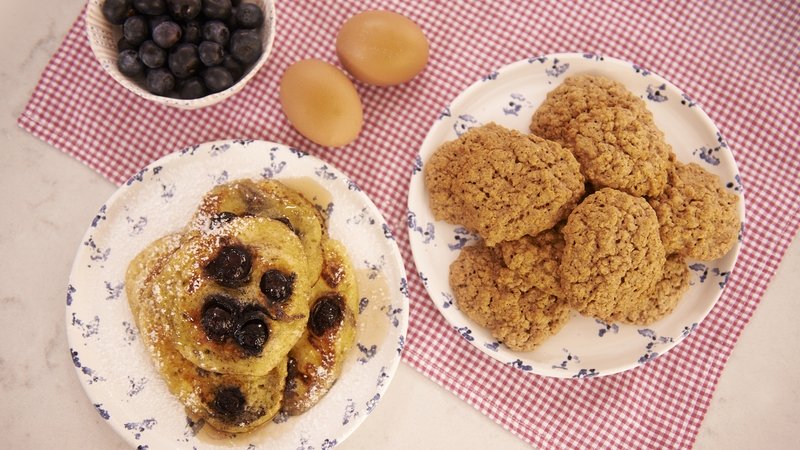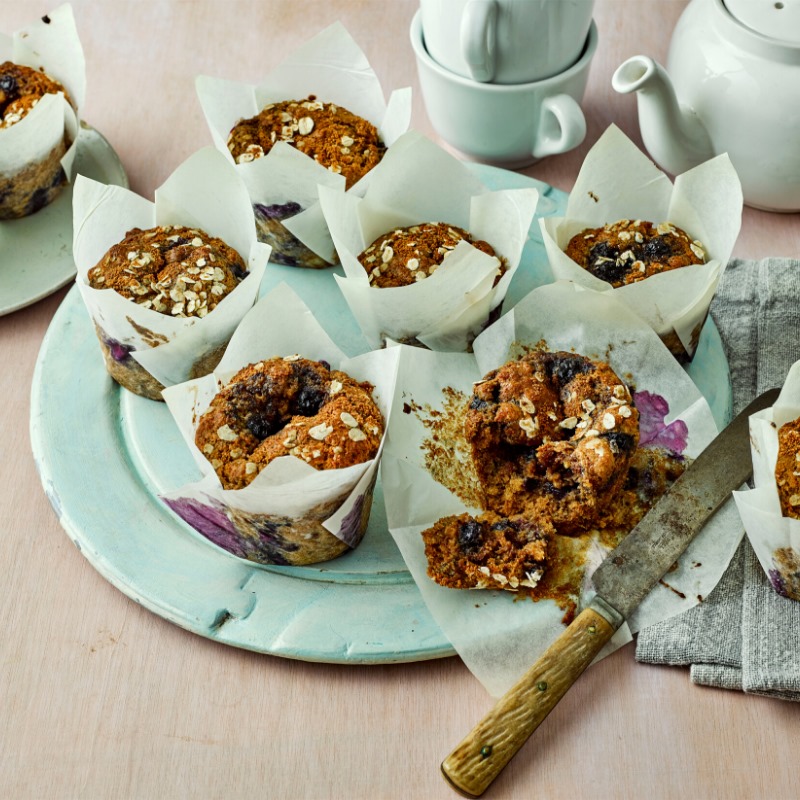
Have a fresh and light start to the day with a #Keelings berry granola parfait. #Breakfast

 
keelings sunday parfait

11h11 hours ago


Have a fresh and light start to the day with a berry granola parfait.

Ingredients:
• 245g greek yoghurt
• 122g granola
• 50g Keelings strawberries (sliced)
• 50g Keelings blueberries
• Maple syrup or honey (optional)

Method:
1. Take two tumbler glasses and add 3 Tbsp. yogurt.
2. Add 3 Tbsp. granola and top with Keelings berries.
3. Repeat layers one time.
4. Dollop 1 tsp. yoghurt and sprinkle with granola.
5. Top with Keelings blueberries & strawberries.
6. Add maple syrup or honey if desired.
7. Serve and enjoy! 

St. Mary’s Church, Nash, Pembrokeshire, West Wales

ST MARY, NASH, SOUTH PEMBROKESHIRE

Dyfed PRN 4416

 RB No. 3070

 NGR SN 0101 0327

 Listed Building No. 5988

 Grade II listed (1998)

First listed in 1970. Last amended in 1996.

Reason for listing: Listed as an important example of a pre-Ecclescological Movement C19 church, retaining most of its original character.

 SUMMARY

19th century church; 0% pre-19th century core fabric. On site of, and same location as, medieval church.

A single-cell church, small. Consists of chancel/nave, without structural division, 5 bays; 1841-2. Vestry (north), 1 bay, later 19th century?. Construction is in limestone rubble. Slate gable roofs, vestry with slate lean-to. Openings mainly from 1841-2, simple neo-gothic. Western bellcote, single, later 19th century.

(Box pews, west gallery and pulpit from 1841-2.)

Roofs and floors: 1841-2. Finishes: later 19th century.

Condition – good.

Archaeological potential – very good. Medium-deep external drain around 40% of church; former component beyond ?40% of church; no underfloor void; no external memorials significantly close to church.

Structural value (pre 19th century) – poor. 0% pre C19 core fabric.

Group value – low. C19 church; adjacent masonry farm buildings.

Phasing:

Phase 1 – Chancel/nave, 1841-2.

Phase 2 – Vestry (and bellcote), later C19?.

DESCRIPTION

St Mary, Nash, is a single-celled church, of small size. It was entirely rebuilt in 1841-2 on the same site, and in the same location as its predecessor, retaining none of the earlier fabric.

The present church consists of a 5-bayed chancel/nave without structural division, and a single bayed vestry north of the ‘chancel’ west bay. Construction is in limestone rubble; external pointing is largely from the later 19th century and the interior is plastered. Openings are from 1841-2 and simple neo-Gothic; the windows have 4-centred heads and 2 or 3 lights, in a simple ‘Perpendicular’ style. The west door has a 4-centred head; above it lies a parapet with a single bellcote, in darker limestone and probably an addition. The chancel/nave roof is a slated gable; the vestry has a slated lean-to roof.

Richard Fenton visited the earlier church c.1810 and described it as ‘though certainly ancient… neither has, nor appears to have had, any steeple or other ornament whatever, being the meanest religious structure I have seen in this hundred’ (Fenton, 1903, 234). It was apparently single-celled like the present church; a north aisle or chapel, ‘being grown ruinous’, had apparently been demolished a few years previously. According to Lewis, 1833, it was ‘a very ancient structure, remarkable for the rude simplicity of its architecture, and is said to have been erected by one of the earliest Norman proprietors of Upton Castle’. The tithe map of 1840 shows a conventionalised church, in elevation, with a west tower that is entirely spurious (NLW, Nash, 1840).

The church was demolished and rebuilt in its present form in 1841-2, under the local architect George Gwyther, of Pembroke Dock (Cadw, 1996, 11), and was reseated with the present pews, pulpit and gallery (Pembs. R. O., HPR/15/17); the flagged floor and plaster ceiling are contemporary. The vestry had been added by 1874 (Ordnance Survey 1:2500, First Edition, Pembs. Sheet XL.6.), when the bellcote was probably (re)built in its present form. The church was repaired in the 1890s (Cadw, 1996, 11) but the details of this work are not known.

There is a good range of internal fittings from 1841-2 including box pews, a pentagonal pulpit and a west gallery (cf. near-contemporary fittings at the nearby church at Redberth). The ‘chancel’ fittings are later 20th century (Bartosch & Stokes, 1992, 11).

The font has a square bowl which cannot be closely dated.

There is 1 bell (Bartosch & Stokes, 1992, 10).

A medium-deep external drain runs along the south wall. A north aisle/chapel was formerly present. The floor appears to lie directly on the substrate. No external memorials lie significantly close to the church.

Richard Fenton saw a medieval effigy, ‘of a crusader’, lying loose outside the church; apparently it had previously lain within the former north aisle/chapel (Fenton, 1903, 235). It has been moved to Upton Chapel (RCAHM, 1925, 253).

The church was Grade II listed in 1998.

First listed in 1970. Last amended in 1996.

Reason for listing: Listed as an important example of a pre-Ecclescological Movement C19 church, retaining most of its original character.

 SITE HISTORY

 There is no firm evidence for the pre-conquest religious use of the site:-

St Mary, Nash, was a parish church during the post-conquest period (Rees, 1932), of the medieval Deanery of Pembroke. It was appendant to the Manor of Nash (or ‘Esse’) and was assessed at £5 in 1291 (Green, 1913, 214). Its annual value was £6 12s 8½d in 1536 (ibid.). The chapel of Upton was subordinate to Nash parish.

Patronage was vested with the Manor of Upton and Nash in the 16th century, held by the Bowen family (ibid.), but was divided among a number of individuals by the 18th century and in 1833 was in the hands of the Rev. William Evans (Lewis, 1833), when the living was a rectory, with Upton annexed, rated in the king’s books at £6 12s 8½d (ibid.).

In 1998 St Mary, Nash, was a parish church. The living was a rectory, held with Cosheston and Upton (Benefice 583) in the Archdeaconry of St Davids, Rural Deanery of Castlemartin (St Davids, 1997-8).

The dedication is occasionally given as St Catherine (Ordnance Survey 1:2500, First and Second Editions, Pembs. Sheet XL.6.).

SOURCES CONSULTED

 Map Evidence

NLW, Ordnance Survey 1:2500, First Edition, Pembs. Sheet XL.6.

NLW, Ordnance Survey 1:2500, Second Edition, Pembs. Sheet XL.6.

NLW, Parish of Nash, Tithe Map, 1840.

Rees, W., 1932, South Wales and the Border in the XIVth century.

 Church in Wales Records

Bartosch & Stokes, 1992, Quinquennial Report, Nash.

St Davids, 1997-8, Diocesan Year Book.

 Parish Records, Pembrokeshire Record Office, Haverfordwest

HPR/15 – Nash with Upton:-

HPR/15/14 – Churchwarden’s Accounts, 1945-7.

HPR/15/17 – Plan of seating, c.1845.

Unpublished Accounts

Thomas, W. G., 1964, St Mary, Nash (in National Monuments Record, Aberystwyth)

Printed Accounts

Gordon Partnership, 1993, Redundant Religious Buildings in West Wales.

Cadw, 1996, Buildings of Special Architectural or Historic Interest (Cosheston).

Glynne, S. R, 1888, ‘Notes on the Older Churches in the Four Welsh Dioceses’, Archaeol. Cambrensis, Vol. V, Fifth Series.

Green, F., 1913, ‘Pembrokeshire Parsons’, West Wales Historical Records Vol. III.

Fenton, R., 1903 edn., A Historical Tour through Pembrokeshire.

Lewis, S., 1833, A Topographical Dictionary of Wales.

RCAHM, 1925, Inventory: Pembrokeshire.

Salter, M., 1994, The Old Parish Churches of South West Wales.

Updated – February 2022 – PKR[:]

Region

Dyfed

Theme

Ecclesiastic

Anna Haugh “I love, absolutely love, making Christmas cake” 🎂🥰😍

https://www.instagram.com/reel/DN8l0bBjUPy/?igsh=MXY2dWhlN3IweWZ4Zg==

haughser

  • I love absolutely love making Christmas cake, it’s one of those traditions that takes me right back to childhood, bringing the recipe to life with my mother making a wish as we stirred.

    The whiskey gives it flavour and helps really preserves it, but the real magic comes from time. Time to rest, time to deepen, time to become something truly memorable.

    Keep an eye out for an upcoming post where I’ll show you the dish this is for, it’s one I think you’ll love☺️

    #irish #irishfood #christmascakes #irishcake #chef #irishrestaurant #irishtraditions #whiskey #irishwhiskey4d

Weekends @fika_33 #killeshandra Co.Cavan  🥰🇮🇪  #loughbawn

fika_33_

Killeshandra Co Cavan

37 likes

  • Fika 33 Classic French Toast 🍞🍓🫐 Coated with cinnamon sugar, topped with homemade berry compote, fresh berries, lemon curd and mascarpone! Why not add some savouriness with crispy bacon ?🥓 This is a firm favourite on our breakfast menu for many visitors here in Fika 33 👋🏼 It’s not just good — it’s can’t-stop-eating good ✨. @createdincavan

Ballymaloe’s Famous Chocolate Orange Cake recipe

Serves 12

For the Orange Cake:

  • 4 eggs
  • softened butter
  • sugar
  • plain flour
  • 2 oranges
  • 1 teaspoon baking powder

For the orange butter icing:

  • 1 orange
  • 110g (4oz, 1/2 cup) icing sugar
  • 55g (2oz, 1/4 cup) softened butter

For the chocolate icing:

  • 170g (6oz) chocolate
  • 2 tablespoons water
  • 50g (2oz, 4 tablespoons) softened butter
  • 2 large eggs
Weigh the eggs. Take the same weight in butter, sugar and flour. Beat the butter and sugar together until pale and light in texture. Wash the oranges and add the finely grated rind of 2 and the juice of 1 to the butter mixture. Mix the flour and baking powder and add alternately with the eggs. Beat thoroughly. Bake in a 24cm (91/2in) tin in a moderate oven, 180°C/350°F/gas 4, for 50 minutes approx. Cool the cake and split it in two. Sandwich with the orange butter icing and spread the chocolate icing over the top and sides allowing any excess to run off.
To make the orange butter icing, finely grate the rind of the orange and squeeze out the juice. Beat the icing sugar, butter and orange rind together. Add in enough juice to make the icing a spreading consistency.
To make the chocolate icing, melt the chocolate in the water. Remove from the heat and beat in the butter and then the eggs very thoroughly. Leave to cool and set before icing and filling the cake.

Venison and sweet potato casserole with butter beans by @nevenmaguire @rte lyricfm – Marty in the Morning

Casseroles are simply the easiest meals to prepare. First you do all your peeling, slicing and sautéing, then you pop everything into a large pot with a lid and leave it in the oven or on the hob for a couple of hours. In the meantime, you can go for a walk, watch a movie or mow the lawn, then later on, you can settle down to a hearty, warming feast.

SERVES 6–8

  • 50g (2oz) butter
  • 900g (2lb) venison haunch, cut into 2.5cm (1in) cubes
  • 1 large onion, finely chopped
  • 2 celery sticks, finely chopped
  • 2 garlic cloves, finely chopped
  • 50g (2oz) plain flour
  • 2 tbsp paprika
  • 300ml (½ pint) red wine
  • 2 tbsp redcurrant jelly
  • about 1.2 litres (2 pints) beef or chicken stock
  • 450g (1lb) sweet potatoes, peeled and cut into small chunks
  • 1 x 400g (14oz) tin of butter beans, drained and rinsed
  • sea salt and freshly ground black pepper
  • chopped fresh flat-leaf parsley, to garnish

1 Preheat the oven to 180°C (350°F/gas mark 4).

2 Heat the butter in a large, flameproof casserole with a lid over a medium heat. Season the venison and add to the dish. Add the onion, celery and garlic and cook for 2 minutes, stirring. Add the flour and paprika and cook for 1–2 minutes, stirring to combine. Pour in the wine and allow it to bubble down, stirring constantly. Mix in the redcurrant jelly with enough stock to just cover the meat.

3 Bring the casserole to the boil, then season to taste. Cover with a lid and put in the oven for 1 hour. After this time, remove from the oven to add the sweet potatoes and butter beans, then continue cooking in the oven for another hour, until the venison and sweet potatoes are tender.

4 Spoon into warmed bowls and garnish with the parsley to serve.

Stuffed beef rolls with red wine sauce

This recipe uses a good-value cut that isn’t as popular as it should be. It’s perfect comfort food for all the family on a chilly winter evening. It does take time, though, because it needs slow cooking to get as much flavour as possible and to become very tender so that when these stuffed beef rolls are finished cooking, you will be able to eat them with a spoon.

SERVES 4

  • 4 x 100g (4oz) slices of lean topside of beef
  • 2 tbsp rapeseed oil
  • 1 onion, finely diced
  • 2 carrots, finely diced
  • 2 celery sticks, diced
  • 600ml (1 pint) beef stock
  • 250ml (9fl oz) red wine
  • 1 tbsp tomato purée
  • 2 fresh thyme sprigs, plus extra sprigs to garnish
  • 1 bay leaf
  • creamy mashed potatoes, to serve (optional)

FOR THE STUFFING:

  • 1 tbsp rapeseed oil
  • 1 onion, finely chopped
  • 2 tsp fresh thyme leaves
  • 2 parsnips, finely grated
  • pinch of mild curry powder
  • 3 tbsp fresh white breadcrumbs
  • sea salt and freshly ground black pepper

1 Preheat the oven to 180°C (350°F/gas mark 4).

2 First make the stuffing. Heat the oil in a sauté pan. Add the onion and thyme and cook for about 5 minutes, until softened but not coloured. Add the grated parsnips and cook for 2–3 minutes, stirring. Stir in the curry powder and cook for 20 minutes, until the parsnips are tender. Remove from the heat and stir in the breadcrumbs, then season to taste. Spread the stuffing in an even layer over the beef slices and roll them up to enclose, securing them with a cocktail stick.

3 To prepare the casserole, heat the oil in a casserole over a high heat and sear the beef parcels until brown all over. Remove to a plate and set aside. Next, sauté the onion, carrots and celery for a few minutes, until they are just catching colour. Add the beef stock, wine, tomato purée, thyme sprigs and bay leaf and bring slowly to the boil. Return the beef to the casserole, then cover and cook in the oven for 1–1½ hours, until the beef rolls are meltingly tender. Season to taste.

4 To serve, remove the cocktail sticks from the beef parcels and cut them into slices. Arrange on warmed plates and pour over the sauce. Garnish with the thyme and add a dollop of mashed potatoes to each one to serve if liked.

Mary Flahavan’s Quick Apple Porridge

apple & raisin porr

Quick Apple Porridge
This recipe avoids milk altogether and so would be ideal for anyone on a dairy-free diet.
Ingredients
40g (1½ oz) or 2 scoops of Flahavan’s Quick Oats
170 ml (1/3 pint) of apple juice
Pinch of cinnamon
Sliced apple
Cooking and Serving Instructions
  1. Mix the oats with the apple juice in a deep bowl.
  2. Microwave for 2-3 minutes stirring occasionally until the juice is absorbed. Add more juice if necessary.
  3. Leave to stand for 1 minute.
  4. Stir and serve topped with sliced apple and a sprinkle of cinnamon.