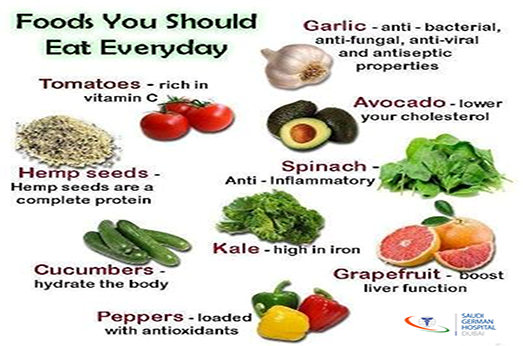
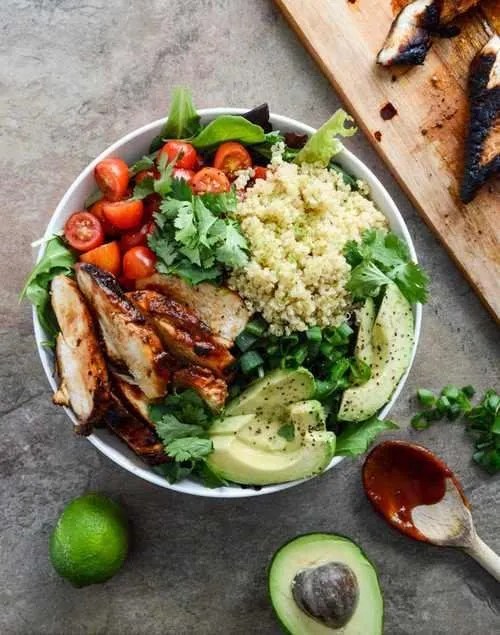
Food you should Eat Everyday for a healthy life. What do you think, what else we can add for a healthy diet? #SGHDubai #HealthTip


Food you should Eat Everyday for a healthy life. What do you think, what else we can add for a healthy diet? #SGHDubai #HealthTip

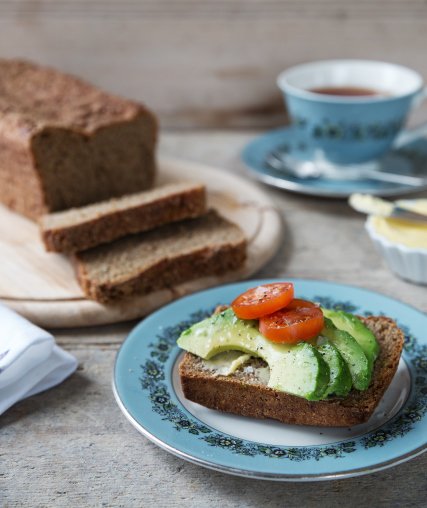
Try our wholemeal rye bread topped with avocado and tomatoes for a healthy lunch option or tasty weekend brunch http://bit.ly/2jeIk62


Stir halved grape tomatoes into melted Kerrygold Garlic & Herb Butter; cook for 2 minutes to heat tomatoes. Toss with hot, cooked linguine, adding additional butter to taste; season with salt and pepper. Stir small boccaccini (fresh mozzarella balls) into hot pasta. Cook just until cheese starts to melt. Top with with shredded Kerrygold Dubliner Cheese and snipped fresh basil.

Whether you refer to a tomato as a fruit or a vegetable, there is no doubt that a tomato is a nutrient-dense, super-food that most people should be eating more of.
The tomato has been referred to as a “functional food,” a food that goes beyond providing just basic nutrition, additionally preventing chronic disease and delivering other health benefits, due to beneficial phytochemicals such as lycopene.
Despite the popularity of the tomato, only 200 years ago it was thought to be poisonous in the U.S., likely because the plant belongs to the nightshade family, of which some species are truly poisonous.
The benefits of consuming fruits and vegetables of all kinds, including tomatoes, are infinite. As plant food consumption goes up, the risk of heart disease, diabetes, and cancer goes down.
High fruit and vegetable intake is also associated with healthy skin and hair, increased energy and lower weight. Increasing consumption of fruits and vegetables significantly decreases the risk of obesity and overall mortality.
As an excellent source of the strong antioxidant vitamin C and other antioxidants, tomatoes can help combat the formation of free radicals known to cause cancer.
Lycopene has been linked with prostate cancer prevention in several studies.7 According to John Erdman, Ph.D., Professor Emeritus of the department of food science and human nutrition at the University of Illinois, “There’s very good, strong, epidemiological support for increased consumption of tomato products and lower incidence of prostate cancer.”7
Among younger men, diets rich in beta-carotene may play a protective role against prostate cancer, according to a study conducted by the Harvard School of Public Health’s Department of Nutrition.
Beta-carotene consumption has been shown to have an inverse association with the development of colon cancer in the Japanese population. High fiber intakes from fruits and vegetables are associated with a lowered risk of colorectal cancer.
According to the American Cancer Society, some studies have shown that people who have diets rich in tomatoes may have a lower risk of certain types of cancer, especially cancers of the prostate, lung, and stomach. Further human-based research is needed to find out what role lycopene might play in the prevention or treatment of cancer.
Maintaining a low sodium intake is essential to lowering blood pressure, however increasing potassium intake may be just as important because of its vasodilation effects. According to the National Health and Nutrition Examination Survey, fewer than 2 percent of U.S. adults meet the daily 4700 mg recommendation.3
Also of note, a high potassium intake is associated with a 20 percent decreased risk of dying from all causes.3
The fiber, potassium, vitamin C and choline content in tomatoes all support heart health. An increase in potassium intake along with a decrease in sodium intake is the most important dietary change that a person can make to reduce their risk of cardiovascular disease, according to Mark Houston, M.D., M.S., an associate clinical professor of medicine at Vanderbilt Medical School and director of the Hypertension Institute at St. Thomas Hospital in Tennessee.3
In one study, those who consumed 4069 mg of potassium per day had a 49 percent lower risk of death from ischemic heart disease compared with those who consumed less potassium (about 1000 mg per day).3
High potassium intakes are also associated with a reduced risk of stroke, protection against loss of muscle mass, preservation of bone mineral density and reduction in the formation of kidney stones.3
Studies have shown that type 1 diabetics who consume high-fiber diets have lower blood glucose levels and type 2 diabetics may have improved blood sugar, lipids and insulin levels. One cup of cherry tomatoes provides about 2 grams of fiber.
The Dietary Guidelines for Americans recommends 21-25 g/day for women and 30-38 g/day for men.
Collagen, the skins support system, is reliant on vitamin C as an essential nutrient that works in our bodies as an antioxidant to help prevent damage caused by the sun, pollution and smoke, smooth wrinkles and improve overall skin texture.5
Eating foods that are high in water content and fiber like tomatoes can help to keep you hydrated and your bowel movements regular. Fiber is essential for minimizing constipation and adding bulk to the stool.
Adequate folic acid intake is essential for pregnant women to protect against neural tube defects in infants.
The folic acid in tomatoes may also help with depression by preventing an excess of homocysteine from forming in the body, which can prevent blood and other nutrients from reaching the brain. Excess homocysteine interferes with the production of the feel-good hormones serotonin, dopamine, and norepinephrine, which regulate not only mood, but sleep and appetite as well.4
The Nordic diet: healthy eating with an eco-friendly bent http://hvrd.me/UQlqe #nutrition #HarvardHealth

Expand your plant-food menu options with this tasty wrap. Collard greens replace the traditional flour-based wrap and are stuffed with fresh corn, tomatoes and peppers. Each wrap is topped with a zesty rice blend. Loaded with vitamins, minerals, phytonutrients and fiber, they’re perfect for a quick, healthy meal!
1 cup cooked brown rice
½ cup fresh corn kernels
¼ cup chopped fresh cilantro
2 tablespoons 0% Greek yogurt
1 tablespoon fresh lime juice
1/8 teaspoon kosher salt
4 large collard greens, Swiss chard, or cabbage leaves, stems trimmed
2 medium beefsteak tomatoes, thinly sliced
1 avocado, thinly sliced
1 red bell pepper, thinly sliced
Hot sauce to taste
Makes 4 servings
Per serving:
185 calories
Total fat 8.2g
Saturated fat 1.2g
Protein 4.5g
Carbohydrate 26.4g
Dietary fiber 6.2g
Sugar 5.3g
Added sugar 0g
Cholesterol 0mg
Sodium 110mg
Recipe developed by Sara Quessenberry for Cleveland Clinic Wellness

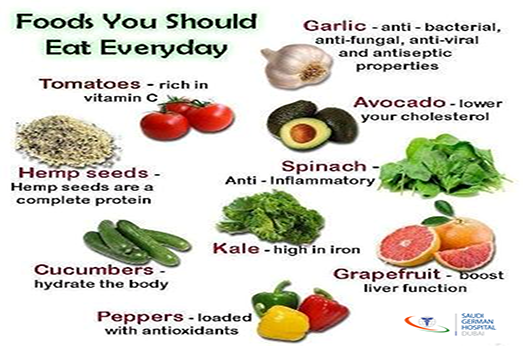
Food you should Eat Everyday for a healthy life. What do you think, what else we can add for a healthy diet? #SGHDubai #HealthTip