This is a perfect tea for lots of hungry children, but it would also be a good weekend late breakfast, depending on your mood. It’s the classic way that many crêpe stallholders cook crêpes to order late at night around the major tourist attractions in Paris. They are always very popular, often with long queues, and once you’ve tasted them it’s easy to understand why.
Ingredients
24 asparagus spears
8 eggs
450 g swiss cheese, such as gruyère or emmental (thinly sliced)
8 slices of cooked ham
1 tblsp olive oil
Crêpes:
100 g plain flour
1 egg
300 ml milk
sunflower oil (for frying)
sea salt
black pepper (freshly ground)
Method
Sift the flour and a pinch of salt into a bowl and make a well in the centre. Add the egg and whisk well with a balloon whisk.
Gradually beat in the milk, drawing in the flour from the sides to make a smooth batter. Leave to rest for 5 minutes.
Meanwhile, trim the asparagus spears and blanch in a pan of boiling water for 1–2 minutes, until almost tender but still with a slight bite.
Drain and refresh under cold running water to prevent them from cooking any further and set aside until needed.
Heat a little oil in an 18cm (7in) heavy-based pancake or frying pan. Pour in just enough batter to thinly coat the base of the pan.
Cook over a moderately high heat for about 1 minute, until golden brown. Turn or toss the crêpe and break in an egg, then gently whisk to spread it evenly all over the crêpe.
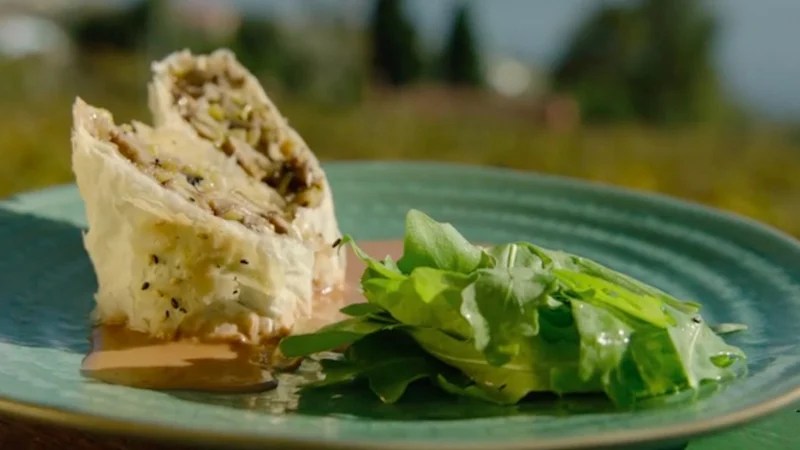
Neven Maguire’s mushroom & leek strudel with madeira wine sauce
Ingredients
Serves 4-6
For the strudel
2 tbsp olive oil, plus extra for oiling
1 small onion, peeled and finely diced
2 garlic cloves, peeled and crushed
225g mixed wild mushrooms roughly chopped
1 small leek, washed and finely sliced
2 tbsp double cream
2 tbsp Madeira Wine
2 tbsp chopped parsley
4-5 sheets filo pastry, thawed if frozen (about 100g/4oz in total)
1 egg, beaten
salt and freshly ground black pepper
mixed salad leaves, to serve
For the madeira wine sauce
700ml beef stock
1 tbsp tomato purée
3 tbsp Madeira Wine
3 tbsp cream
Method
For the strudel
Preheat the oven to 190°C/375°F/ gas mark 5.
Line a baking tray with parchment paper.
Heat the olive oil in a large frying pan.
Add the onion, garlic and mushrooms and cook over a medium to high heat for 2-3 minutes until almost tender.
Reduce the heat, add the cream and Madeira to the pan and cook for another minute.
Add herbs and salt and pepper to taste.
Sauté for another minute until the spring onions are just tender and the liquid has almost completely reduced.
Allow to cool completely.
Unroll the sheets of filo pastry and place them all, one on top of the other, on a work surface.
Brush the top sheet of pastry with beaten egg and then spread over the mushroom mixture to within 4cm (1½in) of the edges.
Fold the short ends inwards a little to meet the mushroom mixture and then, starting with a long edge, roll up the pastry fairly tightly like you would a Swiss roll, keeping the mushrooms in place as you roll.
Place the strudel seam-side down on the parchment paper and brush it all over with the remaining beaten egg.
Bake for 20-25 minutes until crisp and golden brown.
Allow to cool for a few minutes before carefully placing on a chopping board.
Cut the strudel into thick slices and arrange on warmed plates. Drizzle some sauce beside it and serve with some mixed salad leaves.
For the madeira wine sauce
Heat a heavy based saucepan, add the Madeira Wine and reduce by half.
Gradually whisk in the beef stock until smooth, followed by the tomato purée.
Simmer for approximately 5 minutes, stirring occasionally until slightly thickened.
Whisk in the cream, bring to the boil, season to taste and thicken with some diluted cornflower.
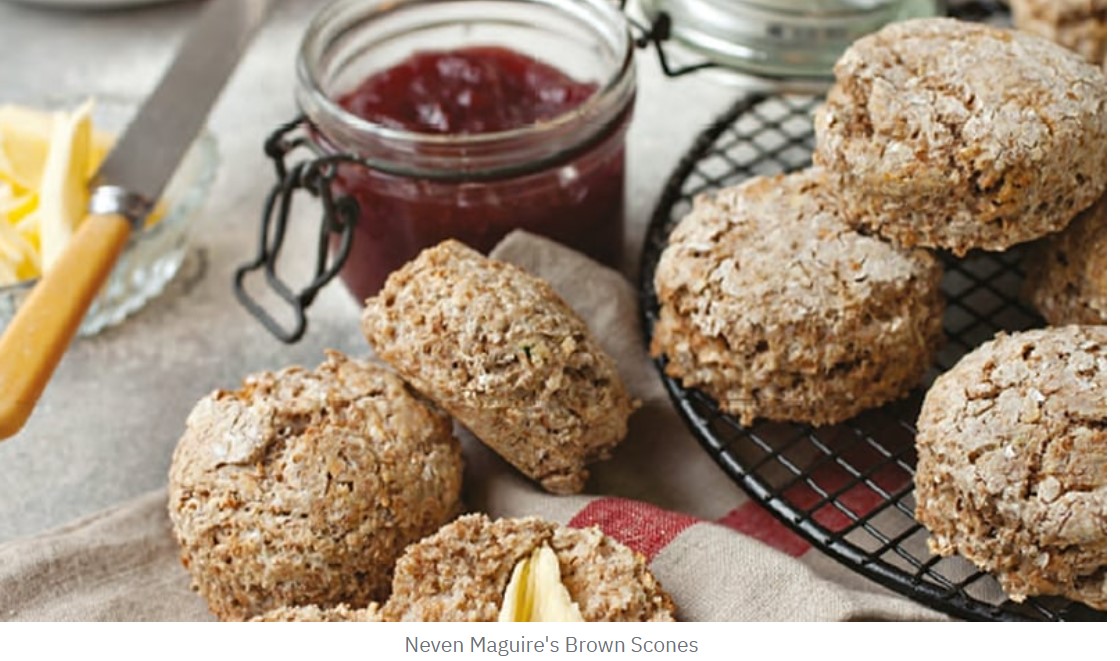
Brown scones are full of roughage and great for breakfast. And here is a good tip: you can make this mixture, shape the scones and freeze them. You can then cook the scones straight from the freezer to the oven – just give them an extra 5 minutes and make sure the scones are golden brown and well-risen.
Ingredients
Rapeseed or sunflower oil, for greasing
225g (8oz) self-raising flour, plus extra for dusting
225g (8oz) coarse wholemeal flour
½ tsp baking soda
½ tsp salt
50g (2oz) wheat bran
25g (1oz) butter, diced and at room temperature
1 tsp light muscovado sugar
300ml (½ pint) buttermilk, plus a little extra if necessary
Method
Preheat the oven to 220°C (425°F/gas mark 7). Line 2 baking sheets with parchment paper and grease the paper with a little oil.
Sift the flours, baking soda and salt into a bowl. Tip in the bran left in the sieve and stir it in with the wheat bran. Rub in the butter with your fingertips until it is evenly dispersed. Stir in the sugar.
Make a well in the centre of the dry ingredients and add the buttermilk and golden syrup. Using a large spoon, mix gently and quickly until you have achieved a smooth, not-too-sticky dough. Add a little more buttermilk if necessary, until the dough binds together without being sloppy.
On a lightly floured surface, roll out the dough to a 2.5cm (1in) thickness and cut into rounds with a 6cm (2½in) plain cutter. Arrange on the lined baking sheets and bake for 10-15 minutes, until golden brown and well-risen.
Serve with butter or lightly whipped cream and strawberry jam.
A delicious classic recipe for a very classy cake.
Ingredients
butter (melted, for greasing)
4 eggs
125 g (41/2 oz) caster sugar (plus 3 tbsp for sprinkling)
2 tblsp warm water
1 tsp vanilla extract
125 g (41/2 oz) plain flour (plus extra for dusting)
for the filling
200 g (7oz) rhubarb (about 2 stalks, trimmed), cut into 5mm (1/4 in) slices
125 g (41/2 oz) caster sugar
200 ml (7fl oz) milk
1 vanilla pod, split lengthways, or 2 tsp vanilla extract
3 egg yolks
15 g (1/2 oz) cornflour
100 ml (31/2 fl oz) whipped double or regular cream (measured when whipped)
Method
Preheat the oven to 190°C (375°F/Gas 5). Line the base of the Swiss roll tin (25 x 38cm/ 10 x 15′) with baking parchment, brush the base and sides of the tin with melted butter and dust with flour.
Using a hand-held electric beater or an electric food mixer, whisk together the eggs, caster sugar, water and vanilla extract until light and fluffy.
Sift in the flour, about one-third at a time, and fold it into the mixture. Carefully pour the mixture into the prepared Swiss roll tin and bake in the oven for 12–15 minutes or until the centre of the sponge is slightly springy to the touch and the edges have shrunk a little from the sides of the tin.
Take a piece of baking parchment slightly larger in size than the tin and spread out on a work surface.
Sprinkle the paper evenly with caster sugar (this is to stop the cake sticking to the paper). Quickly flip the Swiss roll tin over onto the sugared paper, then carefully remove the tin and baking parchment from the bottom of the cake.
Place a clean, slightly damp tea towel over the cake while it cools – this will prevent it drying out and cracking when you roll it.
Meanwhile, make the filling. Place the rhubarb in a saucepan with 75g (3oz) of the caster sugar and 25ml (1fl oz) of water and place on a medium heat, stirring to dissolve the sugar. Bring to the boil and allow to boil, uncovered and stirring regularly, for 10–15 minutes or until the rhubarb is completely soft and the mixture is quite thick.
Tip out onto a plate and allow to cool.
Next make the custard. Place the milk and the split vanilla pod (if using) in another pan and bring to the boil.
Whisk the egg yolks (and vanilla extract, if using) with the remaining sugar (I like to use a hand-held electric beater for this) for a few minutes or until pale and light. Then briefly whisk in the cornflour.
Pour the hot milk and vanilla pod (if using) onto the egg mixture, whisking as you pour, then tip it all back into the saucepan and cook, stirring all the time, over a low heat for a few minutes or until it forms a thick custard.
Pour it into a bowl and allow to cool, then fold in the cooled rhubarb and the whipped cream – you can leave it slightly marbled (not fully mixed) if you prefer.
When the sponge is completely cold, spread over the rhubarb and custard mixture, then, with one of the short sides facing you, roll up the Swiss roll away from you and carefully transfer to a serving plate.
Sprinkle with a little extra caster sugar to finish, then cut into slices about 2cm (3/4in) thick to serve.