bordbia
Daffodils can bring some joy to any room! This daffodil season, why not treat yourself or a loved one to a bunch 🌼
Daffodils are widely available to purchase until the end of March #DaffodilSeason #IrishDaffodils #Daffodils


Summer Fruits
Cream Filling
Set the oven to 100ºC and line 2 baking sheets with parchment. Combine the egg whites, sugar, vinegar and vanilla extract. In the electric mixer, with the whisk attachment, beat the whites into stiff shiny peaks. Using a piping bag, pie mounds of meringue 7cm in diameter and 7 cm high onto the baking sheets. Bake for about 2 hours. Cool to room temperature.
Prepare the fruit and add half the berries to a medium saucepan, add the sugar and lemon juice and simmer gently for 5 minutes. Process the fruit mixture. Set aside.
Whisk the mascarpone, yoghurt and lemon rind together.
Tap the centre of each meringue to form a nest. Warm the coulis in a saucepan. Turn off the heat and add the remaining whole berries. Spoon the cream filling into the centre of each meringue, followed by several spoonfuls of the fruit.
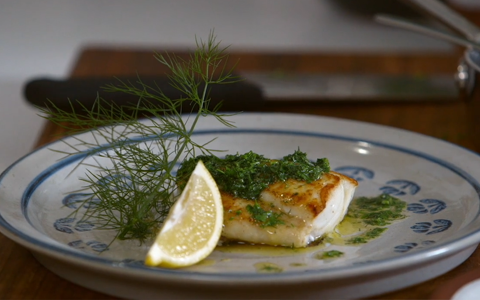
This way of cooking fish is perceived as being rather old fashioned, but if you have a really fresh fish, it can be fabulous and quite contemporary in its simplicity. Hake, cod, ling and mackerel are all delicious cooked in this way. The relish served here is classic, and when properly prepared, it will remind you why herbs, butter and lemon will always have a place at the table when fresh fish is being served.
To cook the fish, place the grill pan on a medium heat and allow to become quite hot. You don’t want it smoking madly, but should see a light haze, almost like vapour, arising from the pan. Dry the fish fillets with paper towel and dip in the seasoned flour and shake off the excess. You can skip this flouring stage if you wish. With a knife, lightly butter the flesh side of the fish fillets. Place the fish, buttered sides down on the hot grill. The fish should sizzle immediately it hits the pan, if it doesn’t, the pan wasn’t hot enough and you need to crank up the heat immediately. If you have difficulty determining if the pan is hot enough, take one of the pieces of fish and holding it above the pan, just place a corner of the buttered side onto the grill. If it sizzles, it is fine to proceed, if it doesn’t then allow the pan to get hotter. Let the fish cook, still on a high heat until the fish is well coloured. There should be a bit of smoke coming from the pan, but not great clouds of it, so adjust the heat accordingly. Lift the fish at one corner to check if it is golden and getting crisp. When you are confident this stage has been reached, turn the heat down a little and with the help of a fish or egg slice, turn the fish over on to the skin side. Let it continue to cook until the skin is crispy and the fish is cooked through. You will know the fish is cooked when the flesh appears to be white and creamy in colour and no longer looks translucent.
While the fish is cooking, melt the butter for the relish. Allow the butter to cool a little before stirring in the chopped herbs.
Remove the cooked fish to hot serving plates, placing them with the golden flesh side up. Place a wedge of lemon on each plate and drizzle the herb relish over.
If you wish garnish with a spring of parsley and serve immediately.
http://www.bordbia.ie/consumer/recipes/roryoconnell/pages/grilledfishwithherbrelish.aspx

Heat the olive oil in a large frying pan and add the seasoned hake fillets, skin side down. Cook for a couple of minutes until the skin is just beginning to crisp, then add little knobs of butter to the pan around each hake fillet and cook for another couple of minutes until the skin is crisp.
Turn the hake fillets over and cook for another 3-4 minutes until cooked through. This will depend on the thickness of the fillets. Transfer to warmed plates while you make the sauce.
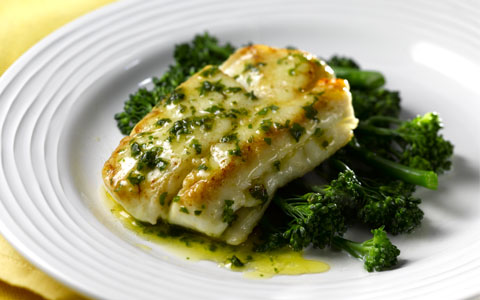
Add the rest of the butter to the frying pan and allow it to gently melt over a moderate heat. When it has melted, add a squeeze of lemon juice and the herbs, swirling to combine. Season to taste. Spoon this sauce over the hake fillets and serve with steamed broccoli and some sautéed new potatoes.
Above all be careful not to overcook the fish. To check, gently prod the thickest part of the fish with a small knife. If it is cooked, the flesh will look opaque and the flakes will separate easily. If it isn’t done yet, it will still have the translucent look for raw fish.
Other fish you could use: Whiting, haddock or trout fillets
Protein: 39g
Carbohydrates: 52g
Fat: 26g
Iron: 2.4mg
Energy: 644kcal
This way of cooking fish is perceived as being rather old fashioned, but if you have a really fresh fish, it can be fabulous and quite contemporary in its simplicity. Hake, cod, ling and mackerel are all delicious cooked in this way. The relish served here is classic, and when properly prepared, it will remind you why herbs, butter and lemon will always have a place at the table when fresh fish is being served.
To cook the fish, place the grill pan on a medium heat and allow to become quite hot. You don’t want it smoking madly, but should see a light haze, almost like vapour, arising from the pan. Dry the fish fillets with paper towel and dip in the seasoned flour and shake off the excess. You can skip this flouring stage if you wish. With a knife, lightly butter the flesh side of the fish fillets. Place the fish, buttered sides down on the hot grill. The fish should sizzle immediately it hits the pan, if it doesn’t, the pan wasn’t hot enough and you need to crank up the heat immediately. If you have difficulty determining if the pan is hot enough, take one of the pieces of fish and holding it above the pan, just place a corner of the buttered side onto the grill. If it sizzles, it is fine to proceed, if it doesn’t then allow the pan to get hotter. Let the fish cook, still on a high heat until the fish is well coloured. There should be a bit of smoke coming from the pan, but not great clouds of it, so adjust the heat accordingly. Lift the fish at one corner to check if it is golden and getting crisp. When you are confident this stage has been reached, turn the heat down a little and with the help of a fish or egg slice, turn the fish over on to the skin side. Let it continue to cook until the skin is crispy and the fish is cooked through. You will know the fish is cooked when the flesh appears to be white and creamy in colour and no longer looks translucent.
While the fish is cooking, melt the butter for the relish. Allow the butter to cool a little before stirring in the chopped herbs.
Remove the cooked fish to hot serving plates, placing them with the golden flesh side up. Place a wedge of lemon on each plate and drizzle the herb relish over.
If you wish garnish with a spring of parsley and serve immediately.
http://www.bordbia.ie/consumer/recipes/roryoconnell/pages/grilledfishwithherbrelish.aspx

Set the grill to high.To cook, whisk the eggs with the chives, basil and seasoning. Heat a non-stick pan with the olive oil. Pour in the egg mixture, stir for a moment or two, allowing the liquid egg to flow on to the base of the pan. Scatter on the cream cheese and continue cooking until the egg is almost set but still moist on top, add the smoked salmon pieces, press on salmon lightly. Place the pan under the hot grill to finish cooking 1-2 minutes. Cool 5 minutes, and then loosen edge with spatula and slide onto a large plate. Cut into wedges and serve warm. Garnish with red onion slices.
http://www.bordbia.ie/consumer/recipes/eggs/pages/smokedsalmonfrittata.aspx
Heat the olive oil in a large frying pan and add the seasoned hake fillets, skin side down. Cook for a couple of minutes until the skin is just beginning to crisp, then add little knobs of butter to the pan around each hake fillet and cook for another couple of minutes until the skin is crisp.
Turn the hake fillets over and cook for another 3-4 minutes until cooked through. This will depend on the thickness of the fillets. Transfer to warmed plates while you make the sauce.
Add the rest of the butter to the frying pan and allow it to gently melt over a moderate heat. When it has melted, add a squeeze of lemon juice and the herbs, swirling to combine. Season to taste. Spoon this sauce over the hake fillets and serve with steamed broccoli and some sautéed new potatoes.
Above all be careful not to overcook the fish. To check, gently prod the thickest part of the fish with a small knife. If it is cooked, the flesh will look opaque and the flakes will separate easily. If it isn’t done yet, it will still have the translucent look for raw fish.
Other fish you could use: Whiting, haddock or trout fillets
Protein: 39g
Carbohydrates: 52g
Fat: 26g
Iron: 2.4mg
Energy: 644kcal