
Chef
@Anahaugh returns home for her new cookery series on
@BBCnireland Along the way Anna meets local food producers and celebrity guests including
@RealCFrampton @dennistaylor1985
@angelascanlon Find out more
Nutrition key to sound health
Chef
@Anahaugh returns home for her new cookery series on
@BBCnireland Along the way Anna meets local food producers and celebrity guests including
@RealCFrampton @dennistaylor1985
@angelascanlon Find out more
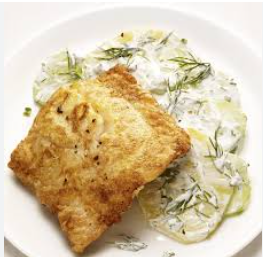
Heat the olive oil in a large frying pan and add the seasoned hake fillets, skin side down. Cook for a couple of minutes until the skin is just beginning to crisp, then add little knobs of butter to the pan around each hake fillet and cook for another couple of minutes until the skin is crisp.
Turn the hake fillets over and cook for another 3-4 minutes until cooked through. This will depend on the thickness of the fillets. Transfer to warmed plates while you make the sauce.
Add the rest of the butter to the frying pan and allow it to gently melt over a moderate heat. When it has melted, add a squeeze of lemon juice and the herbs, swirling to combine. Season to taste. Spoon this sauce over the hake fillets and serve with steamed broccoli and some sautéed new potatoes.
Steamed broccoli and sauté new potatoes
Above all be careful not to overcook the fish. To check, gently prod the thickest part of the fish with a small knife. If it is cooked, the flesh will look opaque and the flakes will separate easily. If it isn’t done yet, it will still have the translucent look for raw fish.
Other fish you could use: Whiting, haddock or trout fillets
Protein: 39g
Carbohydrates: 52g
Fat: 26g
Iron: 2.4mg
Energy: 644kcal
http://www.bordbia.ie/consumer/recipes/fish/pages/panfriedhake.aspx


 dunnesstoresVerified
•
Follow
Liked by regina_hollingsworth1 and others
 dunnesstores
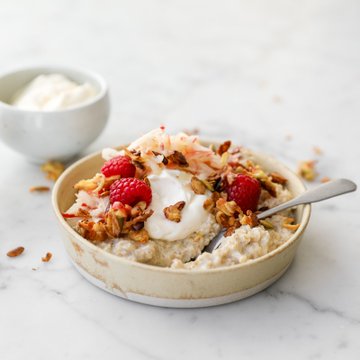

 Visit https://ndc.ie/recipes/apple-crumble-porridge/… for the full recipe
  #milkitsgoodtoknowitsgood #enjoyitsfromeurope #sustainabletogetherineurope
Warm up on this winter morning with our Creamy Porridge with Irish Crème Fraîche and Preserved Peaches! 🍑✨ A bowl of pure deliciousness that is full of Flahavan’s creamy oats. It’s not just breakfast, it’s a hug in a bowl – Enjoy! 🥣😍 #Flahavansirishoats #Lovelydoublybaked
INGREDIENTS:
80g Flahavan’s Progress Oatlets
400ml whole milk
pinch of sea salt
2-3 tbsp Irish Creme Fraiche
1-2 tbsp brown Sugar
2 preserved peaches, sliced
METHOD:
Simmer: In a saucepan, gently heat the oats with milk and the salt. Stir occasionally until thickened.
Sweeten: Once creamy, stir in 1 tbsp of brown sugar.
Serve: Pour porridge into bowls. Add a dollop of the crème fraîche and a slice of preserved peach.


January 13, 2026
Cabbage often—and unfairly—gets overlooked, with flashier veggies and protein-dense superfoods getting all the attention. But as far as nutritional food options go, the leafy green is pretty hard to beat. A staple in different cuisines (American coleslaw! Middle Eastern malfouf! Chinese suan la bai cai!), cabbage has been a longtime favorite amongst global chefs.
“Much of this stems from its versatility,” Woldy Reyes, chef and author of the cookbook In the Kusina: My Seasonal Filipino Cooking, tells Vogue. “We are seeing a growing trend of chefs utilizing it as a centerpiece, such as cabbage steaks, rather than as a side dish. The culinary appeal has never been stronger.”
“Its popularity stems from its ability to transform,” adds Tatiana Mora, chef of plant-based Michelin star restaurant Mita. “It can be eaten raw, fermented, steamed, roasted, or sautéed, consistently providing flavor, texture, and nutrition. I love it because it is a noble vegetable that grows easily, keeps well, and can be used almost entirely, making it perfect for a conscious and respectful approach to cooking.”
It’s accessible, easy to cook, and delicious. Here are all the reasons cabbage deserves a seat at your table (get it?) in 2026.
Cabbage is a leafy green that is part of the brassica plant family (which also includes broccoli, cauliflower, brussels sprouts, and kale), says Amy Shapiro, RD, registered dietitian and founder of Real Nutrition. It comes in several varieties, but the most common ones you’ll see are green, red (or purple), and savoy. What makes cabbage different from other leafy greens is its density and durability. “It’s heartier, stores longer, and holds up well to cooking, fermenting, and shredding,” Shapiro says. “Nutritionally, it shares many benefits with other cruciferous vegetables, but it’s often milder in flavor and more versatile across cuisines.”
Besides its versatility, one of the main benefits of cabbage is its many nutrients. Shapiro lists other main benefits of the leafy green:
Supports Gut Health
Shapiro says that, because cabbage contains fiber and other compounds that support digestion, eating this leafy green can benefit the gut bacteria and boost gut health.
Anti-Inflammatory Properties
Cabbage is also rich in antioxidants and phytonutrients that studies have shown can reduce inflammation, she says.
Boosts Heart Health
Along with fiber, cabbage has potassium, which supports healthy cholesterol levels and blood pressure. Cabbage also has vitamin K, which is essential for blood clotting (and bone health). Shapiro points to red cabbage in particular, which she says contains antioxidants called anthocyanins that studies have shown can improve brain and heart health.
Regulates Blood Sugar
Cabbage is low in calories and carbs while being high in fiber, which can help stabilize glucose levels in the body.
Boosts Immune System
Shapiro says that cabbage is rich in sulfur-containing compounds to help strengthen your immune system’s defences—and vitamin C, which studies have shown can provide antioxidant protection and support immune health.