
Halloween 🎃 🧙♀️ 🤪 in Cavan
Nutrition key to sound health

 dunnesstoresVerified
My brother, Kenneth, loves Asian food and he is in no doubt that he is far better than me at cooking it! I don’t disagree. He is proud of this chicken satay dish and often makes it for the family. This dipping sauce also works well with pork, prawns, beef strips or turkey. And remember, kids just love anything on sticks!
SERVES 4
FOR THE PICKLED CUCUMBER SALAD:
FOR THE DIPPING SAUCE:
1 To make the dipping sauce, place the peanut butter in a small pan and stir in the soy sauce, light brown sugar and lime juice. Gradually whisk in the coconut milk and heat gently until you have achieved a smooth sauce. Stir in the chilli and coriander, then leave to cool, stirring occasionally to prevent a skin from forming.
2 Soak 8 x 15cm (6in) bamboo skewers in a shallow dish of cold water for at least 30 minutes. Preheat a griddle pan until it’s smoking hot or light a barbecue.
3 Whisk together the soy sauce, honey and curry powder. Season with pepper and stir in the chicken pieces. Leave to marinate for 2 minutes, then thread the chicken pieces onto the soaked bamboo skewers and arrange on the barbecue. Cook the chicken skewers over medium-hot coals for 4–6 minutes, turning once or twice, until completely tender and cooked through. If using a griddle pan, reduce the heat to medium as soon as you’ve put the skewers on.
4 Meanwhile, to prepare the pickled cucumber salad, place the vinegar in a bowl and stir in the sugar and a good pinch of salt until both have dissolved. Tip in the cucumber, stirring to combine, and set aside to allow the flavours to develop. 5 To serve, arrange 2 chicken satay skewers on each warmed plate. Divide the dipping sauce among individual bowls and place to the side of the skewers. Add the pickled cucumber salad, leaving behind any excess liquid, to serve.
Butter Chicken
Swap your usual takeaway curry for this homemade chicken makhana, which combines marinated chicken with a rich, buttery sauce. This is an authentic Indian curry with its origins in Delhi, where it was first made to use up pieces of leftover tandoori chicken.
Serves 4–6
Trim the chicken and cut into bite-sized pieces. Put in a bowl and stir in half the lemon juice with a good pinch of salt. Add 2 tablespoons of the curry seasoning, the yogurt and 1 tablespoon of the oil. Mix to combine, then season generously with pepper. Cover and leave to marinate for at least 1 hour or up to 3 days in the fridge.
Heat the rest of the oil and a knob of the butter in a wok or skillet over a high heat, and quickly sear the marinated chicken in batches until golden brown, transferring with a slotted spoon to a clean bowl as you go. Add the onions to the pan and sauté for 4–5 minutes until they start to caramelise.
Tip in the garlic, chilli and ginger, then add another knob of the butter and sauté for 1–2 minutes. Chop the stalks from the coriander and add them to the pan with the rest of the curry seasoning and another knob of the butter. Toast for a few minutes until very fragrant. Pour the passata into the pan and bring to a simmer, then add the cream and the rest of the lemon juice.
Transfer to a blender and blend until you have a very smooth sauce. Return to the pan and add the chicken with any juices and reheat gently for about 5 minutes until the chicken is cooked through and tender. Season to taste, then fold in the lemon rind with the rest of the butter and the coriander leaves, reserving a few sprigs to garnish. Transfer to bowls and garnish with the coriander sprigs.
SERVE WITH … This mild and creamy curry is sure to please all tastes. Make some Homemade Flatbreads, perhaps brushing them with a little melted butter and sprinkling with black onion seeds. A bowl of Pilau Rice completes the meal, alongside some spiced mango chutney, mint raita and lime pickle.

1Preheat the oven to 180C.
2 Place the rhubarb into an oven proof dish. Pour over the sugar. Place the orange slices on top. Cover with foil and bake for 25 minutes. Sprinkle with the orange blossom water and leave to cool.
3. Place the rice, milk, chai tea bags and sugar in a saucepan. Bring to the boil on the hob. Turn down to simmer slowly for 30 – 40 minutes, only leave the tea bags in the milk for ten minutes before removing.
4. Stir occasionally to ensure it doesn’t catch on the bottom. Spoon the rice pudding into bowls, top with some rhubarb and scatter with toasted almonds. Serve right away.
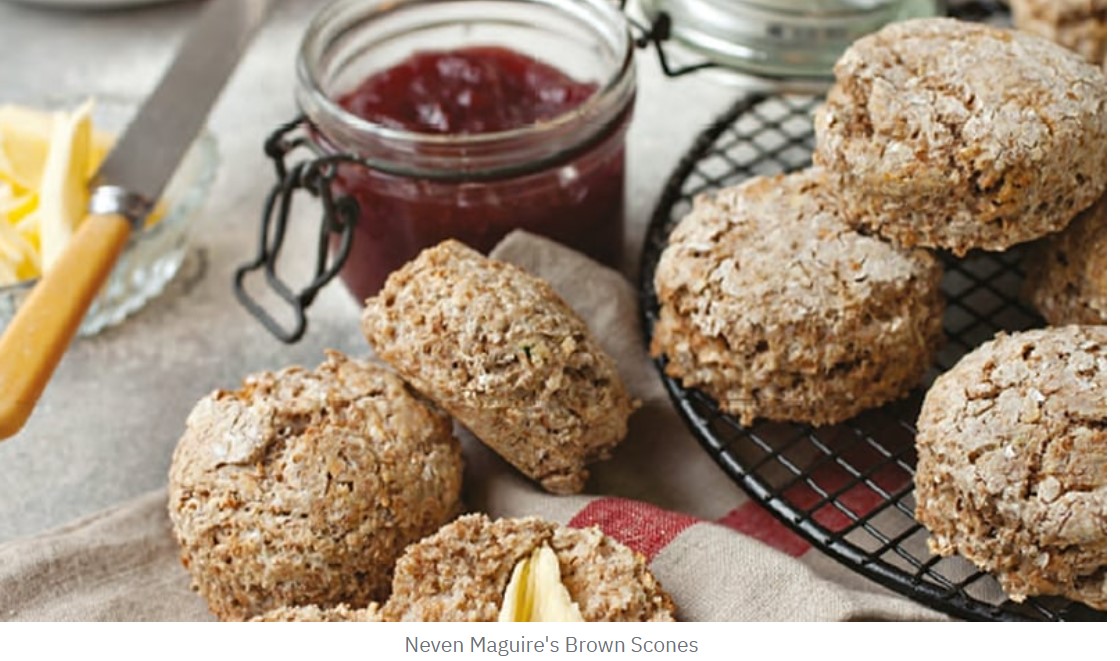
Brown scones are full of roughage and great for breakfast. And here is a good tip: you can make this mixture, shape the scones and freeze them. You can then cook the scones straight from the freezer to the oven – just give them an extra 5 minutes and make sure the scones are golden brown and well-risen.
Celebrity Chef
More from
Neven Maguire: Home Chef


•
Follow
glenilenfarm
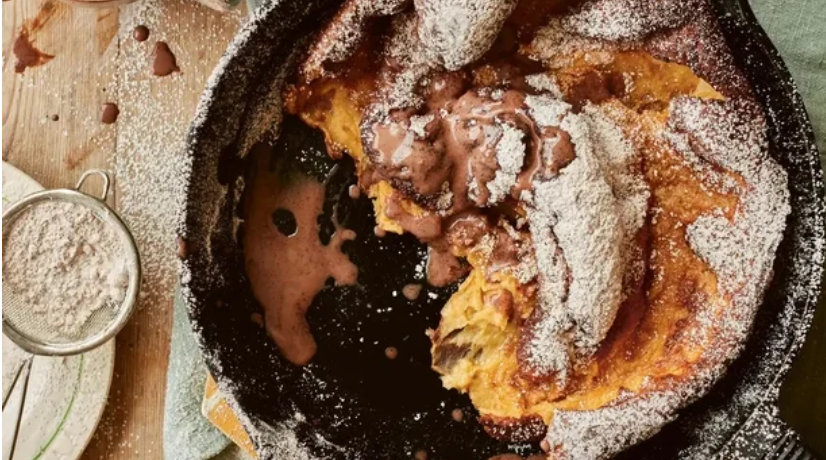
Hayden says this is her ‘kids’ dream breakfast’.
“I love classic Spanish churros for breakfast – who doesn’t?” Chef Georgina Hayden says.
“Dipped in hot chocolate, they’re such a treat, but deep-frying is not something I want to be doing on a weekday morning (or any morning, come to that). This is a striking and fun alternative.
“As with all good batters, you can just leave this one in the fridge overnight for next-level effortlessness. My kids’ dream breakfast.”
Churros Dutch baby
Serves: 4
1. Blitz the plain flour, 175 millilitres of the whole milk, the eggs, sea salt and vanilla in a blender until smooth. You can also do this by hand with a whisk.
2. If you can, cover and leave the mixture to rest for 30 minutes, or in the fridge if leaving longer (though bring the batter to room temperature before cooking).
3. Preheat your oven to 220°C/200°C fan/gas mark seven.
4. Cut the butter into cubes and place in a large ovenproof frying pan or cast-iron pan.
5. Pop into the oven until the butter has melted and is browned (this adds loads of flavour), but you don’t want it to burn, so keep an eye on it.
6. Working quickly and carefully, leave the pan in the oven, pour in the batter and shut the door. Leave it untouched for 20 minutes (do not open that door!).
7. Then reduce the oven temperature to 180°C/160°C fan/gas mark four and bake for a further five minutes.
8. While the pancake is baking, make the cinnamon sugar and the hot chocolate. Mix the icing sugar and ground cinnamon and set aside. Cut or break the chocolate into small equal-sized pieces and place them in a heatproof bowl.
9. When the Dutch baby is almost ready, heat the single cream and remaining 100 millilitres of milk in a small saucepan over a medium heat, so it is hot but not boiling. Remove from the hob before it starts to bubble, then pour it over the chocolate. Leave for one minute, then stir until you have a thick, smooth chocolate sauce.
10. When the Dutch baby is ready, remove from the oven and dust straight away with the cinnamon sugar, as evenly as you can. Serve with the chocolate sauce on the side.
MEDesque by Georgina Hayden is published in hardback by Bloomsbury Publishing. Photography by Laura Edwards. Available now.