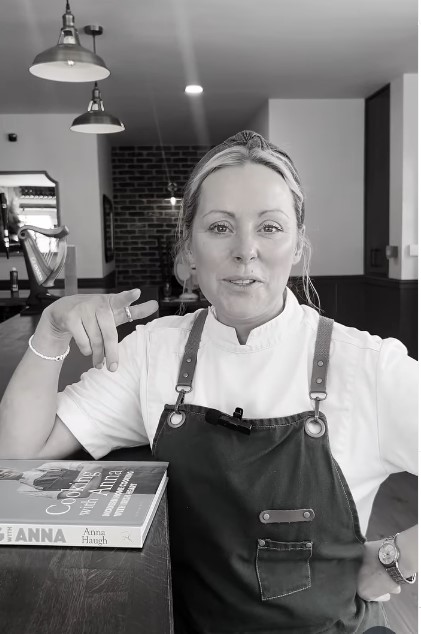
My peach baked Alaska from my @masterchefuk skills test! If you’d like the recipe for this one, I’ve added it to the link in my bio! I’ve included the recipe for the Genoise sponge too 🥰
Cheat’s No Churn Vanilla & Sea Salt Ice-Cream with Roasted Frozen Berries and Grated White Chocolate | Summer ending doesn’t mean ice cream is off the menu and this straightforward method of making this ice cream might just convince you to take the plunge and make your own. Even if you don’t, and use shop bought, the trick of roasting frozen berries with a sprinkle of grated white chocolate will make you wonder why you haven’t been doing this for years, with ingredients as always from @dunnestores 🍦🍓 Give it a go this weekend!
Serves: 4 Time: 35 mins + overnight freezing time
For the ice cream: 2 vanilla pods, split in half, seeds scraped 200g condensed milk 600ml double cream 2 tsp flaky sea salt
For the roasted frozen berries: 300g frozen mixed berries 3 tbsp caster sugar 1 tbsp cornflour Juice of a lemon
To serve: 100g white chocolate, grated
1. Put the condensed milk, cream and vanilla pods & seeds into a large bowl. Using an electric mixer, whisk the mixture until thickened and stiff peaks form. Gently stir in the sea salt and spoon into a large loaf tin or large glass lunch box with a lid, cover and freeze overnight or until solid. 2. When you are about 25 minutes away from serving, preheat the oven to 180°C/160°C fan /350°F/Gas Mark 4. 3. Add the berries to a deep tray with the caster sugar, cornflour and lemon juice. Mix well to combine, add to a baking tray and transfer to the oven to roast for 15 minutes, stirring halfway, until the berries are broken down, glossy and juicy. 4. Remove the berries from the oven and allow to cool slightly then serve the ice cream into bowls. Top with the slightly warm berries then drown everything in the grated white chocolate.1d
Makes about 6 servings (depending on hunger level and capacity for
sharing) Note: These scones are more muffin-like in texture; dough will be moist and wet, which ensures a tender texture.
I am excited to take over the café from today. We’ll be opening the doors as usual at 10am but with all the same familiar faces and the usual cosy atmosphere that you’re used to.
I’d like to wish Emma the very best, and a big thank you for the time we’ve worked together & all the laughs we’ve had along the way.
I am looking forward to welcoming our loyal customers and new faces over the coming weeks and months.
Thank you to everyone for all your support and well wish so far. I’m very grateful.
Sharon Hearne Smith’s Sesame Seed Porridge Bread from Today with Maura and Dáithí.
Ingredients
This is an unusual bread recipe, based on porridge oats and yoghurt instead of flour and water. It is quick, easy and virtually foolproof to make.
Use any selection of seeds you prefer instead of sesame seeds, or omit them altogether for a plain bread. Alternatively, add other flavours like nuts and dried fruits or sundried tomatoes and basil or a swirl of pesto would be delicious too. This bread stays quite moist and fresh for a few days stored in an airtight container.
Makes: 1 loaf (about 12 slices)
Sunflower oil for greasing
500g tub natural yoghurt
100ml milk
2 tbsp olive oil
2 tbsp sesame seeds + extra for sprinkling
2 tsp bicarbonate of soda
2 x 500ml yoghurt tubs of porridge oats (or 400g)
butter for serving, optional
Method
Preheat the oven to 200C (fan 180C), 400F, Gas Mark 6. Grease a 1Lb loaf tin (approximately 3 x 5 x 7 inch) with parchment paper and grease again.
Scoop the yoghurt into a large bowl. Add the milk, oil, sesame seeds and bicarbonate of soda and mix until well blended.
Fill a clean and dry yoghurt tub with oats and tip them in. Repeat with a second tub of oats. Alternatively, weigh out 400g of oats on a scales.
Mix everything together until well blended.
Spoon into the prepared tin, spreading the top level. Scatter a small handful of sesame seeds on top.
Bake for 45 minutes or until golden brown and a skewer comes out clean when pierced in the middle.
Remove from the tin and return the loaf to oven, directly on the shelf, for another 5 minutes to dry out the crust.
Remove and leave to cool on a wire rack. Cut into slices and serve spread with a little butter if liked.
A delicious classic recipe for a very classy cake.
Ingredients
butter (melted, for greasing)
4 eggs
125 g (41/2 oz) caster sugar (plus 3 tbsp for sprinkling)
2 tblsp warm water
1 tsp vanilla extract
125 g (41/2 oz) plain flour (plus extra for dusting)
for the filling
200 g (7oz) rhubarb (about 2 stalks, trimmed), cut into 5mm (1/4 in) slices
125 g (41/2 oz) caster sugar
200 ml (7fl oz) milk
1 vanilla pod, split lengthways, or 2 tsp vanilla extract
3 egg yolks
15 g (1/2 oz) cornflour
100 ml (31/2 fl oz) whipped double or regular cream (measured when whipped)
Method
Preheat the oven to 190°C (375°F/Gas 5). Line the base of the Swiss roll tin (25 x 38cm/ 10 x 15′) with baking parchment, brush the base and sides of the tin with melted butter and dust with flour.
Using a hand-held electric beater or an electric food mixer, whisk together the eggs, caster sugar, water and vanilla extract until light and fluffy.
Sift in the flour, about one-third at a time, and fold it into the mixture. Carefully pour the mixture into the prepared Swiss roll tin and bake in the oven for 12–15 minutes or until the centre of the sponge is slightly springy to the touch and the edges have shrunk a little from the sides of the tin.
Take a piece of baking parchment slightly larger in size than the tin and spread out on a work surface.
Sprinkle the paper evenly with caster sugar (this is to stop the cake sticking to the paper). Quickly flip the Swiss roll tin over onto the sugared paper, then carefully remove the tin and baking parchment from the bottom of the cake.
Place a clean, slightly damp tea towel over the cake while it cools – this will prevent it drying out and cracking when you roll it.
Meanwhile, make the filling. Place the rhubarb in a saucepan with 75g (3oz) of the caster sugar and 25ml (1fl oz) of water and place on a medium heat, stirring to dissolve the sugar. Bring to the boil and allow to boil, uncovered and stirring regularly, for 10–15 minutes or until the rhubarb is completely soft and the mixture is quite thick.
Tip out onto a plate and allow to cool.
Next make the custard. Place the milk and the split vanilla pod (if using) in another pan and bring to the boil.
Whisk the egg yolks (and vanilla extract, if using) with the remaining sugar (I like to use a hand-held electric beater for this) for a few minutes or until pale and light. Then briefly whisk in the cornflour.
Pour the hot milk and vanilla pod (if using) onto the egg mixture, whisking as you pour, then tip it all back into the saucepan and cook, stirring all the time, over a low heat for a few minutes or until it forms a thick custard.
Pour it into a bowl and allow to cool, then fold in the cooled rhubarb and the whipped cream – you can leave it slightly marbled (not fully mixed) if you prefer.
When the sponge is completely cold, spread over the rhubarb and custard mixture, then, with one of the short sides facing you, roll up the Swiss roll away from you and carefully transfer to a serving plate.
Sprinkle with a little extra caster sugar to finish, then cut into slices about 2cm (3/4in) thick to serve.
Preheat oven to 180c fan and line a 23cm x 23cm x 5cm square tin with baking parchment.
Combine the flour, oats, brown sugar and salt in a bowl. Rub in the butter using your hands to form a crumbly mixture. Press 2/3 of the mixture into the bottom of the prepared pan, pressing down firmly.
Bake for 10 minutes then remove from the oven. Spread the jam to within a ½ cm of the edge and scatter over the fresh raspberries. Sprinkle the remaining crumb mixture over the top and bake for 35-40 minutes until lightly browned.
Once cooked, allow to cool before cutting into squares.