Experiment with other flavour additions – a little chopped cooked ham or Parma ham, diced cooked mushrooms, a few herbs or some sliced artichoke heart can all go into the base before you crack in the egg. For a really extravagant addition, add a drop or two of white truffle oil over the cream.
Ingredients
Butter, for greasing
2 ripe vine tomatoes, peeled, seeded and finely chopped
4 large eggs
4 tblsp cream
25g (1oz) mature cheddar cheese, finely grated
1 tsp snipped fresh chives
Sea salt and freshly ground black pepper
Griddled sourdough bread sliced into chunky fingers, to serve
Method
Preheat the oven to 190°C (375°F/gas mark 5).
Butter 4 blini pans or ramekins and scatter the tomatoes in the bottom.
Crack an egg into each blini pan and season with salt, then add 1 tablespoon of cream to each one and scatter the cheddar on top.
Arrange the blini pans in a shallow roasting tin and pour in enough boiling water to come about halfway up the side of each pan.
Place in the oven and bake for 15 minutes, until the eggs are set and the cheese is bubbling.
Set each blini pan on a plate and scatter over the chives, then add the chunky bread fingers to serve.
#ad | Looking for the perfect mince pie recipe? Try these Frangipane Topped Mince Pies from our brand ambassador @nevenmaguire using our Simply Better handmade mincemeat from @foodsofathenry and our shortcrust pastry from @rollit.pastry
Frangipane Topped Mince Pies Ingredients (Makes 24) 1 Packet Simply Better All Butter Shortcrust Pastry, thawed Plain Flour, for dusting 1 Jar Simply Better Mincemeat Flaked almonds, to garnish
For the Frangipane 150g Butter 150g Caster Sugar 3 Simply Better Free Range Corn Fed Large Eggs 150g Ground Almonds 1 Tbsp. Plain Flour 1 Tsp Vanilla Extract Zest of 1 Lemon
Method 1. Preheat the oven to 180°C (375°F/Gas Mark 5). Roll out the pastry on a lightly floured work surface to make a large rectangle, then stamp out 24 x 6cm discs (with a cutter or use a glass) and place in greased muffins tins (of course you can do this in batches).
2. To make the frangipane, combine all of the ingredients in a bowl and whisk with an electric whisk for about one minute until you achieve a soft paste.
3. To assemble, add a large teaspoon of mincemeat into each pastry case then top with a tablespoon of the frangipane mixture. Sprinkle over some flaked almonds and transfer to the oven to bake for 25-30 minutes until golden brown. Serve warm or cold with brandy butter or custard.
This creamy, cheesy version of the baked egg classic swaps in sweet potatoes.
Ingredients
Chefs Yotam Ottolenghi and Noor Murad admit this dish is “a far cry from a classic shakshuka, yes, but we’ve found that sweet potatoes provide just the right amount of moisture and heft to serve as a base for these eggs.
“Serve this vibrant dish as a weekend brunch; it sure looks the part,” they suggest.
1kg sweet potatoes, skin on and scrubbed clean 1 small red onion, thinly sliced into rounds 2tbsp lemon juice 3tbsp olive oil 150g mature cheddar, roughly grated 3 garlic cloves, crushed 1tsp cumin seeds, roughly crushed with a pestle and mortar 8 medium eggs 25g unsalted butter ¾tbsp sriracha 2tbsp picked fresh coriander leaves, with some stem attached Salt and black pepper
(Elena Heatherwick/PA)
Method
1. Preheat the oven to 200°C fan. Poke the sweet potatoes all over with a fork (about eight to 10 times) and place them on a medium, parchment-lined baking tray. Bake for 45–50 minutes, or until cooked through and softened. Set aside to cool and turn the oven temperature down to 180°C fan.
2. Meanwhile, in a small bowl mix together the onion, one tablespoon of lemon juice and a pinch of salt and set aside to pickle.
3. Remove the cooked potato skins and tear them into roughly 4cm pieces. Transfer the potato flesh to a large bowl and set aside. Place the skins back on the baking tray and toss with one tablespoon of oil, a quarter teaspoon of salt and a good grind of pepper. Bake for eight minutes, or until nicely coloured and starting to crisp up. Set aside to cool and crisp up further.
4. Use a fork to mash the potato flesh until smooth, then add the cheddar, garlic, cumin, another tablespoon of oil, the remaining tablespoon of lemon juice, one teaspoon of salt and a generous grind of pepper, and mix to combine.
5. Put the remaining tablespoon of oil into a large frying pan, for which you have a lid, and swirl around to coat the bottom. Spoon the mashed potato mixture into the pan, using your spoon to distribute it evenly. Place on a medium-high heat and leave to cook for about seven minutes, for the bottom to start to colour. Turn the heat down to medium and use a spoon to make eight wells in the potato mixture, breaking an egg into each. Sprinkle lightly with salt and pepper, cover with the lid and cook for four to five minutes, rotating the pan, or until the whites are set and the yolks are still runny.
6. While the eggs are cooking, put the butter and sriracha into a small saucepan on a medium heat and cook until the butter has melted, whisking constantly to emulsify. Remove the mixture from the heat before it starts to bubble – you don’t want it to split.
7. When ready, spoon the sriracha butter all over the eggs, then top with a good handful of the crispy potato skins, half the pickled onion and all the picked coriander leaves. Serve right away, with the rest of the potato skins and pickled onion to eat alongside.
Ottolenghi Test Kitchen: Shelf Love by Noor Murad and Yotam Ottolenghi, photography by Elena Heatherwick, is pubished by Ebury Press.
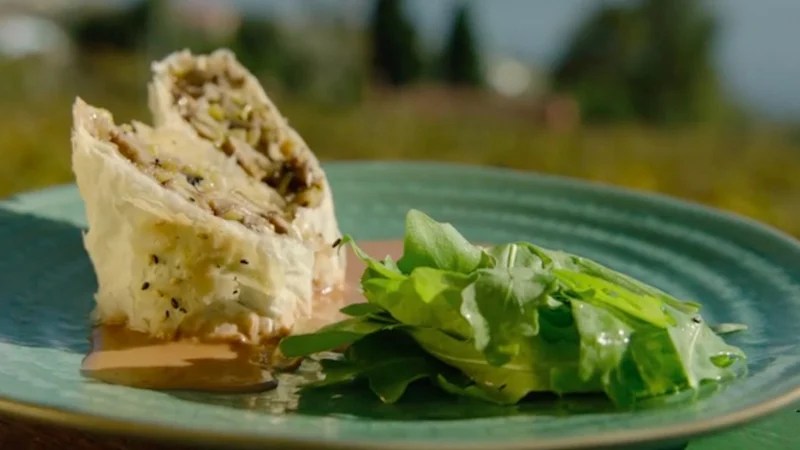
Neven Maguire’s mushroom & leek strudel with madeira wine sauce
Ingredients
Serves 4-6
For the strudel
2 tbsp olive oil, plus extra for oiling
1 small onion, peeled and finely diced
2 garlic cloves, peeled and crushed
225g mixed wild mushrooms roughly chopped
1 small leek, washed and finely sliced
2 tbsp double cream
2 tbsp Madeira Wine
2 tbsp chopped parsley
4-5 sheets filo pastry, thawed if frozen (about 100g/4oz in total)
1 egg, beaten
salt and freshly ground black pepper
mixed salad leaves, to serve
For the madeira wine sauce
700ml beef stock
1 tbsp tomato purée
3 tbsp Madeira Wine
3 tbsp cream
Method
For the strudel
Preheat the oven to 190°C/375°F/ gas mark 5.
Line a baking tray with parchment paper.
Heat the olive oil in a large frying pan.
Add the onion, garlic and mushrooms and cook over a medium to high heat for 2-3 minutes until almost tender.
Reduce the heat, add the cream and Madeira to the pan and cook for another minute.
Add herbs and salt and pepper to taste.
Sauté for another minute until the spring onions are just tender and the liquid has almost completely reduced.
Allow to cool completely.
Unroll the sheets of filo pastry and place them all, one on top of the other, on a work surface.
Brush the top sheet of pastry with beaten egg and then spread over the mushroom mixture to within 4cm (1½in) of the edges.
Fold the short ends inwards a little to meet the mushroom mixture and then, starting with a long edge, roll up the pastry fairly tightly like you would a Swiss roll, keeping the mushrooms in place as you roll.
Place the strudel seam-side down on the parchment paper and brush it all over with the remaining beaten egg.
Bake for 20-25 minutes until crisp and golden brown.
Allow to cool for a few minutes before carefully placing on a chopping board.
Cut the strudel into thick slices and arrange on warmed plates. Drizzle some sauce beside it and serve with some mixed salad leaves.
For the madeira wine sauce
Heat a heavy based saucepan, add the Madeira Wine and reduce by half.
Gradually whisk in the beef stock until smooth, followed by the tomato purée.
Simmer for approximately 5 minutes, stirring occasionally until slightly thickened.
Whisk in the cream, bring to the boil, season to taste and thicken with some diluted cornflower.
This makes a perfect lunch with some crusty bread.
Serves 4
Preparation time: 30 mins
Ingredients
1-2 aubergines
8 unpeeled garlic cloves
3 tablesp.olive oil
2 red peppers, halved and deseeded
2 tablesp. balsamic vinegar
4 scallions, finely sliced
8-10 black olives
Salt and black pepper
Salad leaves, generous handful per person
200g cheese
To Cook
Preheat the oven to Gas Mark 4, 180°C (350°F). Slice the aubergines lengthwise and mix with 6 of the garlic cloves and 1-2 tablespoons of the oil. Spread out on a baking sheet. Season well. Roast until tender – this will take approximately 20 minutes.
Grill the peppers until well blackened. Cover with a tea towel and leave to cool. Then remove the skins and cut into strips.
Whisk the vinegar with the remaining oil in a large bowl, peel and chop the remaining garlic and add to the bowl. Mix in the aubergines and peppers, scallions and olives. Taste for seasoning. Tear up the salad leaves, arrange on a large platter, top with aubergine mixture and sprinkle with cheese.
This dish would also be delicious served with a slice of baked ham or bacon if you have any leftover. Alternatively, chop up the ham or bacon and add to the colcannon mixture before shaping into patties.
Serves 4
Ingredients
450g potatoes, peeled
40g butter
3 scallions, finely chopped
A little salt and freshly ground black pepper
50g Savoy cabbage, shredded
A little plain flour, for dusting
Olive oil, for frying
1 tablesp. white wine vinegar
4 large eggs
For the Hollandaise Sauce
2 teasp. white wine or tarragon vinegar
2 large egg yolks
100g unsalted butter
To Cook
Cook the potatoes in a covered pan of boiling salted water for 15-20 minutes until tender.
Meanwhile, heat a knob of the butter and one tablespoon of water in a heavy-based pan with a lid, over a high heat. When the butter has melted and formed an emulsion, add the scallions and cabbage with a pinch of salt. Cover, shake vigorously and cook over a high heat for 1 minute. Shake the pan again and cook for another minute, then season with pepper.
Drain the potatoes and mash until smooth, then beat in the remaining butter. Fold in the cabbage mixture. Shape the mixture into four balls, dust with flour and press into neat patties.
Heat a thin film of olive oil in a heavy-based frying pan and add the patties, then cook for 3-4 minutes on each side until golden brown.
To make the poached eggs, bring a large pan of water to the boil. Add the vinegar and season with salt and keep at a very gentle simmer. Break the eggs into the water and simmer for 3-4 minutes until just cooked but still soft on the inside. Remove with a slotted spoon and drain well on kitchen paper, trimming away any ragged edges.
To make the hollandaise sauce, place the vinegar and egg yolks in a food processor with a pinch of salt. Blend until just combined.
Gently heat the butter in a heavy-based pan until melted and just beginning to foam. Turn on the food processor and with the motor running at medium speed; pour in the melted butter in a thin, steady stream through the feeder tube. Continue to blitz for another 5 seconds and pour back into the pan but do not return to the heat. Allow the heat from the pan to finish thickening the sauce as you stir it gently for another minute before serving. Season to taste with salt.
Serving Suggestions
To serve, place a colcannon cake on each warmed plate and place a poached egg on top of each one. Spoon over the hollandaise sauce and add a grinding of black pepper.
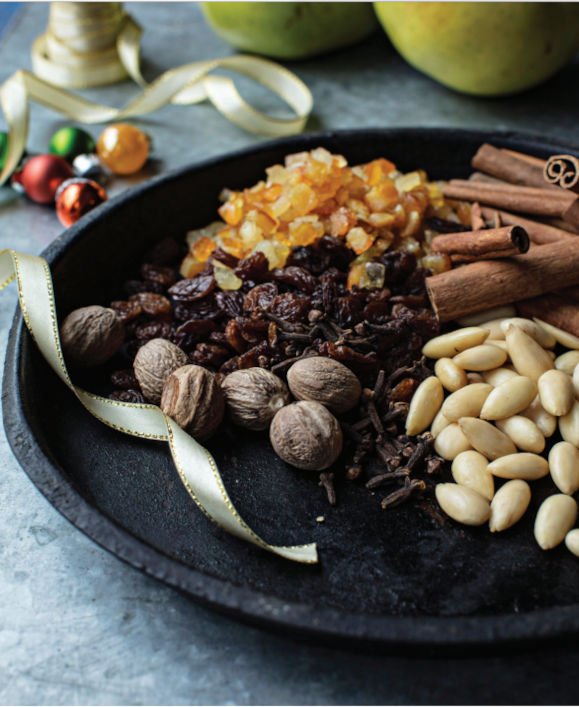
Nothing beats the flavour of homemade Christmas pudding, but it’s important to get good-quality fruit and it’s best made at least 1 month in advance.
I love plum pudding, hot or cold, with lashings of cream, but the spiked almond custard is even more special. I always look forward to it. A big thank you to Auntie Maureen for this recipe.
Ingredients
50g (2oz) plain flour
1/2 tsp ground mixed spice
1/2 tsp ground cloves
1/4 tsp ground nutmeg
225g (8oz) sultanas
175g (6oz) butter, melted, plus extra for greasing
175g (6oz) fresh white breadcrumbs
175g (6oz) light brown sugar
175g (6oz) raisins
50g (2oz) currants
50g (2oz) candied mixed peel
50g (2oz) blanched almonds, hopped
1/2 eating apple, peeled, cored and diced
1/2 small carrot, grated finely grated rind and juice of
1 lemon
2 eggs, lightly beaten
300ml (1/2 pint) stout
fresh redcurrant sprigs, to decorate (optional)
icing sugar, to decorate (optional)
spiked almond custard, to serve
Method
Sift together the flour, mixed spice, cloves and nutmeg. Add the sultanas, melted butter, breadcrumbs, sugar, raisins, currants, mixed peel, almonds, apple, carrot and the lemon rind and juice and mix until well combined. Gradually add the beaten eggs, stirring constantly, followed by the stout. Mix everything together thoroughly and cover with a clean tea towel, then leave in a cool place overnight.
Use the fruit mixture to fill 2 x 1.2 litre (2 pint) greased pudding bowls. Cover with a double thickness of greaseproof paper and tin foil, then tie tightly under the rim with string. Store in a cool, dry place overnight.
To cook, preheat the oven to 150°C (300°F/gas mark 2).
Stand each pudding basin in a large cake tin three-quarters full of boiling water, then cook in the oven for 6–8 hours (or you can steam them for 6 hours in the usual way). Cool and re-cover with clean greaseproof paper. Again, store in a cool, dry place.
On Christmas Day, re-cover with greaseproof paper and foil. Steam for 2–3 hours, until completely cooked through and tender. Decorate with the redcurrant sprigs and a light dusting of icing sugar, if liked.
To serve, cut the plum pudding into slices and arrange on serving plates. Have a separate jug of the spiked almond custard so that everyone can help themselves.
This recipe comes from the original Swiss Bircher muesli, where porridge oats are soaked in a little water, then sweetened with delicious seasonal or dried fruit, and sometimes nuts and seeds too. Strawberries and raspberries work particularly well in this muesli recipe, as does grated apple, to which you could also add a smidgen of ground cinnamon.
The recipe was created in the early 1900s by the Swiss physician Dr Maximillian Bircher-Benner, who knew that a diet rich in nutrients was essential for the recuperation of the patients in his hospital.
Place the porridge oats in a bowl with the water. Allow the oats to sit for 10 minutes, then add in the strawberries. Mash with a fork before adding enough light agave syrup or honey, whichever you’re using, to sweeten the mixture.
Serve the muesli on its own, or with cream and brown sugar; or topped with natural yoghurt and toasted, chopped hazelnuts or almonds.
Serves 2-3.
You will need:
75g (3oz) porridge oats
150ml (5fl oz) water
110g (4oz) strawberries
2-3 teaspoons light agave syrup or honey
To serve, you will need:
Cream and brown sugar (optional)
Natural yoghurt and toasted chopped hazlenuts or almonds (optional)
Place the porridge oats in a bowl with the water. Allow the oats to sit for 10 minutes, then add in the strawberries. Mash with a fork before adding enough light agave syrup or honey, whichever you’re using, to sweeten the mixture.
Serve the muesli on its own, or with cream and brown sugar; or topped with natural yoghurt and toasted, chopped hazelnuts or almonds.
Neven Maguire is shortlisted for the Bookselling Ireland Food and Drink Book of the Year in the An Post Irish Book Awards. You can vote at irishbookawards.ie.
Ingredients
Give this classic Italian dessert a twist with a delicate creamy vanilla flavour and a fresh strawberry topping. It’s the perfect dessert for a chilled summer gathering. If you want to make it less rich, simply replace 200ml of the cream with milk.
Serves 4
1 vanilla pod
3 sheets gelatine 600ml cream 100g caster sugar
300g large strawberries (preferably Pat Clarke’s)
½ lemon
2–3 tsp icing sugar, to taste
Method
To make the panna cotta, split the vanilla pod in half and scrape out the seeds . Put the gelatine sheets into a bowl of cold water and leave them to soak for 5 minutes . Put the cream, caster sugar and vanilla seeds into a pan, and slowly bring up to the boil, whisking continuously . Take the pan off the heat . Take
the gelatine out of the water, gently squeeze out the excess water and add to the cream mixture, whisking continuously until it has dissolved . Strain the mixture through a sieve into a measuring jug .
Divide the mixture equally between 4 x 200ml dariole moulds or ramekins, place them on a baking tray and leave them to set in the fridge for at least 3 hours or up to 2 days .
Choose the 4 nicest strawberries for decoration, then cut them in half with the stems intact . Remove the stalks from the remainder, then add to a blender with a squeeze of lemon juice and icing sugar to taste – the amount will depend on how sweet the strawberries are . Blitz to a smooth purée, then pass through a sieve into a jug .
To serve, leave at room temperature for 15 minutes, then turn each panna cotta upside down on to a serving plate . If it won’t drop out, carefully dip the mould briefly into a bowl of warm water to loosen it . Serve with a drizzle of the strawberry compote and the sliced fresh strawberries .
Serve after … Panna cotta is a brilliant stand-by dessert because it’s quick and simple enough to make in the morning . I leave it to set in the fridge and serve after Fragrant Butterflied Lamb (p .69) with a large bowl of the best strawberries in Ireland . Pat Clarke has been delivering me strawberries for years, and their flavour is sensational.










 Foodaware
http://www.bordbia.ie/consumer/recipes/