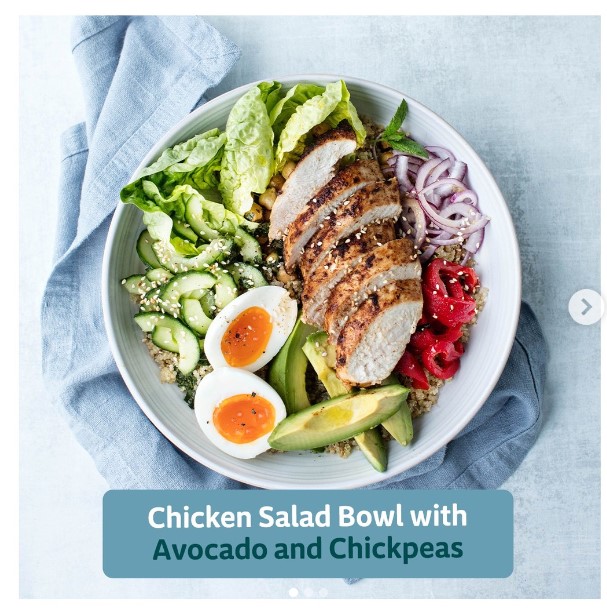
Chicken Salad Bowl with Avocado & Chickpeas @bordbia #workingmums
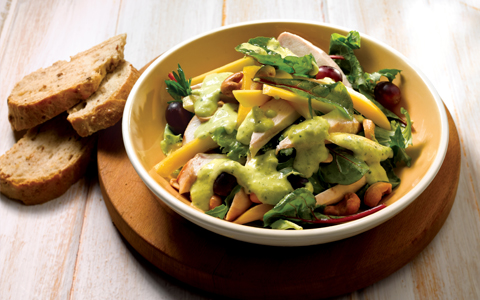
Nutrition key to sound health

Place all the batter ingredients in the processor. Whizz until well blended. Heat a non–stick pan & add a touch of butter. Add 4 large spoonfuls of batter, spaced well apart and cook for 2 minutes until bubbles appear, flip and cook for another minute. Transfer to a plate and keep warm while you cook the rest
(makes about 16.)
To make the sauce
Heat the fruit, honey and lemon juice until you have a nice thick fruity sauce. Serve warm with the pancakes and extra Yoghurt if you wish.
Protein: 11g
Carbohydrates: 68g
Fat: 9g
Iron: 2mg
Energy: 386kcal

https://www.instagram.com/reel/DBEd6l7OivZ/?igsh=aWhvbDlmaWp6c3V1

•
Follow
https://www.instagram.com/reel/DBEd6l7OivZ/?igsh=aWhvbDlmaWp6c3V1
•
Follow

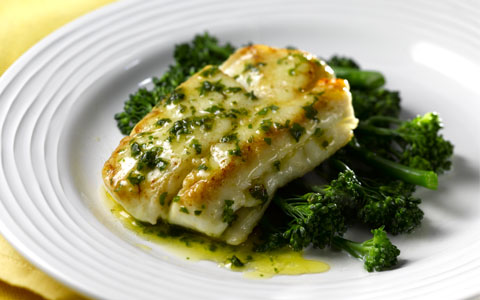
Heat the olive oil in a large frying pan and add the seasoned hake fillets, skin side down. Cook for a couple of minutes until the skin is just beginning to crisp, then add little knobs of butter to the pan around each hake fillet and cook for another couple of minutes until the skin is crisp.
Turn the hake fillets over and cook for another 3-4 minutes until cooked through. This will depend on the thickness of the fillets. Transfer to warmed plates while you make the sauce.
Add the rest of the butter to the frying pan and allow it to gently melt over a moderate heat. When it has melted, add a squeeze of lemon juice and the herbs, swirling to combine. Season to taste. Spoon this sauce over the hake fillets and serve with steamed broccoli and some sautéed new potatoes.
Above all be careful not to overcook the fish. To check, gently prod the thickest part of the fish with a small knife. If it is cooked, the flesh will look opaque and the flakes will separate easily. If it isn’t done yet, it will still have the translucent look for raw fish.
Other fish you could use: Whiting, haddock or trout fillets
Protein: 39g
Carbohydrates: 52g
Fat: 26g
Iron: 2.4mg
Energy: 644kcal
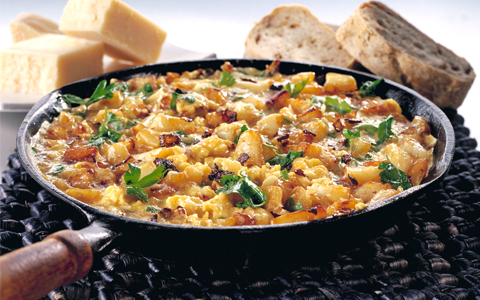
Heat the oil in a non-stick pan and cook the potatoes for 8-10 minutes until nearly cooked and beginning to brown. Add the onion and continue to cook until the onion is just golden, then add the garlic.
When the potatoes are just cooked, season the egg mixture and add to the potatoes. Stir well and allow the eggs to cook on the base. Place a plate over the pan, carefully turn the omlette onto the plate, then slide back into the pan to cook the other side.
To serve, sprinkle with parsley and cut into wedges.
Note
You can add other ingredients, whatever is available – chopped ham, bacon, scallions, mushrooms. You can of course use up cooked potatoes, but the flavour is much better if you start out with uncooked.
http://www.bordbia.ie/consumer/recipes/Christmas/Pages/WhatsintheFridgeOmlette.aspx

Use a little water to dampen a 450g (1lb) loaf tin (the more square shaped, the better), then line with a double layer of cling film. Line 2 large baking sheets with non-stick baking paper.
Melt the plain chocolate in a heatproof bowl set over a pan of simmering water. Spoon half the melted chocolate onto each sheet of baking paper and spread it out to the edges in a thin layer. Put in the fridge for about 30 minutes to set.
Melt the white chocolate and 5 tablespoons of the cream in a separate heatproof bowl set over a pan of simmering water. Once melted, give it a good stir and set aside to cool.
Whip the rest of the cream in a large bowl with the vanilla seeds until the cream is just holding its shape, then fold in the cooled melted white chocolate.
In a separate bowl, whisk the egg white and icing sugar until stiff peaks have formed, then fold into the white chocolate mixture.
Carefully peel the plain chocolate from the baking paper and break it up into pieces.
Place a couple spoonfuls of the whipped cream mixture into the prepared loaf tin and cover with a layer of the plain chocolate pieces. Repeat the layers until the loaf tin is filled up, finishing with a layer of whipped cream. Cover the top with cling film and freeze overnight (or up to 1 month). Any remaining pieces of plain chocolate can be put into a freezer-proof container and frozen separately to use for decoration.
About 1 hour before serving, transfer the loaf tin and reserved chocolate decoration to the fridge.
Pastry
Filling
Custard
To make the pastry: Sift the flour and icing sugar into a bowl. Using a round-bladed knife or the tips of your fingers, work in the butter and then mix in the egg yolks. Add the ice-cold water until the dough just comes together. Wrap in cling film and chill for at least 30 minutes.
Preheat the oven to 190°C (375°F/gas mark 5). Lightly dust the work surface with flour.
Divide the pastry into 2 portions, one slightly larger than the other, then roll out the larger piece until it is about 30cm in diameter. Use to line a 20cm pie dish or a 23cm flat plate, gently pressing into the corners. Trim the edges with a knife and reserve the excess for decorating. Place back in the fridge to chill while you prepare the apples.
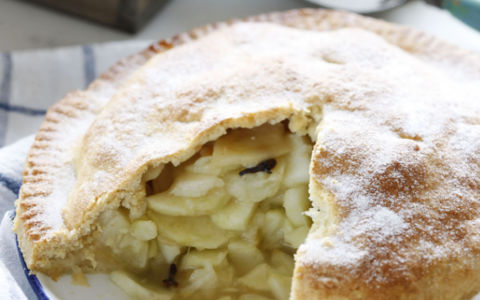
Peel, core and slice the apples. Place in a large bowl with all but 1 tablespoon of the caster sugar. Add the cinnamon and cloves and mix together. Brush the edge of the pastry with a little milk and then pile the apples into the lined pie dish. Roll out the second piece of pastry into a circle slightly larger than the pie dish and use to cover the apples. Press the edges together to seal, then use a sharp knife to cut away any excess.
Crimp the edges of the tart with a round-bladed knife, using your fingers as a guide. If you wish roll out the pastry scraps and cut into leaf shapes. Brush the shapes with milk and stick on top of the pie. Brush the entire top of the pastry with milk and sprinkle over the remaining 1 tablespoon of sugar. Bake for 25-30 minutes, then reduce the oven to 180°C (350°F/gas mark 4) and bake for another 20-25 minutes, until golden brown.
Meanwhile, to make the custard, place the egg yolks in a large bowl with the sugar and vanilla seeds. Whisk with an electric mixer for a few minutes, until pale and thickened.
Place the milk and cream in a medium pan and bring to the boil, then immediately remove from the heat. Gradually whisk the heated milk and cream into the egg yolk mixture until smooth, then pour back into the pan and place over a gently heat. Cook gently for 6-8 minutes on a medium heat, stirring constantly, until the custard coats the back of a wooden spoon. Keep warm.
To serve, cut the warm apple tart into slices and arrange on warmed serving places with some of the custard. Pour the remaining custard into a jug and hand around separately.
http://www.bordbia.ie/consumer/recipes/desserts/pages/appletartwithcustard.aspx

