I adore this delicious and nutritious soup. It’s great either for family suppers or for a dinner party. The soup can be frozen and the Dubliner toasts prepared in advance, then grilled at the last moment. Ideal if you need a meal in an instant. Rachel Allen
Melt the butter in a medium to large saucepan, and add the potatoes and onion, salt and pepper. Cover with a piece of wax paper and sweat over a gentle heat for 10 minutes. Meanwhile, cut the broccoli florets from the stalk. Using a small knife, remove the outer layer of skin from the stalk and discard, then chop the stalk into 1/2-inch pieces. Add to the onion and potato, cover and sweat for a further 5 minutes. Add the hot stock to the potatoes, onion and broccoli stalk, bring up to a boil, then add the chopped broccoli florets. Boil without the lid over a high heat for 4–5 minutes until soft, then add the cream. Remove from the heat, puree in a blender and season to taste.To make the Dubliner toasts, toast the bread on both sides, sprinkle with grated Dubliner Cheese and pop under a hot grill or into a hot oven for 2 minutes or until the cheese melts. Cut the toast into fingers and serve on the side with the soup.
A delicious classic recipe for a very classy cake.
Ingredients
butter (melted, for greasing)
4 eggs
125 g (41/2 oz) caster sugar (plus 3 tbsp for sprinkling)
2 tblsp warm water
1 tsp vanilla extract
125 g (41/2 oz) plain flour (plus extra for dusting)
for the filling
200 g (7oz) rhubarb (about 2 stalks, trimmed), cut into 5mm (1/4 in) slices
125 g (41/2 oz) caster sugar
200 ml (7fl oz) milk
1 vanilla pod, split lengthways, or 2 tsp vanilla extract
3 egg yolks
15 g (1/2 oz) cornflour
100 ml (31/2 fl oz) whipped double or regular cream (measured when whipped)
Method
Preheat the oven to 190°C (375°F/Gas 5). Line the base of the Swiss roll tin (25 x 38cm/ 10 x 15′) with baking parchment, brush the base and sides of the tin with melted butter and dust with flour.
Using a hand-held electric beater or an electric food mixer, whisk together the eggs, caster sugar, water and vanilla extract until light and fluffy.
Sift in the flour, about one-third at a time, and fold it into the mixture. Carefully pour the mixture into the prepared Swiss roll tin and bake in the oven for 12–15 minutes or until the centre of the sponge is slightly springy to the touch and the edges have shrunk a little from the sides of the tin.
Take a piece of baking parchment slightly larger in size than the tin and spread out on a work surface.
Sprinkle the paper evenly with caster sugar (this is to stop the cake sticking to the paper). Quickly flip the Swiss roll tin over onto the sugared paper, then carefully remove the tin and baking parchment from the bottom of the cake.
Place a clean, slightly damp tea towel over the cake while it cools – this will prevent it drying out and cracking when you roll it.
Meanwhile, make the filling. Place the rhubarb in a saucepan with 75g (3oz) of the caster sugar and 25ml (1fl oz) of water and place on a medium heat, stirring to dissolve the sugar. Bring to the boil and allow to boil, uncovered and stirring regularly, for 10–15 minutes or until the rhubarb is completely soft and the mixture is quite thick.
Tip out onto a plate and allow to cool.
Next make the custard. Place the milk and the split vanilla pod (if using) in another pan and bring to the boil.
Whisk the egg yolks (and vanilla extract, if using) with the remaining sugar (I like to use a hand-held electric beater for this) for a few minutes or until pale and light. Then briefly whisk in the cornflour.
Pour the hot milk and vanilla pod (if using) onto the egg mixture, whisking as you pour, then tip it all back into the saucepan and cook, stirring all the time, over a low heat for a few minutes or until it forms a thick custard.
Pour it into a bowl and allow to cool, then fold in the cooled rhubarb and the whipped cream – you can leave it slightly marbled (not fully mixed) if you prefer.
When the sponge is completely cold, spread over the rhubarb and custard mixture, then, with one of the short sides facing you, roll up the Swiss roll away from you and carefully transfer to a serving plate.
Sprinkle with a little extra caster sugar to finish, then cut into slices about 2cm (3/4in) thick to serve.
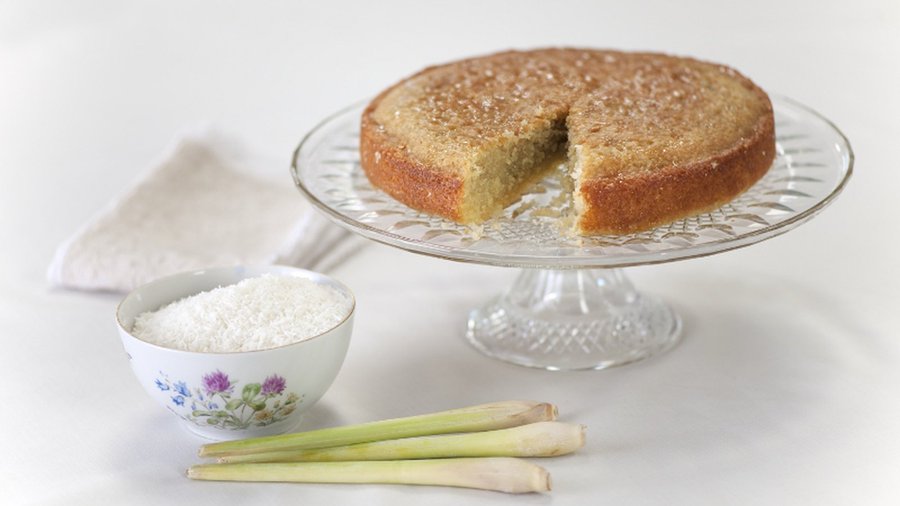
A quirky combination. The end result? A scrumptious cake for all to enjoy. Ingredients 4 stalks of lemongrass, base and tops trimmed, outer leaves removed but reserved for the syrup (see below) 250 g (9oz) caster sugar 4 eggs 200 g (7oz) butter, softened, plus extra for greasing 125 g (41/2 oz) desiccated coconut 125 g (41/2 oz) plain flour, plus extra for dusting 2 tsp baking powder greek yoghurt or creme fraiche, to serve for the syrup reserved trimmings and outer leaves of the lemongrass (see above) 75 g (3oz) caster sugar 23cm (9in) diameter cake tin with 6cm Method Preheat the oven to 170°C (325°F/Gas 3). Butter the sides of the cake tin and dust with flour, then line the base with a disc of baking parchment. Slice the lemongrass stalks quite thinly into rounds about 3mm (1?8in) thick, then place in a food processor with the caster sugar and whiz for 1–2 minutes or until the lemongrass is finely puréed and very aromatic. Add the eggs, butter and coconut and whiz again until combined, then sift the flour and baking powder together and add to the machine, whizzing very briefly just until the ingredients come together. Tip the mixture into the prepared tin and bake for 40–45 minutes or until a skewer inserted into the centre of the cake comes out clean. While the cake is cooking, make the syrup. Roughly chop the lemongrass trimmings, place in a saucepan with the sugar and 75ml (3fl oz) of water and set over a high heat. Stir the mixture until the sugar is dissolved, then bring to the boil and boil for 2 minutes before removing from the heat and leaving to infuse. When the cake has finished baking, take it out of the oven and let it sit in the tin for 10 minutes. Loosen around the edges using a small, sharp knife and carefully remove the cake from the tin before transferring to a serving plate. Reheat the syrup, then pierce holes all over the cake with a skewer and pour the hot syrup through a sieve onto the cake, moving the pan and sieve around as you pour so that the syrup covers the top of the cake. Allow the cake to cool down completely. Serve with a dollop of natural Greek yoghurt or crème fraiche.
Home-made vanilla ice cream in ice bowl decorated with our Irish Native Bluebells… make time for a walk on our woodland paths if you are visiting @Ballymaloe this weekend! Photo @JRRyall


 ballymaloecookeryschool
 _mariaharte_Currently making blackberry and sweet geranium jam from a jackpot of blackberries on my evening stroll! 🌞








 Photo
Photo  Foodaware