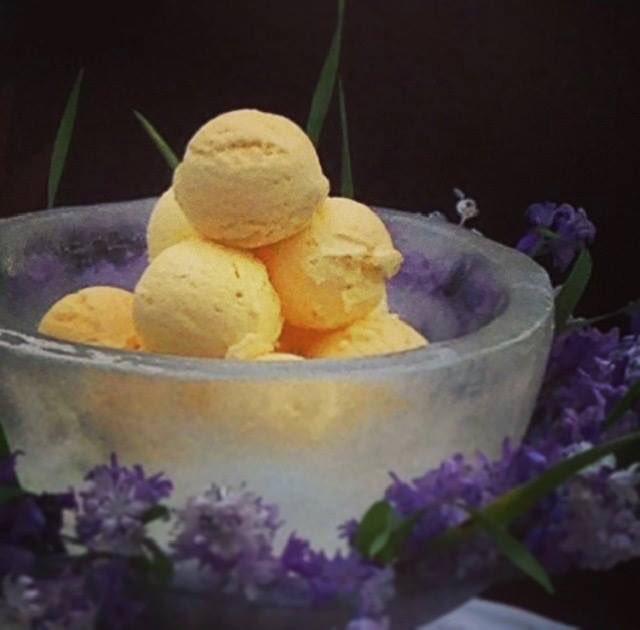
Home-made vanilla ice cream in ice bowl decorated with our Irish Native Bluebells… make time for a walk on our woodland paths if you are visiting @Ballymaloe this weekend! Photo @JRRyall
I am never quite sure if I should be calling this a cake or a tart but in any event, it is delicious and quite easy to make.
Ingredients
I am never quite sure if I should be calling this a cake or a tart but in any event, it is delicious and quite easy to make.
The origins of the recipe are from Tuscany in Italy but I like to use highly perfumed Irish dessert apples when in season. Look out for some lesser known but very delicious Irish dessert apples such as Irish Peach and Ardcairn Russet.
Serves 8
10g butter melted for greasing the parchment paper
4 dessert apples
Finely grated zest of 2 lemons
1 teaspoon vanilla extract
250g caster sugar
2 eggs
150ml cream
110g butter melted and cooled
125g whole almonds, blanched, peeled and ground to a fine powder in a food processer or ground almonds
110g plain flour sieved
1 ½ teaspoons baking powder sieved
100g of apricot jam
1 tablespoon lemon juice, warmed and sieved
2 tablespoons of chopped sweet geranium leaves ( optional)
Method
Preheat the oven to 180c / 350 f / gas 4
Line a 28cm flan ring with a removable base with a disc of parchment paper. The paper should in one piece cover the base and sides of the tin and come up 1cm above the edge of the tin. Brush the paper with a little melted butter.
Peel, core and quarter the apples and slice into c 3mm slices. Mix with the lemon zest. Whisk the vanilla, sugar, and eggs to a thick and light consistency similar to a batter. Whisk in the cream and cooled melted butter. Fold in the almonds, flour and baking powder. Add ¾ of the sliced apples, being careful not to break the apple slices.
Pour the mixture into the prepared flan ring and gently smooth over the surface. Scatter the remaining apples over the surface and sprinkle with 1 dessertspoon of caster sugar.
Place in the preheated oven and cook for 20 minutes. Reduce the temperature to 160c etc and cook for a further 40 minutes by which time the tart will feel gently set. It may be necessary to cover the tart during the cooking with a sheet of parchment paper if the tart is getting too dark.
Remove from the oven and allow to cool slightly. While the tart is still warm, Paint the surfaced with the warm sieved apricot jam to achieve a glossy glaze and if using the chopped geranium, sprinkle on immediately after glazing the tart.
Delicious coffee cake decorated with chocolate craque, hazelnut and of chocolate shards and caramel hazelnut peaks by @rosiemence — one of the #12weekstudents.
The dressing recipe makes more than you will need, but it keeps in the fridge for a week, if covered.
For the dressing, you will need:
100ml (3½fl oz) sunflower or vegetable oil
25ml (1fl oz) extra-virgin olive oil
1 x 25g (1oz) tin of anchovies, drained and rinsed
1 egg yolk
1 small clove of garlic, peeled and crushed
1 tablespoon lemon juice
½ teaspoon Dijon mustard
Pinch of salt
½ tablespoon Worcestershire sauce
½ teaspoon Tabasco sauce
For the salad, you will need:
4 good-quality eggs
1 tablespoon sunflower oil, for frying
8 rashers of smoked streaky bacon, cut into 1cm (¼in) dice
4 handfuls of mixed lettuce leaves, including rocket and winter greens, such as baby spinach, mustard greens or beetroot leaves
50g (2oz) Parmesan cheese, grated, to serve
1 tablespoon chives, chopped, to serve
First, make the dressing – you can do this either in a food processor or by hand. First, pour the sunflower or vegetable oil, whichever you’re using, and the extra-virgin olive oil into a jug.
If you’re making the dressing by hand, mash the anchovies with a fork, then put them in a bowl along with the egg yolk, the crushed garlic, the lemon juice, the Dijon mustard, the pinch of salt, the Worcestershire sauce and the Tabasco sauce. Whisk together.
As you’re whisking, add the oil mixture from the jug very slowly and gradually. The dressing will become creamy as the emulsion forms.
When all the oil mixture has been incorporated, whisk in 25ml (1fl oz) of water to make the dressing the consistency of double cream, then add some extra seasoning to taste.
If you’re making the dressing in a food processor, add the anchovies, the egg yolk, the crushed garlic, the lemon juice, the Dijon mustard, the pinch of salt, the Worcestershire sauce and the Tabasco sauce. Whizz together, then gradually add the oil mixture from the jug and the water, as previously described, pouring them in through the machine’s feed tube.
To poach the eggs, first put a saucepan of water on a high heat and bring it to the boil.
Meanwhile, pour the sunflower oil into a frying pan on a high heat, add the bacon and fry it for 3-5 minutes, or until it is golden brown and crispy. Drain it on kitchen paper and set aside.
While the bacon is frying, tear the mixture of lettuce and winter greens into large, bite-sized pieces and place a handful on a plate. Drizzle with 1-2 tablespoons of the dressing, then sprinkle with the crispy bacon pieces.
Once the egg-poaching water has come to the boil, turn the heat down to low. Crack each egg into the lightly simmering water and poach for 3-4 minutes, or until the white is set and the yolk is still a little soft.
Turn the heat off under the saucepan and carefully lift each egg out, one by one, allowing all water to drain from the egg. Arrange one egg in the centre of each plate of dressed salad leaves, sprinkle with grated Parmesan and chopped chives.
First season the haddock pieces with the salt and freshly ground black pepper. Arrange the fillets in a single layer in the ovenproof dish (it should be a dish that is posh enough to bring to the table). Mix the grated Cheddar cheese together with the Dijon mustard and the cream and spread carefully over the fish.
The fish can be prepared ahead and refrigerated at this point. It will keep in the fridge for a day.
To cook, place in the pre-heated oven for about 20 minutes or until the fish is cooked and the top is golden and bubbly. If the fish is cooked but the top is not yet golden, place under a hot grill for just a few moments to colour the cheese.
2 fennel bulbs, trimmed and cut lengthways into 3-4mm (¼in) slices
2 apples (unpeeled), quartered, cored and cut into wedges 5mm (¼in-½in) thick
4 smoked mackerel fillets, skin removed and flesh torn into bite-sized chunks
4 handfuls of rocket leaves
First, add the extra-virgin olive oil and the lemon juice to a large bowl. Season with the salt and freshly ground black pepper, then whisk everything together. Next, add in the sliced fennel, the wedges of apple and the chunks of mackerel. Mix together well, then add the rocket leaves and gently toss everything together to dress the leaves. Divide between plates and serve immediately.
Serves six.
You will need:
6 x 175g (6oz) pieces of haddock
Salt and freshly ground black pepper
225g (8oz) Irish mature Cheddar cheese, grated
1 tablespoon Dijon mustard
4 tablespoons cream
Ovenproof dish 8½ x 10 in (21.5 x 25.5cm)
Pre-heat the oven to 180°C, 350°F, Gas 4.
First season the haddock pieces with the salt and freshly ground black pepper. Arrange the fillets in a single layer in the ovenproof dish (it should be a dish that is posh enough to bring to the table). Mix the grated Cheddar cheese together with the Dijon mustard and the cream and spread carefully over the fish.
The fish can be prepared ahead and refrigerated at this point. It will keep in the fridge for a day.
To cook, place in the pre-heated oven for about 20 minutes or until the fish is cooked and the top is golden and bubbly. If the fish is cooked but the top is not yet golden, place under a hot grill for just a few moments to colour the cheese.