Alcohol is a toxic, addictive drug that can be very damaging to health. Alcohol products, mainly beer, spirits and wine can be marketed without reference to alcohol in the advertising. Alcohol is consumed without restraint or regard for its health consequences.
Great to spend some time with my Dad doing something we both enjoy. It's not often Killykeen looks like this and it has got increasingly magical over the past week as temps continue to drop #cavan#hiddenheartlandspic.twitter.com/DJF4PnQL0J
DublinTown Christmas Lights Switch On At Bewley’s Grafton Street
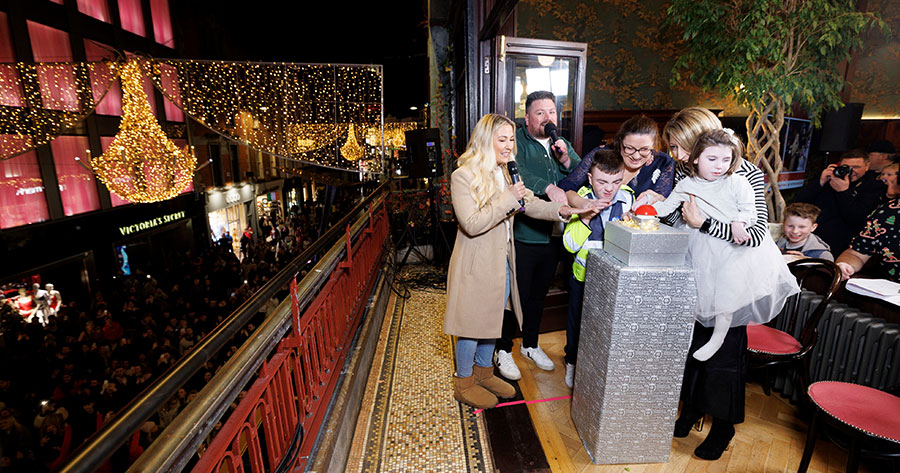
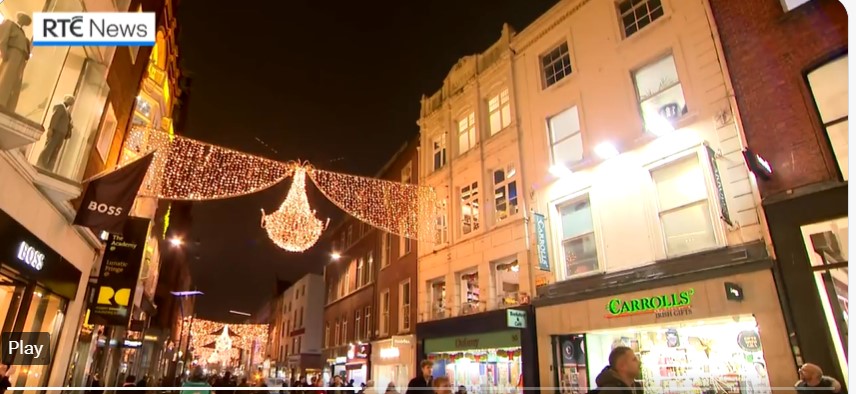
It’s beginning to look a lot like the festive season following the big switch on of the stunning Grafton Street Christmas lights at Bewley’s Grafton Street on Thursday November 16th.
Erected by city centre business group Dublin Town, they were turned on by Little Blue Heroes Foundation representatives Willow Mae Carroll, seven, from Kells, Co Meath, and Cian Byrne, 10, from Finglas West, Dublin, who pushed the magic button.
The Foundation is a Garda charity supporting families of children with serious illnesses, while empowering the lives of young people through positive community engagement.
With only 34 days remaining to December 25, the switching on of the spectacular Grafton Street chandeliers, precedes the turning on of lights at Henry Street, South William Street, Capel Street and throughout the city centre.
In total, Dublin Town, which has been decorating the city centre at Christmas on behalf of businesses for 15 years, will provide energy-efficient Christmas lights across 25 streets in the city centre this year.
It takes 30 people, working through the night over four weeks, to erect the lights. All lighting used is low-energy LED, regulated by time clocks. The Grafton Street display uses one third of the electricity of a domestic shower. Every single bulb and fixture is tested by Dublin Town’s lighting contractor in advance of going up.
Bewley’s Grafton Street is delighted to partner with DublinTown as the venue for the Christmas Lights switch on and hope everyone gets to enjoy the sparkle over the upcoming festive season.
The Christmas lights were switched on in Dublin’s Grafton Street in the city centre this evening. The street was decorated by the city centre business group Dublin Town, who received assistance from two very special guests in turning on the lights | https://rte.ie/b/1481024
800ml (1pt 9fl oz) good-quality chicken or vegetable stock
50g (2oz) butter
1 onion, finely chopped
3 garlic cloves, chopped
Salt and freshly ground black pepper
400g (14oz) risotto rice, such as carnaroli or arborio
200ml (7fl oz) white wine
8 tablespoons grated Parmesan, plus extra for serving
100g (3oz) butter, soft, cut into cubes
4 tablespoons marjoram or parsley, chopped
Good squeeze of lemon juice
2-3 tablespoons mascarpone (optional)
Directions
In a heatproof bowl, combine the dried porcini mushrooms and boiling water. Soak for 20 minutes or until soft.
Preheat the oven to 180°C, 350°F, Gas 3. Place the chicken or vegetable stock, whichever you are using, in a saucepan over a medium-low heat and bring to just under a simmer.
Add the butter to a large saucepan or casserole dish with a lid, and place on a medium heat. Add the chopped onion and the chopped garlic and cook for 6-8 minutes until soft.
As the onion is cooking, drain the porcinis but reserve the soaking liquid. Roughly chop the porcinis and set aside, then strain the soaking liquid and add to the simmering stock. Season this liquid with salt and pepper.
Add the chopped porcinis to the onion and cook, stirring frequently, for 1-2 minutes. Next, stir in the risotto rice and cook for two minutes, stirring gently. Add in the white wine, stir and cook for 2-3 minutes until it has evaporated. Pour in the simmering stock, stir to combine, place a lid on top and put it into the oven. Cook for 10-12 minutes until just al dente.
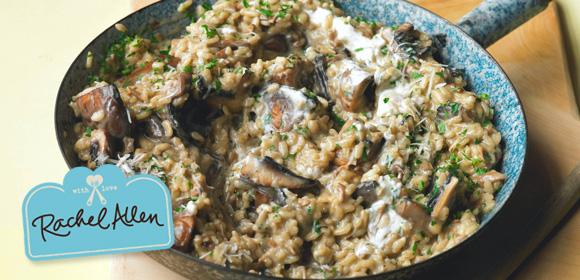
Remove the risotto from the oven, add the grated Parmesan and cubes of butter, then use a wooden spoon to beat everything together. Stir in the marjoram or parsley, whichever you are using, lemon juice and mascarpone, if using.





 Foodaware
Serves 2-4.
You will need:
50g (2oz) dried porcini mushrooms
400ml (14fl oz) boiling water
800ml (1pt 9fl oz) good-quality chicken or vegetable stock
50g (2oz) butter
1 onion, finely chopped
3 garlic cloves, chopped
Salt and freshly ground black pepper
400g (14oz) risotto rice, such as carnaroli or arborio
200ml (7fl oz) white wine
8 tablespoons grated Parmesan, plus extra for serving
100g (3oz) butter, soft, cut into cubes
4 tablespoons marjoram or parsley, chopped
Good squeeze of lemon juice
2-3 tablespoons mascarpone (optional)