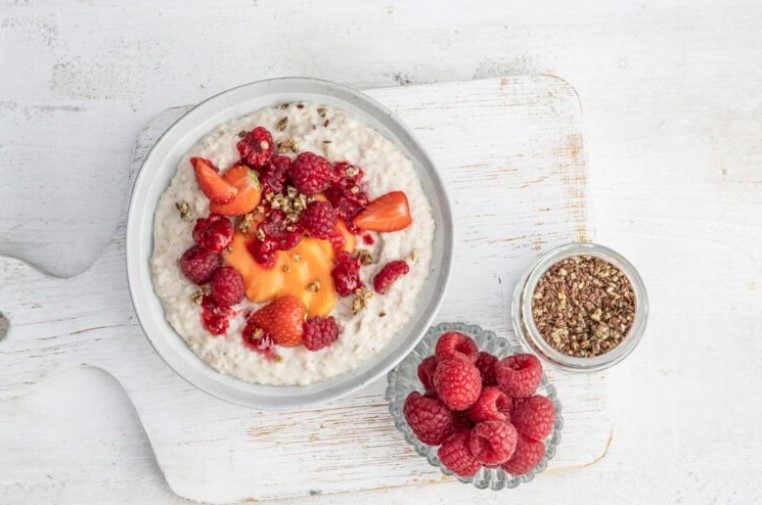
Say goodbye to winter blues and hello to summer hues with this mouthwatering bowl of oats🌴☀️ Take your morning porridge to the tropics with a burst of flavour that’ll transport you to paradise. 🏝️ Whether you’re lounging by the pool or starting your day with a sunny mindset, this tropical delight is sure to bring the warmth of summer to every spoonful #FlahavansOats
Serves 1|Takes 10 minutes
INGREDIENTS:
30g Flahavan’s oats
150mls whole milk
Papaya
Strawberries
Raspberries
Nuts
METHOD:
For the porridge:
Stir 30g of Flahavan’s Porridge Oats into 150mls of milk. Bring to a boil and simmer for 3 minutes stirring continuously
For the toppings:
Crushed raspberries: Tumble 100g of raspberries into a bowl.Add a teaspoon of sugar or drizzle of honey and mash together with a fork.
Say goodbye to winter blues and hello to summer hues with this mouthwatering bowl of oats🌴☀️ Take your morning porridge to the tropics with a burst of flavour that’ll transport you to paradise. 🏝️ Whether you’re lounging by the pool or starting your day with a sunny mindset, this tropical delight is sure to bring the warmth of summer to every spoonful #FlahavansOats
Serves 1|Takes 10 minutes
INGREDIENTS:
30g Flahavan’s oats
150mls whole milk
Papaya
Strawberries
Raspberries
Nuts
METHOD:
For the porridge:
Stir 30g of Flahavan’s Porridge Oats into 150mls of milk. Bring to a boil and simmer for 3 minutes stirring continuously
For the toppings:
Crushed raspberries: Tumble 100g of raspberries into a bowl.Add a teaspoon of sugar or drizzle of honey and mash together with a fork.
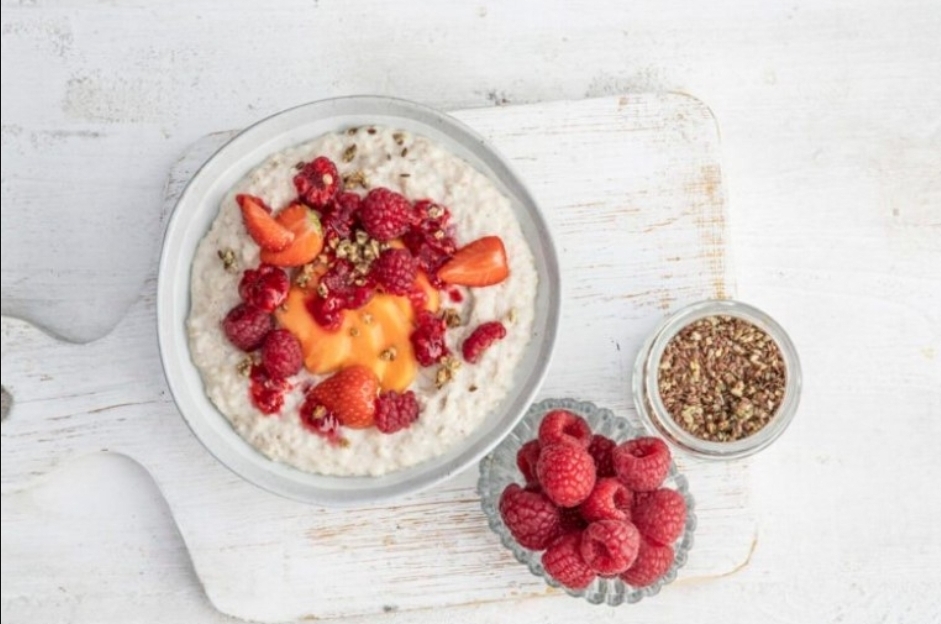
Say goodbye to winter blues and hello to summer hues with this mouthwatering bowl of oats🌴☀️ Take your morning porridge to the tropics with a burst of flavour that’ll transport you to paradise. 🏝️ Whether you’re lounging by the pool or starting your day with a sunny mindset, this tropical delight is sure to bring the warmth of summer to every spoonful #FlahavansOats
Serves 1|Takes 10 minutes
INGREDIENTS:
30g Flahavan’s oats
150mls whole milk
Papaya
Strawberries
Raspberries
Nuts
METHOD:
For the porridge:
Stir 30g of Flahavan’s Porridge Oats into 150mls of milk. Bring to a boil and simmer for 3 minutes stirring continuously
For the toppings:
Crushed raspberries: Tumble 100g of raspberries into a bowl.Add a teaspoon of sugar or drizzle of honey and mash together with a fork.
Stick to clean, cold compresses, and avoid topical ointments
Between the ages of 4 months and 2 and a half years, a lot will change in your baby’s life. They’ll start talking. They’ll start walking. They’ll need their crib mattress lowered and maybe even move to a big-kid bed.
And in that time, they’ll go from toothless little infants to toddlers with a mouthful of chompers.
Yes, in about two years’ time, your baby will cut 20 teeth. So, you’ll soon be an expert in all things teething.
But for now, you probably have questions. And are hearing a lot of different advice.
Before you go online to order the latest and greatest in supposed teething relief products, know that some of the tips and products you see online or hear about from friends aren’t your best options. Safe, effective teething relief is probably already within your reach.
We talked with pediatrician Lisa Diard, MD, about what to expect when your baby is teething and recommendations for a few ways to help them get relief.
Signs your baby is teething
All babies are different. Some fly through teething without making much of a fuss about it. Others might show symptoms.
The important thing to know, Dr. Diard says, is that teething shouldn’t majorly affect your baby (or you).
“Discomfort from teething should be pretty mild,” she says. “And any symptoms your baby does show should only last a few days until the tooth erupts.”
Signs your baby is cutting a tooth include symptoms like:
Increased chewing (on their hands, your hands, toys and whatever else is available to them).
Extra drooling.
A bit of increased fussiness or clinginess.
Red or swollen gums.
A slightly elevated temperature — less than 100.4 degrees Fahrenheit (38 degrees Celsius).
Some people claim that fevers, diaper rash and sleeplessness are also signs of teething. But Dr. Diard — and the American Academy of Pediatrics — says those and other teething myths haven’t been confirmed by research. Rather than chalk those up to teething, investigate what’s going on.
Try these teething remedies
No one wants to see their baby even mildly uncomfortable. They’re helpless tiny tykes, after all, and it’s your job to keep them safe and happy.
But teething babies are mouthy little things. They’re mini drool factories and may want to do nothing more than gnaw on everything they can. That’s totally normal, and it’s the best way to relieve their discomfort.
Dr. Diard suggests these relief options for teething babies:
Your fingers
If you’re up for it, allow your baby to nibble on your (clean!) fingers. Use your index finger to massage their gums where their tooth is coming in. They’ll appreciate the (literal) helping hand.
Try it frequently throughout the day, Dr. Diard suggests.
But really, make sure to wash your hands with soap and water before and after sticking them in your baby’s mouth. You don’t want to deal with a baby with a cold when they’re also in the midst of teething.
Wet cloths
If you’re not up for the finger method (or if your fingers need a break), a cold washcloth can do the trick, too.
Wet a fresh, clean washcloth and stick it in the refrigerator for a bit. That’ll keep it nice and cold, without being too cold as to shock your baby’s sensitive gums.
“Chewing on a cool, wet cloth can help decrease inflammation along the gums,” Dr. Diard says.
Allow your baby to chew solo. Or help out by using the cloth to massage their gums for them.
Teething rings and toys
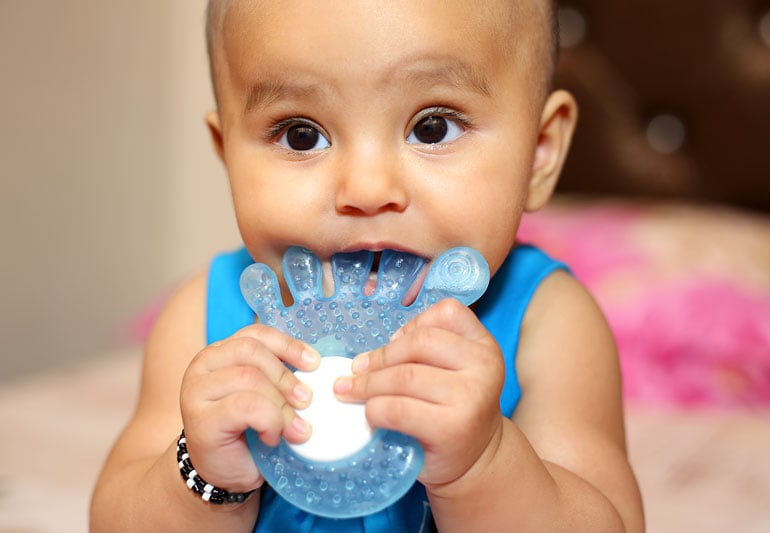
Toys that are meant for teething can provide some relief for aching gums. Choose ones that are easy for tiny fists to grasp and provide the pressure needed to soothe sore gums. Of course, you’ll also want to avoid any choking risks, so stick with toys that are too big to be swallowed.
Some of these products are meant to be refrigerated for a cooling effect. But keep them out of the freezer.
“Frozen teething toys can make them too hard. They can also be so cold they hurt your baby’s gums,” Dr. Diard cautions. “Putting them in the fridge will be plenty cool to provide relief.”
Acetaminophen
If other measures aren’t doing the trick, a dose of pain relief medication may help.
“A day or two of Tylenol® (acetaminophen) is OK for babies who are old enough if they need a little extra pain relief,” Dr. Diard states. “You don’t want to use it longer than that without speaking to a children’s health care provider, like a pediatrician.”
If your baby needs a pain reliever for more than a day or two, something other than teething may be causing their pain.
Unless recommended by a healthcare professional, Tylenol shouldn’t be given to babies under 3 months old. Follow the dosing amounts and timeframes listed on the medication or as recommended by your provider. That will vary based on your baby’s age and weight.
Babies under 6 months of age shouldn’t take ibuprofen, unless directed by your healthcare professional.
Teething remedies to avoid
You want to help your baby feel better, of course, but there are some products out there that can do more harm than good, Dr. Diard says. Use caution with these common teething remedies, or avoid them altogether.
Teething biscuits and foods
Depending on your baby’s age and experience with solids, foods shouldn’t be your go-to for teething relief.
Babies under 9 months old may not know how to handle certain foods, so they can present a choking hazard. And a lot of those teething biscuits and cookies you’ll find won’t offer much in terms of nutrition.
“If you’re introducing solid foods at the same time as your baby is teething, cold, soft foods — like applesauce or bananas — can be good choices both in terms of nutrition and can soothe irritated gums,” Dr. Diard advises.
Topical medications
You’re better off avoiding those gel products for teething relief for a few reasons.
And other ingredients in those products cause a numbing effect that can be dangerous in their own way.
Think about it: You rub numbing gel on your baby’s irritated gums. They immediately touch it with their tongue. Now the tip of their tongue is numb. That makes it easier to accidentally bite their tongue (OUCH!). It also makes it harder to move food around their mouth properly, which can cause choking.
Teething necklaces and beads
Some people swear by teething necklaces with wood, amber, marble, silicone and other materials as an alternative treatment for teething discomfort. The makers claim some of these materials have pain-relieving properties that are absorbed by your baby’s skin to relieve teething symptoms.
What’s more, beads and necklaces present a serious risk for choking and strangulation in babies and toddlers.
If you’re worried that teething is causing your baby pain or is keeping them from living their best baby life, talk with your children’s healthcare provider. They can help understand what’s causing your baby’s discomfort so you can find safe, effective relief.
Say goodbye to winter blues and hello to summer hues with this mouthwatering bowl of oats🌴☀️ Take your morning porridge to the tropics with a burst of flavour that’ll transport you to paradise. 🏝️ Whether you’re lounging by the pool or starting your day with a sunny mindset, this tropical delight is sure to bring the warmth of summer to every spoonful #FlahavansOats
Serves 1|Takes 10 minutes
INGREDIENTS:
30g Flahavan’s oats
150mls whole milk
Papaya
Strawberries
Raspberries
Nuts
METHOD:
For the porridge:
Stir 30g of Flahavan’s Porridge Oats into 150mls of milk. Bring to a boil and simmer for 3 minutes stirring continuously
For the toppings:
Crushed raspberries: Tumble 100g of raspberries into a bowl.Add a teaspoon of sugar or drizzle of honey and mash together with a fork.

 flahavans


 Foodaware