
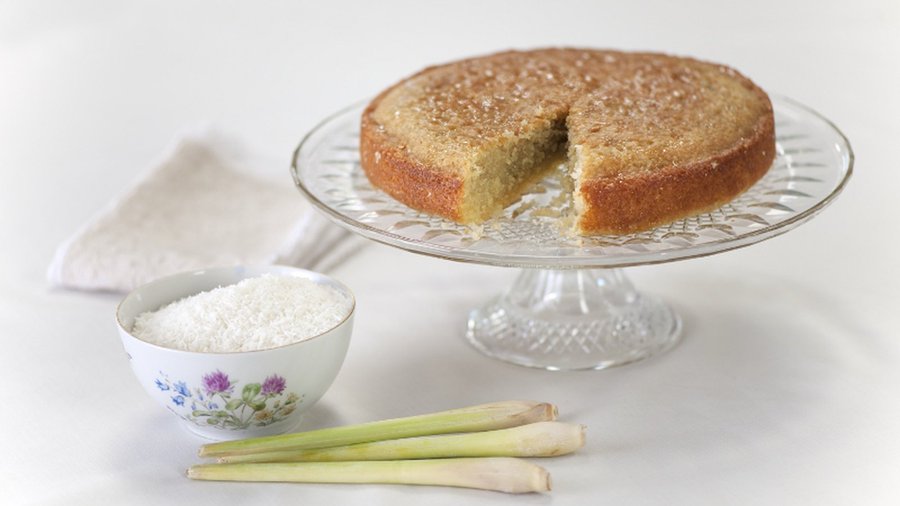
Lemongrass Coconut Cake by Rachel Allen @Ballymaloe


By Rachel Allen Celebrity Chef
More from
Rachel Allen’s Cake Diaries


A quirky combination. The end result? A scrumptious cake for all to enjoy.
Ingredients
4 stalks of lemongrass, base and tops trimmed, outer leaves removed but reserved for the syrup (see below)
250 g (9oz) caster sugar
4 eggs
200 g (7oz) butter, softened, plus extra for greasing
125 g (41/2 oz) desiccated coconut
125 g (41/2 oz) plain flour, plus extra for dusting
2 tsp baking powder
greek yoghurt or creme fraiche, to serve
for the syrup
reserved trimmings and outer leaves of the lemongrass (see above)
75 g (3oz) caster sugar
23cm (9in) diameter cake tin with 6cm
Method
Preheat the oven to 170°C (325°F/Gas 3). Butter the sides of the cake tin and dust with flour, then line the base with a disc of baking parchment.
Slice the lemongrass stalks quite thinly into rounds about 3mm (1?8in) thick, then place in a food processor with the caster sugar and whiz for 1–2 minutes or until the lemongrass is finely puréed and very aromatic.
Add the eggs, butter and coconut and whiz again until combined, then sift the flour and baking powder together and add to the machine, whizzing very briefly just until the ingredients come together.
Tip the mixture into the prepared tin and bake for 40–45 minutes or until a skewer inserted into the centre of the cake comes out clean. While the cake is cooking, make the syrup.
Roughly chop the lemongrass trimmings, place in a saucepan with the sugar and 75ml (3fl oz) of water and set over a high heat. Stir the mixture until the sugar is dissolved, then bring to the boil and boil for 2 minutes before removing from the heat and leaving to infuse.
When the cake has finished baking, take it out of the oven and let it sit in the tin for 10 minutes. Loosen around the edges using a small, sharp knife and carefully remove the cake from the tin before transferring to a serving plate.
Reheat the syrup, then pierce holes all over the cake with a skewer and pour the hot syrup through a sieve onto the cake, moving the pan and sieve around as you pour so that the syrup covers the top of the cake. Allow the cake to cool down completely.
Serve with a dollop of natural Greek yoghurt or crème fraiche.


Lemongrass Coconut Cake by Rachel Allen @Ballymaloe


By Rachel Allen Celebrity Chef
More from
Rachel Allen’s Cake Diaries


A quirky combination. The end result? A scrumptious cake for all to enjoy.
Ingredients
4 stalks of lemongrass, base and tops trimmed, outer leaves removed but reserved for the syrup (see below)
250 g (9oz) caster sugar
4 eggs
200 g (7oz) butter, softened, plus extra for greasing
125 g (41/2 oz) desiccated coconut
125 g (41/2 oz) plain flour, plus extra for dusting
2 tsp baking powder
greek yoghurt or creme fraiche, to serve
for the syrup
reserved trimmings and outer leaves of the lemongrass (see above)
75 g (3oz) caster sugar
23cm (9in) diameter cake tin with 6cm
Method
Preheat the oven to 170°C (325°F/Gas 3). Butter the sides of the cake tin and dust with flour, then line the base with a disc of baking parchment.
Slice the lemongrass stalks quite thinly into rounds about 3mm (1?8in) thick, then place in a food processor with the caster sugar and whiz for 1–2 minutes or until the lemongrass is finely puréed and very aromatic.
Add the eggs, butter and coconut and whiz again until combined, then sift the flour and baking powder together and add to the machine, whizzing very briefly just until the ingredients come together.
Tip the mixture into the prepared tin and bake for 40–45 minutes or until a skewer inserted into the centre of the cake comes out clean. While the cake is cooking, make the syrup.
Roughly chop the lemongrass trimmings, place in a saucepan with the sugar and 75ml (3fl oz) of water and set over a high heat. Stir the mixture until the sugar is dissolved, then bring to the boil and boil for 2 minutes before removing from the heat and leaving to infuse.
When the cake has finished baking, take it out of the oven and let it sit in the tin for 10 minutes. Loosen around the edges using a small, sharp knife and carefully remove the cake from the tin before transferring to a serving plate.
Reheat the syrup, then pierce holes all over the cake with a skewer and pour the hot syrup through a sieve onto the cake, moving the pan and sieve around as you pour so that the syrup covers the top of the cake. Allow the cake to cool down completely.
Serve with a dollop of natural Greek yoghurt or crème fraiche.
Lemongrass Coconut Cake by Rachel Allen @Ballymaloe


By Rachel Allen Celebrity Chef
More from
Rachel Allen’s Cake Diaries


A quirky combination. The end result? A scrumptious cake for all to enjoy.
Ingredients
4 stalks of lemongrass, base and tops trimmed, outer leaves removed but reserved for the syrup (see below)
250 g (9oz) caster sugar
4 eggs
200 g (7oz) butter, softened, plus extra for greasing
125 g (41/2 oz) desiccated coconut
125 g (41/2 oz) plain flour, plus extra for dusting
2 tsp baking powder
greek yoghurt or creme fraiche, to serve
for the syrup
reserved trimmings and outer leaves of the lemongrass (see above)
75 g (3oz) caster sugar
23cm (9in) diameter cake tin with 6cm
Method
Preheat the oven to 170°C (325°F/Gas 3). Butter the sides of the cake tin and dust with flour, then line the base with a disc of baking parchment.
Slice the lemongrass stalks quite thinly into rounds about 3mm (1?8in) thick, then place in a food processor with the caster sugar and whiz for 1–2 minutes or until the lemongrass is finely puréed and very aromatic.
Add the eggs, butter and coconut and whiz again until combined, then sift the flour and baking powder together and add to the machine, whizzing very briefly just until the ingredients come together.
Tip the mixture into the prepared tin and bake for 40–45 minutes or until a skewer inserted into the centre of the cake comes out clean. While the cake is cooking, make the syrup.
Roughly chop the lemongrass trimmings, place in a saucepan with the sugar and 75ml (3fl oz) of water and set over a high heat. Stir the mixture until the sugar is dissolved, then bring to the boil and boil for 2 minutes before removing from the heat and leaving to infuse.
When the cake has finished baking, take it out of the oven and let it sit in the tin for 10 minutes. Loosen around the edges using a small, sharp knife and carefully remove the cake from the tin before transferring to a serving plate.
Reheat the syrup, then pierce holes all over the cake with a skewer and pour the hot syrup through a sieve onto the cake, moving the pan and sieve around as you pour so that the syrup covers the top of the cake. Allow the cake to cool down completely.
Serve with a dollop of natural Greek yoghurt or crème fraiche.

Ottolenghi’s sweet potato shakshuka with sriracha

This creamy, cheesy version of the baked egg classic swaps in sweet potatoes.

This creamy, cheesy version of the baked egg classic swaps in sweet potatoes.

Ingredients

Chefs Yotam Ottolenghi and Noor Murad admit this dish is “a far cry from a classic shakshuka, yes, but we’ve found that sweet potatoes provide just the right amount of moisture and heft to serve as a base for these eggs.

“Serve this vibrant dish as a weekend brunch; it sure looks the part,” they suggest.

View this post on Instagram

A post shared by Noor Murad نور مراد (@noorishbynoor)

Ingredients:
(serves 4)

1kg sweet potatoes, skin on and scrubbed clean
1 small red onion, thinly sliced into rounds
2tbsp lemon juice
3tbsp olive oil
150g mature cheddar, roughly grated
3 garlic cloves, crushed
1tsp cumin seeds, roughly crushed with a pestle and mortar
8 medium eggs
25g unsalted butter
¾tbsp sriracha
2tbsp picked fresh coriander leaves, with some stem attached
Salt and black pepper

Sweet potato shakshuka with sriracha butter and pickled onions
(Elena Heatherwick/PA)

Method

1. Preheat the oven to 200°C fan. Poke the sweet potatoes all over with a fork (about eight to 10 times) and place them on a medium, parchment-lined baking tray. Bake for 45–50 minutes, or until cooked through and softened. Set aside to cool and turn the oven temperature down to 180°C fan.

2. Meanwhile, in a small bowl mix together the onion, one tablespoon of lemon juice and a pinch of salt and set aside to pickle.

3. Remove the cooked potato skins and tear them into roughly 4cm pieces. Transfer the potato flesh to a large bowl and set aside. Place the skins back on the baking tray and toss with one tablespoon of oil, a quarter teaspoon of salt and a good grind of pepper. Bake for eight minutes, or until nicely coloured and starting to crisp up. Set aside to cool and crisp up further.

4. Use a fork to mash the potato flesh until smooth, then add the cheddar, garlic, cumin, another tablespoon of oil, the remaining tablespoon of lemon juice, one teaspoon of salt and a generous grind of pepper, and mix to combine.

5. Put the remaining tablespoon of oil into a large frying pan, for which you have a lid, and swirl around to coat the bottom. Spoon the mashed potato mixture into the pan, using your spoon to distribute it evenly. Place on a medium-high heat and leave to cook for about seven minutes, for the bottom to start to colour. Turn the heat down to medium and use a spoon to make eight wells in the potato mixture, breaking an egg into each. Sprinkle lightly with salt and pepper, cover with the lid and cook for four to five minutes, rotating the pan, or until the whites are set and the yolks are still runny.

6. While the eggs are cooking, put the butter and sriracha into a small saucepan on a medium heat and cook until the butter has melted, whisking constantly to emulsify. Remove the mixture from the heat before it starts to bubble – you don’t want it to split.

7. When ready, spoon the sriracha butter all over the eggs, then top with a good handful of the crispy potato skins, half the pickled onion and all the picked coriander leaves. Serve right away, with the rest of the potato skins and pickled onion to eat alongside.

Ottolenghi Test Kitchen: Shelf Love by Noor Murad and Yotam Ottolenghi, photography by Elena Heatherwick, is pubished by Ebury Press.

More stories on

Lemongrass Coconut Cake by Rachel Allen @Ballymaloe


By Rachel Allen Celebrity Chef
More from
Rachel Allen’s Cake Diaries


A quirky combination. The end result? A scrumptious cake for all to enjoy.
Ingredients
4 stalks of lemongrass, base and tops trimmed, outer leaves removed but reserved for the syrup (see below)
250 g (9oz) caster sugar
4 eggs
200 g (7oz) butter, softened, plus extra for greasing
125 g (41/2 oz) desiccated coconut
125 g (41/2 oz) plain flour, plus extra for dusting
2 tsp baking powder
greek yoghurt or creme fraiche, to serve
for the syrup
reserved trimmings and outer leaves of the lemongrass (see above)
75 g (3oz) caster sugar
23cm (9in) diameter cake tin with 6cm
Method
Preheat the oven to 170°C (325°F/Gas 3). Butter the sides of the cake tin and dust with flour, then line the base with a disc of baking parchment.
Slice the lemongrass stalks quite thinly into rounds about 3mm (1?8in) thick, then place in a food processor with the caster sugar and whiz for 1–2 minutes or until the lemongrass is finely puréed and very aromatic.
Add the eggs, butter and coconut and whiz again until combined, then sift the flour and baking powder together and add to the machine, whizzing very briefly just until the ingredients come together.
Tip the mixture into the prepared tin and bake for 40–45 minutes or until a skewer inserted into the centre of the cake comes out clean. While the cake is cooking, make the syrup.
Roughly chop the lemongrass trimmings, place in a saucepan with the sugar and 75ml (3fl oz) of water and set over a high heat. Stir the mixture until the sugar is dissolved, then bring to the boil and boil for 2 minutes before removing from the heat and leaving to infuse.
When the cake has finished baking, take it out of the oven and let it sit in the tin for 10 minutes. Loosen around the edges using a small, sharp knife and carefully remove the cake from the tin before transferring to a serving plate.
Reheat the syrup, then pierce holes all over the cake with a skewer and pour the hot syrup through a sieve onto the cake, moving the pan and sieve around as you pour so that the syrup covers the top of the cake. Allow the cake to cool down completely.
Serve with a dollop of natural Greek yoghurt or crème fraiche.

Lemongrass Coconut Cake by Rachel Allen #foodaware


By Rachel Allen Celebrity Chef
More from
Rachel Allen’s Cake Diaries


A quirky combination. The end result? A scrumptious cake for all to enjoy.
Ingredients
4 stalks of lemongrass, base and tops trimmed, outer leaves removed but reserved for the syrup (see below)
250 g (9oz) caster sugar
4 eggs
200 g (7oz) butter, softened, plus extra for greasing
125 g (41/2 oz) desiccated coconut
125 g (41/2 oz) plain flour, plus extra for dusting
2 tsp baking powder
greek yoghurt or creme fraiche, to serve
for the syrup
reserved trimmings and outer leaves of the lemongrass (see above)
75 g (3oz) caster sugar
23cm (9in) diameter cake tin with 6cm
Method
Preheat the oven to 170°C (325°F/Gas 3). Butter the sides of the cake tin and dust with flour, then line the base with a disc of baking parchment.
Slice the lemongrass stalks quite thinly into rounds about 3mm (1?8in) thick, then place in a food processor with the caster sugar and whiz for 1–2 minutes or until the lemongrass is finely puréed and very aromatic.
Add the eggs, butter and coconut and whiz again until combined, then sift the flour and baking powder together and add to the machine, whizzing very briefly just until the ingredients come together.
Tip the mixture into the prepared tin and bake for 40–45 minutes or until a skewer inserted into the centre of the cake comes out clean. While the cake is cooking, make the syrup.
Roughly chop the lemongrass trimmings, place in a saucepan with the sugar and 75ml (3fl oz) of water and set over a high heat. Stir the mixture until the sugar is dissolved, then bring to the boil and boil for 2 minutes before removing from the heat and leaving to infuse.
When the cake has finished baking, take it out of the oven and let it sit in the tin for 10 minutes. Loosen around the edges using a small, sharp knife and carefully remove the cake from the tin before transferring to a serving plate.
Reheat the syrup, then pierce holes all over the cake with a skewer and pour the hot syrup through a sieve onto the cake, moving the pan and sieve around as you pour so that the syrup covers the top of the cake. Allow the cake to cool down completely.
Serve with a dollop of natural Greek yoghurt or crème fraiche.