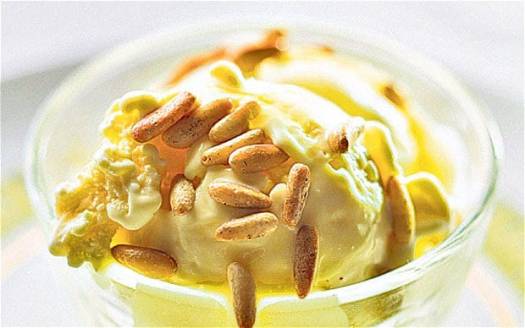
Ricotta adds an interesting texture here, and the saffron makes it wonderfully fragrant.
Serves 6
500ml/17 fl oz whole milk
1 tsp of saffron threads
5 egg yolks
200g/7oz sugar
250ml/8½ fl oz double cream
500g/1lb 2oz ricotta
2 tbsp honey, plus extra to serve
2 handfuls of toasted pine nuts, to serve
Bring the milk and saffron to a simmer and keep warm.
In a large bowl, combine the yolks and sugar and beat until pale.
Add half the warm milk to the egg mixture and whisk again until combined. Pour the mix into the saucepan along with the remaining warm milk. Cook over a low heat, stirring constantly until the mixture thickens into a custard and coats the back of a wooden spoon. Remove from the heat and whisk in the double cream, followed by the ricotta and the honey, until blended.
Churn in an ice cream maker according to the manufacturer’s instructions. Serve sprinkled with toasted pine nuts and a little extra honey.
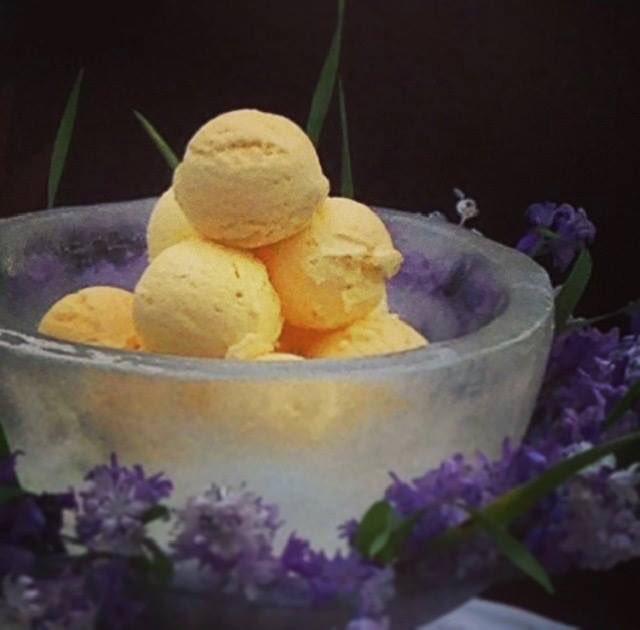
Home-made vanilla ice cream in ice bowl decorated with our Irish Native Bluebells… make time for a walk on our woodland paths if you are visiting @Ballymaloe this weekend! Photo @JRRyall
I am never quite sure if I should be calling this a cake or a tart but in any event, it is delicious and quite easy to make.
Ingredients
I am never quite sure if I should be calling this a cake or a tart but in any event, it is delicious and quite easy to make.
The origins of the recipe are from Tuscany in Italy but I like to use highly perfumed Irish dessert apples when in season. Look out for some lesser known but very delicious Irish dessert apples such as Irish Peach and Ardcairn Russet.
Serves 8
10g butter melted for greasing the parchment paper
4 dessert apples
Finely grated zest of 2 lemons
1 teaspoon vanilla extract
250g caster sugar
2 eggs
150ml cream
110g butter melted and cooled
125g whole almonds, blanched, peeled and ground to a fine powder in a food processer or ground almonds
110g plain flour sieved
1 ½ teaspoons baking powder sieved
100g of apricot jam
1 tablespoon lemon juice, warmed and sieved
2 tablespoons of chopped sweet geranium leaves ( optional)
Method
Preheat the oven to 180c / 350 f / gas 4
Line a 28cm flan ring with a removable base with a disc of parchment paper. The paper should in one piece cover the base and sides of the tin and come up 1cm above the edge of the tin. Brush the paper with a little melted butter.
Peel, core and quarter the apples and slice into c 3mm slices. Mix with the lemon zest. Whisk the vanilla, sugar, and eggs to a thick and light consistency similar to a batter. Whisk in the cream and cooled melted butter. Fold in the almonds, flour and baking powder. Add ¾ of the sliced apples, being careful not to break the apple slices.
Pour the mixture into the prepared flan ring and gently smooth over the surface. Scatter the remaining apples over the surface and sprinkle with 1 dessertspoon of caster sugar.
Place in the preheated oven and cook for 20 minutes. Reduce the temperature to 160c etc and cook for a further 40 minutes by which time the tart will feel gently set. It may be necessary to cover the tart during the cooking with a sheet of parchment paper if the tart is getting too dark.
Remove from the oven and allow to cool slightly. While the tart is still warm, Paint the surfaced with the warm sieved apricot jam to achieve a glossy glaze and if using the chopped geranium, sprinkle on immediately after glazing the tart.
Farmhouse Irish blue cheese made with grass-fed cow’s milk makes the perfect pairing for fresh grilled peaches. As an appetizer or a gourmet snack, they make for a sweet, creamy treat perfect for outdoor grilling. They can also be made on the stovetop using a grill pan for a year-round taste of Irish summer.
Heat a gas or charcoal grill. Cut peaches in half and remove pits. With a melon baller, scoop out a little flesh to enlarge the cavity where the pit was removed. Brush peaches lightly with olive oil on both sides. Place peaches on grill, cut side down. Grill about 2 minutes or until grill marks form. Turn over and grill for 2 minutes more. Place peaches on a serving platter, cut side up. Fill holes where pit was removed with Kerrygold Cashel Blue Farmhouse Cheese and drizzle peaches with honey. Serve warm.
Are you looking for the perfect summer dessert? Look no further! Try our Quick Pavlova @Catherine Leyden made today on Ireland AM.
Cook Time: 1 hour 30 minutes
What you need
3 large Egg Whites
1 tablespoon Odlums Cornflour
1 teaspoon Chef White Vinegar
1 teaspoon Goodall’s Vanilla Essence
4 tablespoons Boiling Water
350g/12oz Granulated Sugar
To Decorate
300ml/½pt Cream
Fresh fruit
Recipe Steps
Put all the ingredients into a bowl and beat until thick. Shape meringue into a ring on baking parchment. Bake in preheated oven at 120°C/250°F/Gas ½ for 1 hour. Reduce heat to 110°C/225°F/Gas ¼ for a further 30 minutes.
Allow to cool. Place on serving dish and fill with whipped cream and fresh fruit of your choice.
This cake can be served warm as a dessert or cold as a teatime treat. It’s delicious with custard, but it would also be good with crème fraîche, clotted cream, vanilla ice cream or whipped cream – the list is endless! If you don’t fancy the apple, try using rhubarb or blackberries, depending on the time of year.
Serves:4
Ingredients:
For the streusel:
4 tbsp plain flour
1oz (2 tbsp) Kerrygold butter, diced, extra to grease
2 tbsp light brown sugar
3 tbsp toasted skinned hazelnuts, finely chopped
For the cake:
5oz (10 tbsp) Kerrygold butter, at room temperature
Preheat the oven to 350°F. Butter a 23cm (9in) loose-bottomed cake tin and then line with a circle of buttered parchment paper. To make the streusel, place the flour in a small bowl and rub in the butter, then stir in the brown sugar and hazelnuts.
To make the cake, beat the butter and caster sugar together with a hand held electric mixer in a bowl until light and fluffy. Beat in the eggs, a little at a time, adding one tablespoon of the flour when you have added about half of the beaten eggs. This will stop it from curdling. Sift over the rest of the flour and the baking powder and cinnamon, then mix lightly. Add the apple, hazelnuts and milk and fold in until thoroughly combined.
Spoon the cake mixture into the prepared cake tin and spread level. Scatter the streusel in an even layer on top of the cake mixture and bake for 50 minutes to 1 hour until the sides of the cake have shrunk slightly away from the tin and the streusel topping is golden brown. To test if the cake is done, insert a fine metal skewer into the middle. If it comes out clean, the cake is ready. Remove the cake from the oven and leave to cool in the tin for 15 minutes set on a wire rack.
To serve, cut the apple and hazelnut streusel cake into slices and arrange on plates with the warm custard.
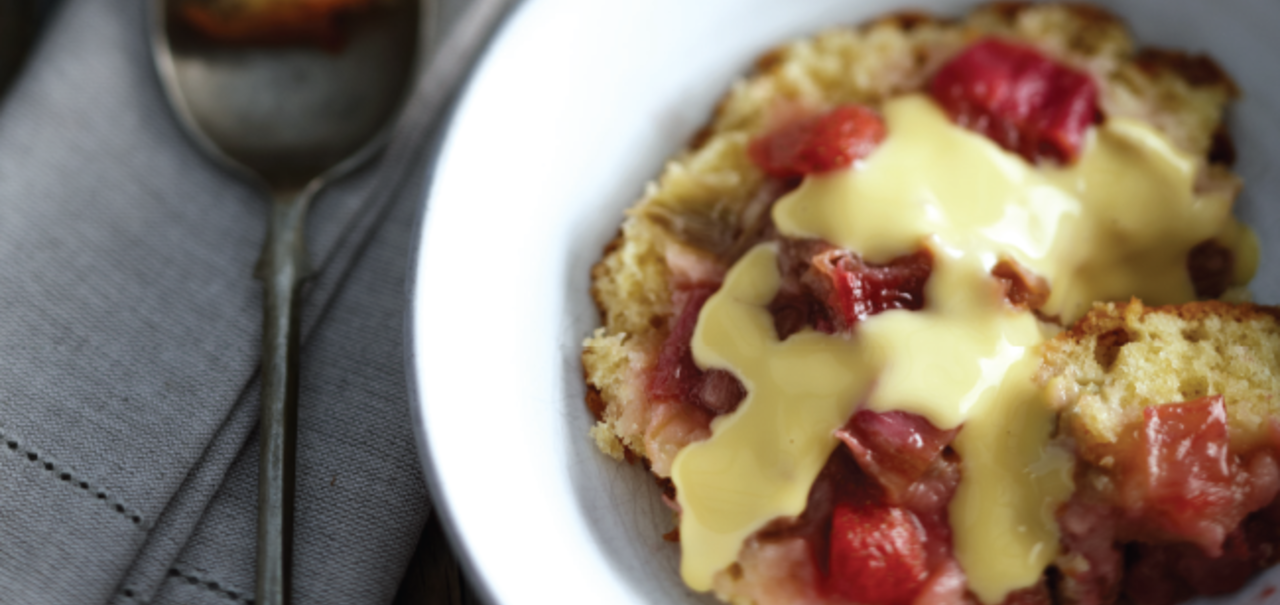
This traditional sponge pudding is excellent comfort food and is on most people’s list of favorite childhood desserts. It can be baked before dinner and then left at room temperature until needed. Pop back into the oven to warm through to serve.
Ingredients:
2 cups (10oz) fresh rhubarb stalks, trimmed and cut into chunks
2 cups(8oz) large strawberries, hulled and quartered
1 ½ cups (10oz) caster sugar
1 piece stem ginger in syrup, drained and finely chopped (optional)
1 cup (6oz) plain flour
1 tsp baking powder
12 tbsp (6oz) Kerrygold Salted Butter, at room temperature
3 eggs
1 tsp vanilla extract
warm custard, to serve
Directions:
Preheat the oven to 350°F (180°C), Gas mark 4. Arrange the rhubarb and strawberries in a 9in (23cm) deep-dish pie plate and sprinkle over ½ cup (4oz) (100g) of the sugar and the stem ginger, if using.
Sift the flour into a bowl with the baking powder. Place the butter in a separate bowl with the remaining sugar and beat with a hand-held mixer until light and fluffy. Beat in the eggs and vanilla extract and then fold in the flour mixture.
Carefully spread the cake mixture over the fruit and bake for about 40 minutes or until the sponge is well risen and golden and an inserted skewer comes out clean.
To serve, spoon the rhubarb and strawberry sponge pudding into warmed bowls and pour over some custard.



 Photo
Photo 

 CHOCOLATE CREMEUX