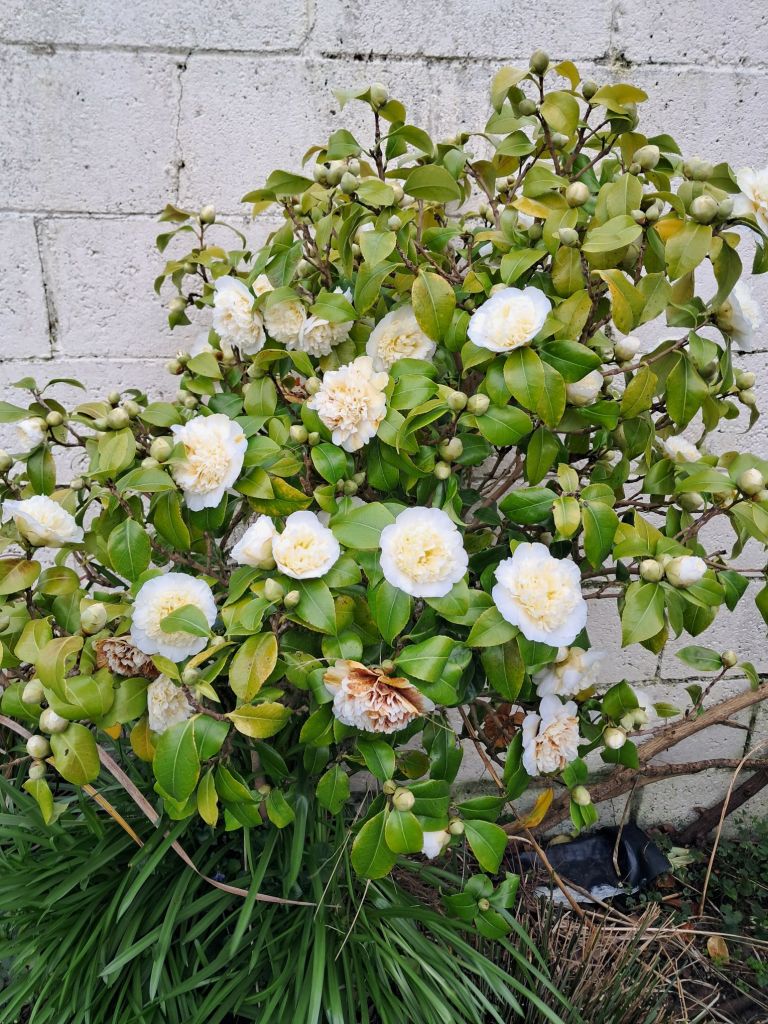
Easter and Spring are the the perfect time to discover Powerscourt when the Estate and gardens are starting to bloom. Don’t miss the opportunity to see 30,000 tulips and Spring bulbs in bloom at this year’s Annual Tulip Festival. At the Japanese Garden you can breathe in an array of exotic fragrances from sweet magnolia flowers, perfumed azaleas and cherry and apple blossom trees, bearing cascades of pink and white flowers. The Camellias in the Memorial Garden and the thousands of daffodils throughout the gardens and Estate bring Spring cheer after the long winter months.
We hope to see you up on the Estate this Easter enjoying the Spring blooms in the gardens.
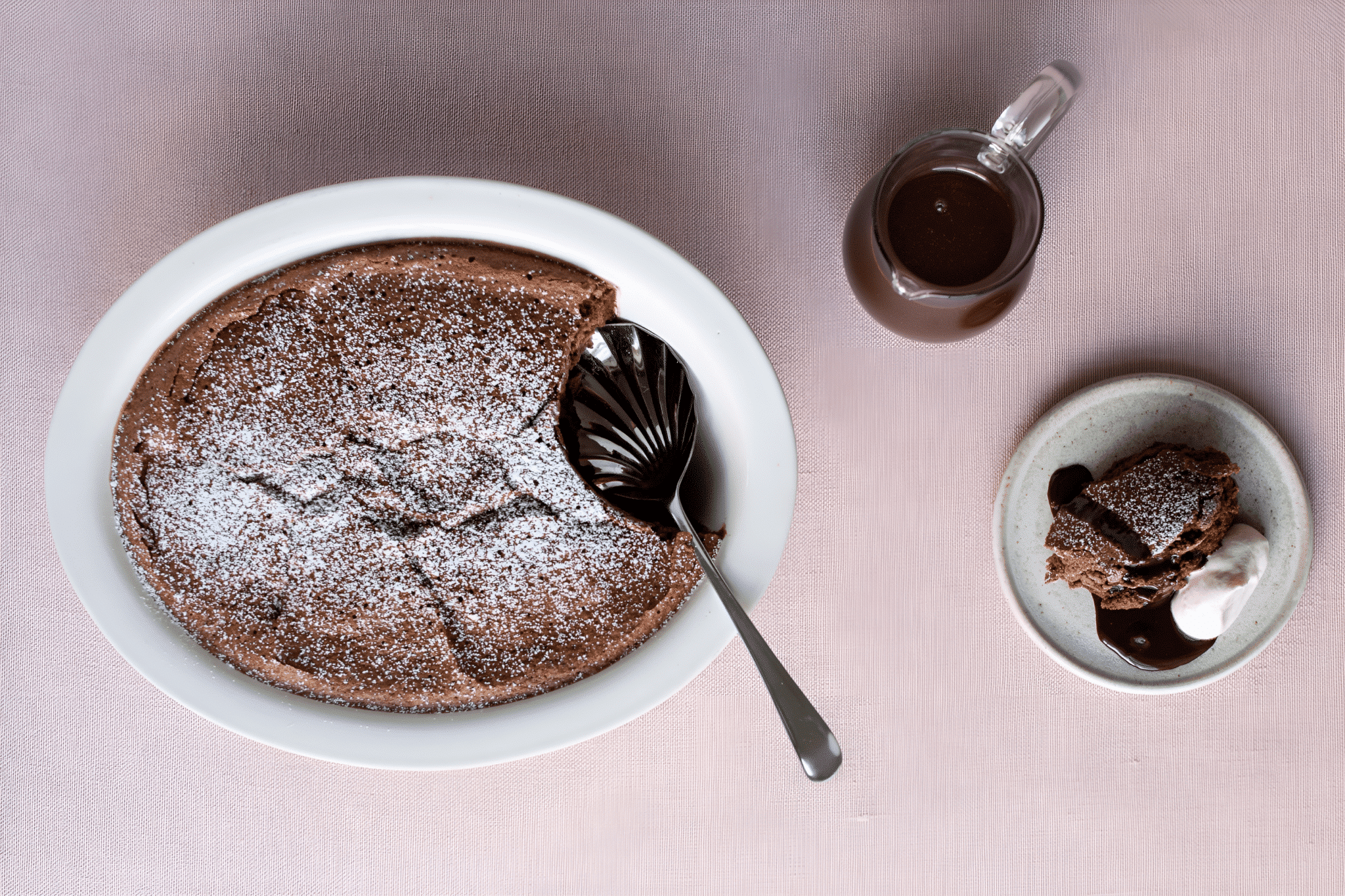
Served warm with softly whipped cream, this chocolate pudding is heaven. Though it is rich, it is not too heavy. Real chocolate lovers may like to serve the pudding with warm Chocolate Sauce alongside. I usually bake this pudding in one dish to serve family style, but the mixture can also be divided between eight 200 ml/7 fl oz (¾ cup) ramekins if you would like each person to have their own individual pudding.
Note: In this recipe, you can swap the plain flour with a gluten-free flour blend to yield a nice gluten-free dessert; the texture will be slightly different but the pudding will still be rich and delicious.
Serves 6–8
For The Pudding
150 g/5 oz dark chocolate, 62% cocoa solids, cut into small pieces
150 g/5 oz (⅔ cup) unsalted butter
1 teaspoon pure vanilla extract
150 ml/5 fl oz (⅔ cup) warm water
110 g/4 oz (½ cup plus 1 tablespoon) caster (superfine) sugar
4 large eggs, separated
25 g/1 oz (¼ cup) plain flour, sifted pinch of cream of tartar (tartaric acid)
To serve
icing (confectioners) sugar, for sprinkling softly whipped cream or crème fraîche.
To make the pudding: Preheat the oven to 200°C/400°F/Gas Mark 6. Place a 1.5 litre/2½ pint (6¼ cup) ovenproof pie dish in a roasting tin that neatly fits it. The roasting tin should be at least 5 cm/2½ inches deep.
Melt the chocolate and butter in a heatproof bowl set over a pan of hot water. Stir from time to time to blend the melting chocolate and butter until smooth. Remove from the heat. Add the vanilla extract, then stir in the warm water and the caster sugar. Continue to mix until the mixture is smooth. Whisk the egg yolks into the chocolate mixture, then fold in the flour making sure there are no lumps.
Whisk the egg whites in a spotlessly clean bowl with a pinch of cream of tartar until it reaches soft peaks. Keep an eye on the whites as they whip to ensure they do not become too stiff and grainy. Fold one quarter of the whisked egg whites into the chocolate mixture to lighten it. Gently fold the remaining egg white into the mixture until completely blended, being careful not to knock all the air out. Pour the mixture into the pie dish. Pour boiling water into the roasting tin to come halfway up the side of the dish.
Bake for 10 minutes, then lower the heat to 160°C/325°F/Gas Mark 3. Bake for a further 20 minutes. The pudding will be set on top but still soft and somewhat molten underneath. Remove the roasting tray and pudding from the oven and allow to sit for 10 minutes.
To serve: Lightly dust the pudding with icing sugar. The pudding can be held in a warm place for up to 1 hour. Serve warm with softly whipped cream or crème fraîche.
This recipe is from ‘Ballymaloe Desserts’ a cookbook by JR Ryall, Head Pastry Chef at Ballymaloe House HotelSearch for:
Served warm with softly whipped cream, this chocolate pudding is heaven. Though it is rich, it is not too heavy. Real chocolate lovers may like to serve the pudding with warm Chocolate Sauce alongside. I usually bake this pudding in one dish to serve family style, but the mixture can also be divided between eight 200 ml/7 fl oz (¾ cup) ramekins if you would like each person to have their own individual pudding.
Note: In this recipe, you can swap the plain flour with a gluten-free flour blend to yield a nice gluten-free dessert; the texture will be slightly different but the pudding will still be rich and delicious.
Serves 6–8
For The Pudding
150 g/5 oz dark chocolate, 62% cocoa solids, cut into small pieces
150 g/5 oz (⅔ cup) unsalted butter
1 teaspoon pure vanilla extract
150 ml/5 fl oz (⅔ cup) warm water
110 g/4 oz (½ cup plus 1 tablespoon) caster (superfine) sugar
4 large eggs, separated
25 g/1 oz (¼ cup) plain flour, sifted pinch of cream of tartar (tartaric acid)
To serve
icing (confectioners) sugar, for sprinkling softly whipped cream or crème fraîche.
To make the pudding: Preheat the oven to 200°C/400°F/Gas Mark 6. Place a 1.5 litre/2½ pint (6¼ cup) ovenproof pie dish in a roasting tin that neatly fits it. The roasting tin should be at least 5 cm/2½ inches deep.
Melt the chocolate and butter in a heatproof bowl set over a pan of hot water. Stir from time to time to blend the melting chocolate and butter until smooth. Remove from the heat. Add the vanilla extract, then stir in the warm water and the caster sugar. Continue to mix until the mixture is smooth. Whisk the egg yolks into the chocolate mixture, then fold in the flour making sure there are no lumps.
Whisk the egg whites in a spotlessly clean bowl with a pinch of cream of tartar until it reaches soft peaks. Keep an eye on the whites as they whip to ensure they do not become too stiff and grainy. Fold one quarter of the whisked egg whites into the chocolate mixture to lighten it. Gently fold the remaining egg white into the mixture until completely blended, being careful not to knock all the air out. Pour the mixture into the pie dish. Pour boiling water into the roasting tin to come halfway up the side of the dish.
Bake for 10 minutes, then lower the heat to 160°C/325°F/Gas Mark 3. Bake for a further 20 minutes. The pudding will be set on top but still soft and somewhat molten underneath. Remove the roasting tray and pudding from the oven and allow to sit for 10 minutes.
To serve: Lightly dust the pudding with icing sugar. The pudding can be held in a warm place for up to 1 hour. Serve warm with softly whipped cream or crème fraîche.
This recipe is from ‘Ballymaloe Desserts’ a cookbook by JR Ryall, Head Pastry Chef at Ballymaloe House HotelSearch for:


 powerscourt_estate




 Foodaware