Alcohol is a toxic, addictive drug that can be very damaging to health. Alcohol products, mainly beer, spirits and wine can be marketed without reference to alcohol in the advertising. Alcohol is consumed without restraint or regard for its health consequences.
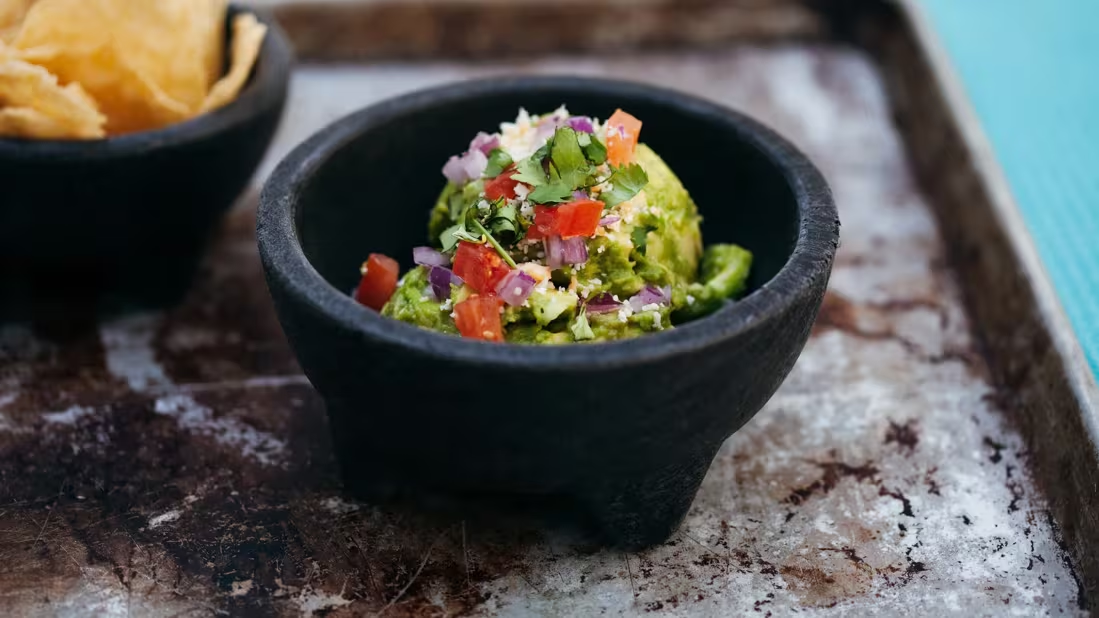
Mix up your favorite guac by adding feta, rice vinegar and oregano!
Traditional guacamole gets a Mediterranean makeover in this mouth-watering dip. Adding flavorful feta cheese, rice vinegar, oregano and parsley will satisfy the cravings of both avocado lovers and feta addicts!
Ingredients
1 cup chopped avocado (1–2 avocados)
1/4 cup finely chopped red onion
1 teaspoon minced garlic
2 tablespoons finely chopped parsley
1/2 teaspoon dried oregano leaves
1 teaspoon olive oil
1 tablespoon seasoned rice vinegar (flavored with basil and oregano)
1 1/4 cup crumbled reduced-fat feta cheese
Directions
In a bowl, gently stir together avocado, onion and garlic.
Mix in parsley and oregano.
Gently stir in olive oil, vinegar and feta. Refrigerate or serve immediately.
Ingredient health benefits
Avocados: Sometimes, good things come in small, bumpy packages. Adding avocados to any dish is a rich, creamy way to get some important nutrients in your body. They’re loaded with unsaturated fats and potassium, which support your heart and protect it from disease, as well as vitamins K, C, E, B6 and B9 (folate). These vitamins support many essential aspects of your well-being, from your eyes and immune cells to strong bones and soft skin. And speaking of head-to-toe health, avocadoes are also high in insoluble and soluble fiber, which your digestive tract will greatly appreciate!
Onions: It’s easy not to look past the potent, eyewatering qualities of this common ingredient, but your efforts won’t be in vain! Onions are packed with important nutrients like vitamin C, fiber and flavonoids, which promote immunity, lower inflammation and keep your heart healthy. The fiber in onions also works with prebiotics to bolster your “good” gut bacteria and “smooth your moves.” And a flavonoid called quercetin may suppress the growth of “bad” bacteria that can make you sick.
Garlic: Another aromatic allium, garlic is so nutritious that some consider it a superfood! It can boost your immune system when eaten regularly with lots of fruits and vegetables, and it may help regulate your blood pressure. There are also plenty of antioxidants that help decrease unwanted inflammation and keep your cells in peak condition, and certain natural compounds might protect you from harmful bacteria like Salmonellaand E. coli.
Parsley: Even herbs can have some benefits of their own! Parsley is a natural diuretic, so it helps your body get rid of extra fluid when nature calls, and there are flavonoids to help preserve your heart and brain health.
Olive oil: It’s well known that olive oil is a prime choice when it comes to cooking oils, but have you ever wondered why? Well, it’s chock full of heart-healthy fats that help lower your “bad” (LDL) cholesterol and raise your “good” (HDL) cholesterol, as well as fat-soluble vitamins like vitamins D and K. Olive oil is also rich in polyphenols, a type of antioxidant. And while all olive oil is nutritious and delicious, consider going for the extra virgin variety (EVOO) if you can, as it has the highest concentration of these benefits.
Cheese: What’s not to love about a food that also loves you? Cheese is a meat-free source of omega-3s, essential fats that fuel every cell in your body and may decrease your risk of certain cancers and eye diseases. Whey, casein and calcium support strong bones and muscles so they can support your needs. And vitamin A and vitamin B12 are responsible for keeping your eyes, brain and blood cells in top shape, while the minerals selenium and zinc help strengthen your immunity.
Nutrition information (per serving)
Makes 5 servings Serving = 1/4 cup
Calories: 123 (72% calories from fat) Fat: 11 g Saturated fat: 2 g Cholesterol: 3 mg Sodium: 105 mg Carbohydrates: 7 g Dietary fiber: 4 g Sugar: 1 g Protein: 3 g Dietary exchanges: 1/2 starch, 2 fat
Today I got to visit @dunnesstores new store in @dundrumtc wow what a stunning store congratulations to all the team in making this happen and best of luck to all the designers too 👏👏 I was so happy and proud of our cookwear kitchen and can’t wait to go back soon and do a cookery demo there it was amazing a lot of hard work went into this thank you to my team im delighted hope you get to visit this stunning store soon 🥰 #shopping#cookwear#fun#pots#pans#cookwithnevenmaguire6w
Pommes persillade might sound fancy, but the homey side dish — a staple on bistro menus — is incredibly easy to make at home. Crispy potatoes with soft, tender centers are tossed in melted butter, minced garlic, and fresh parsley to create the ultimate side dish. It’s like the classic diner home fries you know and love, only elevated.
The trick to getting these potatoes super crispy is to boil them in salted water before pan-frying them. This does two things: It cooks the potatoes all the way through so they are perfectly tender, and it helps bring some of the potatoes’ gelatinized starches to the surface so the potatoes get nice and crispy. To do this, you’ll cover diced potatoes with cold water, bring to a boil, drain them, and let them dry on a sheet tray, where they’ll cool for at least 10 minutes to allow the excess water to evaporate. Then, fry them in a hot skillet to crisp them up.
Here, we’re garnishing the crispy spuds with shredded Parmesan cheese to amp up their savoriness, but you can leave it out and still end up with a delicious side dish. Serve them immediately to maintain their crispy texture and pair with your favorite protein for the ultimate weeknight dinner.
Pommes Persillade
Yield: Serves 6 to 8
Prep Time: 15 minutes
Cook Time: 25 minutes to 30 minutes
Ingredients
4 medium russet potatoes (about 1 1/2 pounds total)
1 tablespoon plus 3/4 teaspoon kosher salt, divided
Peel and cut 4 medium russet potatoes into 1-inch cubes. Place the potatoes in a large pot and add enough cold water to cover potatoes by 1 inch. Stir in 1 tablespoon of the kosher salt. Cover and bring to a boil over high heat. Uncover and reduce heat to low to maintain a gentle simmer. Cook until potatoes are easily pierced with a knife but not falling apart, 12 to 14 minutes. Meanwhile, line a baking sheet with paper towels.
Drain the potatoes, then transfer onto a baking sheet and spread into a single layer. Pat the potatoes dry with more towels and let cool for 10 minutes. Meanwhile, mince 2 garlic cloves, coarsely chop the leaves from 1/2 bunch fresh parsley, and finely shred 1 ounce Parmesan cheese (about 1/2 cup). Microwave 4 tablespoons unsalted butter in a large microwave-safe bowl until melted, about 30 seconds. Add the garlic, parsley, 1/2 teaspoon black pepper, and the remaining 3/4 teaspoon kosher salt, and stir to combine. Set aside.
Heat 2 tablespoons olive oil in a 10-inch cast iron or nonstick skillet over medium-high heat until shimmering. Working in batches if needed, add the potatoes and cook, stirring and flipping them often, until golden-brown and crisp on all sides, 10 to 12 minutes total. Transfer the potatoes into the bowl of garlic butter and toss to coat. Transfer into a serving bowl and garnish with the Parmesan.