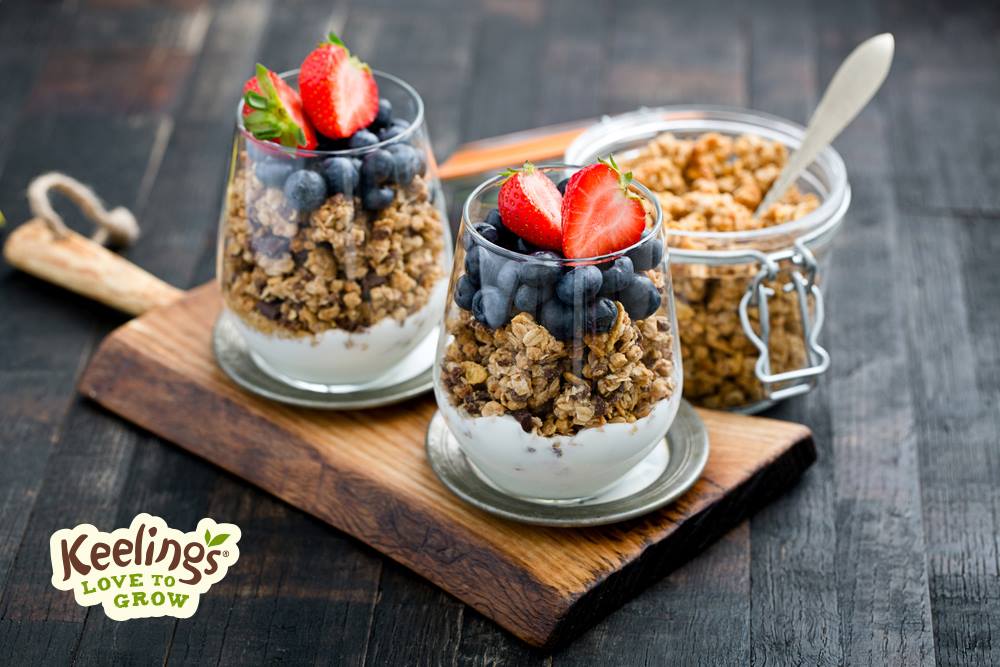
Method: 1. Take two tumbler glasses and add 3 Tbsp. yogurt. 2. Add 3 Tbsp. granola and top with Keelings berries. 3. Repeat layers one time. 4. Dollop 1 tsp. yoghurt and sprinkle with granola. 5. Top with Keelings blueberries & strawberries. 6. Add maple syrup or honey if desired. 7. Serve and enjoy!
I don’t know about you but I love my bed! And I firmly believe that a good night’s sleep can make you feel so good! Breathing, eating and sleeping are three of the most basic and essential functions we do as humans. But can food affect our sleep or does our sleep affect our food? The reality is that it is probably a bit of both…On average we need between 7-9 hours’ sleep per night with some people managing on less and others may need more. Lack of sleep can lead to irritability, fatigue and difficulty concentrating. However chronic poor sleep has been linked to obesity, diabetes and heart disease.
In general, research has found that eating in line with the Mediterranean or DASH diet, both of which promote fruits and vegetables, fiber rich foods and healthy mono-unsaturated and polyunsaturated fats tends to be associated with better quality sleep. Magnesium is a mineral that is reported to help with sleep regulation and is found in bananas, nuts, green vegetables, tofu and dairy. Melatonin is a micronutrient present in some foods but also a hormone that occurs naturally in the body and helps control sleep patterns. Melatonin, is found in tart cherry juice, eggs, nuts and dairy. Interestingly the tradition of hot milk before bed comes from Roman times… and milk contains both magnesium, melatonin and an amino acid called tryptophan which helps produce serotonin and melatonin.
Kiwifruit is another food that has been reported to have a positive impact on sleep duration and quality. In one four-week trial of adults with sleep problems, consumption of two kiwifruits per day one hour before bedtime significantly increased total sleep time and sleep efficiency. A potential reason for this is that they are a rich source of antioxidant and contain the hormone serotonin. Either way they are also great sources of vitamin C and great for keeping bowel movements regular.
Do you ever feel like you make poorer food choices when you’re tired? There may be good reason behind this. Sleep deprivation can cause a drop in Leptin levels (a hormone that signals fullness) and increases the hormone Ghrelin (hormone that stimulates appetite). This change in hormones can explain why you might eat more when missing sleep or why you tend to eat more without feeling full when you have had minimal sleep. US research from Cedar- Sinai Medical Centre also found that lack of sleep increased insulin resistance. So, we can see that regular good night sleep helps manage hormones, appetite and possible food choices.
Caffeine and alcohol can negatively affect falling asleep and sleep quality so best to keep within healthy limits if struggling with sleep. Maybe keep the caffeine to before midday!
1 packet of shortcrust pastrythawed if bought frozen
1 tbsp flour
1 eggbeaten
Handful flaked almonds
Directions
1
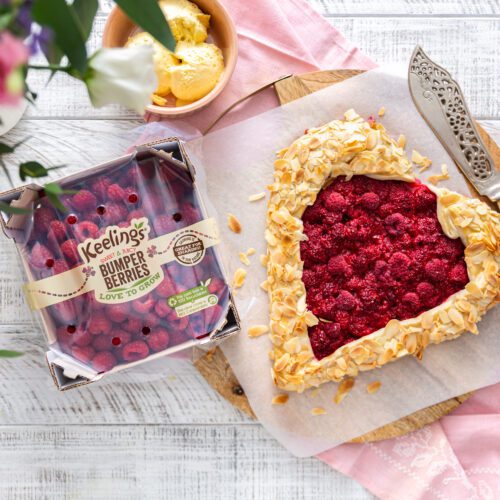
Place raspberries in a medium sized bowl then sprinkled over caster sugar and squeeze over some lemon juice. Stir with a fork so that some of the raspberries are broken up, but still maintaining plenty of whole ones. Set aside.
2
Pre-heat the oven to 200°C / 180°C fan assisted and place a flat baking sheet or overturned tray in the oven to pre-heat.
3
Roll out chilled shortcrust pastry on a floured surface to about 5mm thick then transfer to a baking tray lined with parchment paper. Using a sharp knife, cut the pastry into a large heart, discarding the trimmed pieces of pastry.
4
Sprinkle the flour over the middle of the pastry, this will help thicken the juices while baking, then tip out the raspberries on top and spread out over the pastry in an even layer, but keep a 4-5cm border around the edges.
5
Fold the pastry border up and over the filling, shaping the galette into a heart as you fold the edges over, until you’re back where you started, crimping the pastry together where the folds meet to help them stick.
6
Brush the pastry border with beaten egg and sprinkle with flaked almonds.
7
Place the tray directly on top of the hot tray already in the oven and bake until pastry is golden, 30-35 minutes.
8
Remove from the oven and leave to stand for about 5-10 minutes before serving with scoops of ice-cream or dollops of whipped cream while still warm.
Method: 1. Take two tumbler glasses and add 3 Tbsp. yogurt. 2. Add 3 Tbsp. granola and top with Keelings berries. 3. Repeat layers one time. 4. Dollop 1 tsp. yoghurt and sprinkle with granola. 5. Top with Keelings blueberries & strawberries. 6. Add maple syrup or honey if desired. 7. Serve and enjoy!
I don’t know about you but I love my bed! And I firmly believe that a good night’s sleep can make you feel so good! Breathing, eating and sleeping are three of the most basic and essential functions we do as humans. But can food affect our sleep or does our sleep affect our food? The reality is that it is probably a bit of both…On average we need between 7-9 hours’ sleep per night with some people managing on less and others may need more. Lack of sleep can lead to irritability, fatigue and difficulty concentrating. However chronic poor sleep has been linked to obesity, diabetes and heart disease.
In general, research has found that eating in line with the Mediterranean or DASH diet, both of which promote fruits and vegetables, fiber rich foods and healthy mono-unsaturated and polyunsaturated fats tends to be associated with better quality sleep. Magnesium is a mineral that is reported to help with sleep regulation and is found in bananas, nuts, green vegetables, tofu and dairy. Melatonin is a micronutrient present in some foods but also a hormone that occurs naturally in the body and helps control sleep patterns. Melatonin, is found in tart cherry juice, eggs, nuts and dairy. Interestingly the tradition of hot milk before bed comes from Roman times… and milk contains both magnesium, melatonin and an amino acid called tryptophan which helps produce serotonin and melatonin.
Kiwifruit is another food that has been reported to have a positive impact on sleep duration and quality. In one four-week trial of adults with sleep problems, consumption of two kiwifruits per day one hour before bedtime significantly increased total sleep time and sleep efficiency. A potential reason for this is that they are a rich source of antioxidant and contain the hormone serotonin. Either way they are also great sources of vitamin C and great for keeping bowel movements regular.
Do you ever feel like you make poorer food choices when you’re tired? There may be good reason behind this. Sleep deprivation can cause a drop in Leptin levels (a hormone that signals fullness) and increases the hormone Ghrelin (hormone that stimulates appetite). This change in hormones can explain why you might eat more when missing sleep or why you tend to eat more without feeling full when you have had minimal sleep. US research from Cedar- Sinai Medical Centre also found that lack of sleep increased insulin resistance. So, we can see that regular good night sleep helps manage hormones, appetite and possible food choices.
Caffeine and alcohol can negatively affect falling asleep and sleep quality so best to keep within healthy limits if struggling with sleep. Maybe keep the caffeine to before midday!
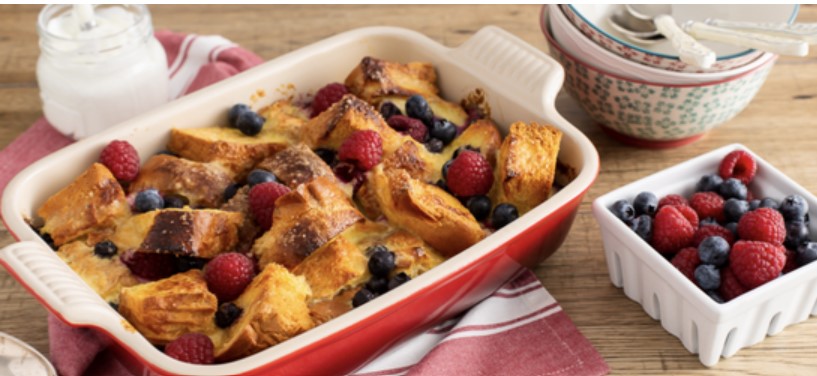
Blueberry & Raspberry Breakfast Pudding Ingredients 400 g brioche loaf, thickly sliced 100 g unsalted butter, very soft 125 g raspberries 125 g blueberries 350 ml vanilla yoghurt 150 ml milk 3 eggs Zest from ½ lemon 1 tbsp demerara sugar Directions 1Pre-heat oven to 180°C/160°C Fan/gas 4. 2Butter the brioche slices on one side only then cut into large cubes by cutting each slice into quarters. 3Scatter brioche cubes, raspberries and blueberries into a large casserole dish and set aside. 4Whisk together yoghurt, milk, eggs and lemon zest in a large jug. Pour mixture over the brioche and leave to soak for 15-20 minutes. 5Sprinkle with demerara sugar then bake until a sharp knife inserted into the centre of the pudding comes out clean, about 35 minutes. Leave to cool for 10-15 minutes on a wire rack then serve with a dollop of yoghurt and a few fresh berries.
Leaves turn to the most beautiful shades of yellow, orange, and red in autumn — and raspberry leaves are no exception! Leaves make chlorophyll in the sunlight, but as the days get darker, lack of sunlight halts the production of chlorophyll, allowing leaves to change colour.





 Foodaware